Find Reliable Diesel Near You, Fast
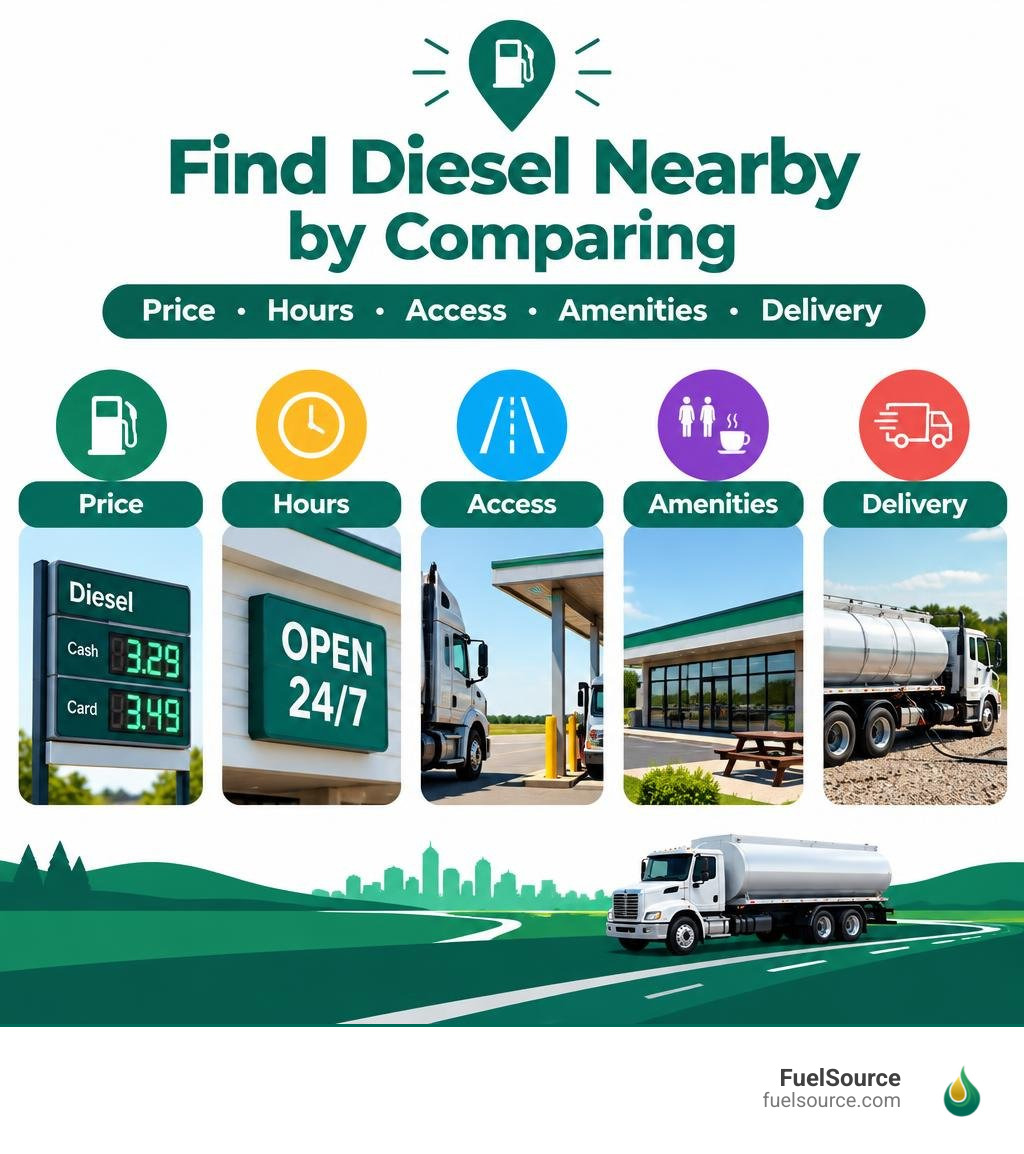
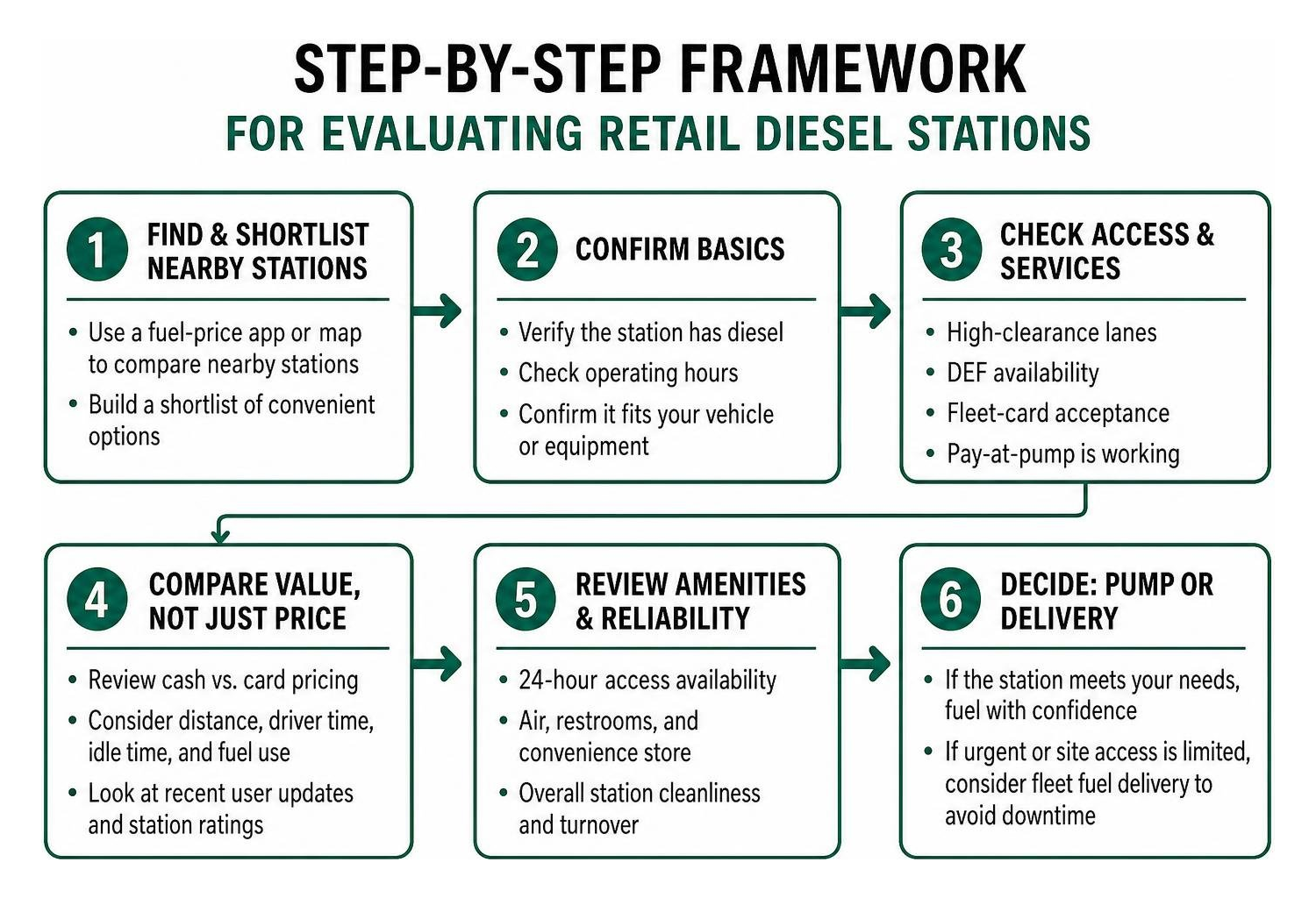
To find diesel near me quickly, use a fuel-price app or map to compare nearby stations, then confirm the station has diesel, is open when you need it, and can accommodate your vehicle or equipment. For fleet vehicles, also check for high-clearance lanes, DEF availability, fleet-card acceptance, and working pay-at-pump service before changing your route.
The cheapest posted price is not always the lowest-cost stop. A station farther away can add driver time, idle time, and fuel use. Check cash versus card pricing, recent user updates, station ratings, and amenities such as 24-hour access, air, restrooms, and a convenience store. If an urgent job site or generator cannot wait, fleet fuel delivery may be a better way to avoid downtime and retail pump problems.
I am Kyle Behnke, an Atlanta-area business professional with experience in strategy and operations at FuelSource. I help connect the practical needs behind a diesel near me search – keeping construction, farming, and logistics work moving when fuel is urgent.
5 Key Factors to Evaluate When Choosing Diesel Near Me
Finding reliable diesel fuel involves more than just pulling into the nearest corner stop. For heavy equipment operators, contractors, and everyday diesel drivers across Metro Atlanta and North Georgia, picking the wrong pump can lead to engine downtime, clogged filters, and unnecessary operating costs.
When you evaluate a retail station, keep these five essential factors in mind:
- Fuel Quality and Cetane Rating: High-cetane fuel ensures smoother combustion, easier cold starts, and lower emissions. Look for reputable brands that maintain rigorous standards for their Ultra-Low Sulfur Diesel (ULSD).
- Local Pricing Trends: Fuel costs can vary dramatically between neighboring counties. Monitoring benchmarks like Georgia average gas prices or checking local rates across Fulton, Cobb, and Gwinnett counties helps you avoid paying excessive retail markups.
- Turnover and Storage Cleanliness: High-volume stations cycle through their underground tanks rapidly, preventing water condensation and microbial contamination.
- Site Access and Layout: Adequate turning radiuses, high canopy clearances, and separate commercial lanes prevent costly bottlenecks for larger trucks and trailers.
- Fleet Card Acceptance: Seamless billing through commercial fleet cards streamlines recordkeeping and expense tracking for business vehicles.
Fuel Formulations and Engine Additives
Standard #2 diesel meets baseline ASTM specifications, but modern high-pressure common-rail (HPCR) injection systems often benefit from enhanced additive blends. Major retailers engineer proprietary formulations—such as Synergy Diesel Efficient or DINOCARE treated diesel—designed to prevent internal injector deposits, boost lubricity, and protect fuel systems from corrosion.
These premium detergent blends break down sticky carbon deposits on delicate injector nozzles, restoring proper spray patterns and maximizing fuel economy. While treated fuels may carry a slight premium at the pump, the improved thermal stability and reduced wear on injection pumps frequently offset the initial cost.
| Feature / Metric | Standard #2 Diesel | Enhanced Additive Diesel Blends |
|---|---|---|
| Detergent Package | Baseline regulatory standards | High-performance deposit-cleaning detergents |
| Cetane Number | Typically 40–42 | Often boosted to 45–50+ |
| Lubricity Enhancers | Meets standard ASTM D975 | Added lubricity agents to protect fuel pumps |
| Corrosion Inhibitors | Minimal | Active anti-corrosion chemistry |
| Target Application | General automotive & machinery | High-efficiency modern engines & heavy-duty fleets |
Station Amenities, Clearance, and Fleet Services
Navigating a commercial truck or a heavy-duty pickup hauling a trailer into a tight retail lot is an easy way to damage equipment. Top-tier stations provide practical site amenities designed specifically for larger commercial rigs:
- Canopy Clearances: Ample vertical clearance (14+ feet) ensures box trucks, flatbeds, and haulers clear overhead structures safely.
- High-Flow Satellite Pumps: Dual-sided, high-flow nozzles fill saddle tanks simultaneously in minutes rather than quarters of an hour.
- Bulk Diesel Exhaust Fluid (DEF): Dedicated DEF dispensers at the island eliminate the need to wrestle with awkward single-use jugs.
- Commercial Fleet Integration: Dedicated billing integration for cards like Wex, Comdata, and Voyager simplifies accounting.
- Convenience and Maintenance: On-site air compressors, water lines, clean restrooms, and well-stocked convenience stores keep your crew refreshed.
Whether you run routes past Gas Station and Convenience Stores in Canton, Georgia or fuel up across Best Gas Prices & Local Gas Stations in Bartow County, GA, choosing full-featured facilities makes each stop productive.
Top Strategies to Find Cheap Diesel and Reliable Pumps
Saving money on retail diesel requires looking past the big numbers on the road sign. Stations frequently display cash-discounted rates, meaning using a standard credit card can add 10 to 20 cents per gallon at checkout.
To minimize fuel expenditures:
- Leverage Fuel Reward Programs: Enroll in retail loyalty apps like Exxon Mobil Rewards+, Shell Fuel Rewards, or Sinclair DINOPAY to knock cents off every gallon.
- Time Your Fill-Ups: Avoid peak morning rush hours when stations are congested and line idling burns wasted fuel. Off-peak refueling during early mornings or evenings saves both time and patience.
- Optimize Local Buying: If your routes cross county borders—such as traveling between Cherokee, Paulding, and Douglas counties—track price spreads to fill up where local fuel taxes and baseline retail rates are lowest.
Using Fuel Apps and Mapping Tools to Locate Diesel Near Me
Crowdsourced fuel platforms have changed how drivers track down available pumps. Tools like GasBuddy rely on dedicated spotter communities to update prices, verify fuel availability, and report pump maintenance issues in real time.
For tech-minded operations, smart home platforms and community forums—such as the Home Assistant Community—frequently share custom integrations and automation blueprints. These open-source tools monitor local API feeds to alert drivers when neighborhood stations drop prices below regional averages.
When scouting stations on digital maps, look for detailed user reviews and photos. Checking service listings in advance helps confirm 24-hour fueling, air pumps, and mobile payment acceptance before arriving. Similarly, viewing real-time pricing and driver feedback for major brands on community boards helps verify whether a low posted price is backed by clean, working pumps.
If your drivers operate around Decatur, referencing local community listings helps pinpoint dependable retail locations along active commercial corridors.
How to Find 24/7 Stations Offering Diesel Near Me
Late-night hauling and early morning dispatches demand stations that never shut their pumps off. When searching for round-the-clock diesel access, focus on locations that offer robust lighting, automated pay-at-the-pump card readers, and operational security cameras.
Established 24-hour travel plazas and dedicated fleet stops provide consistent overnight access with well-maintained lighting, clean facilities, and reliable card authorization. Many brand-operated corporate locations provide verified 24/7 diesel fueling and fleet card processing for seamless off-hours operations.

Navigating Common Diesel Pump Issues and Maintenance Tips
Diesel fuel systems operate under extreme pressure, making them sensitive to contaminants and mechanical hiccups at retail pumps. Every driver has experienced the frustration of an out-of-order receipt printer that forces an extra trip inside, or a pump handle coated in greasy fuel residue because the previous user spilled.
Beyond minor inconveniences, retail fueling carries mechanical risks you should actively manage:
- Water in Fuel: Temperature swings cause condensation inside underground retail tanks. Make a habit of draining your vehicle’s fuel-water separator regularly, especially after refueling during rainy stretches or rapid temperature drops.
- Cold Weather Gelling: In winter, paraffin wax in diesel can crystallize and choke fuel filters. Ensure stations have transitioned to winterized blends or carry emergency anti-gel additives during unexpected cold snaps.
- Pump Cleanliness: Keep heavy-duty work gloves in your cab. Diesel does not evaporate like gasoline, leaving nozzles slippery and prone to transferring grit onto your hands and steering wheel.
- Receipt and Loyalty Glitches: Always verify your digital pump receipt against your account statement to confirm loyalty discounts and fleet discounts were applied properly.
Commercial Alternatives: On-Site Delivery vs. Retail Stations
Sending your drivers to hunt for retail diesel pumps costs your business far more than the price displayed on the sign. When five crew members spend 20 minutes every morning driving off-route, waiting in retail queues, and buying snacks at the register, you lose productive field hours that directly eat into your bottom line.
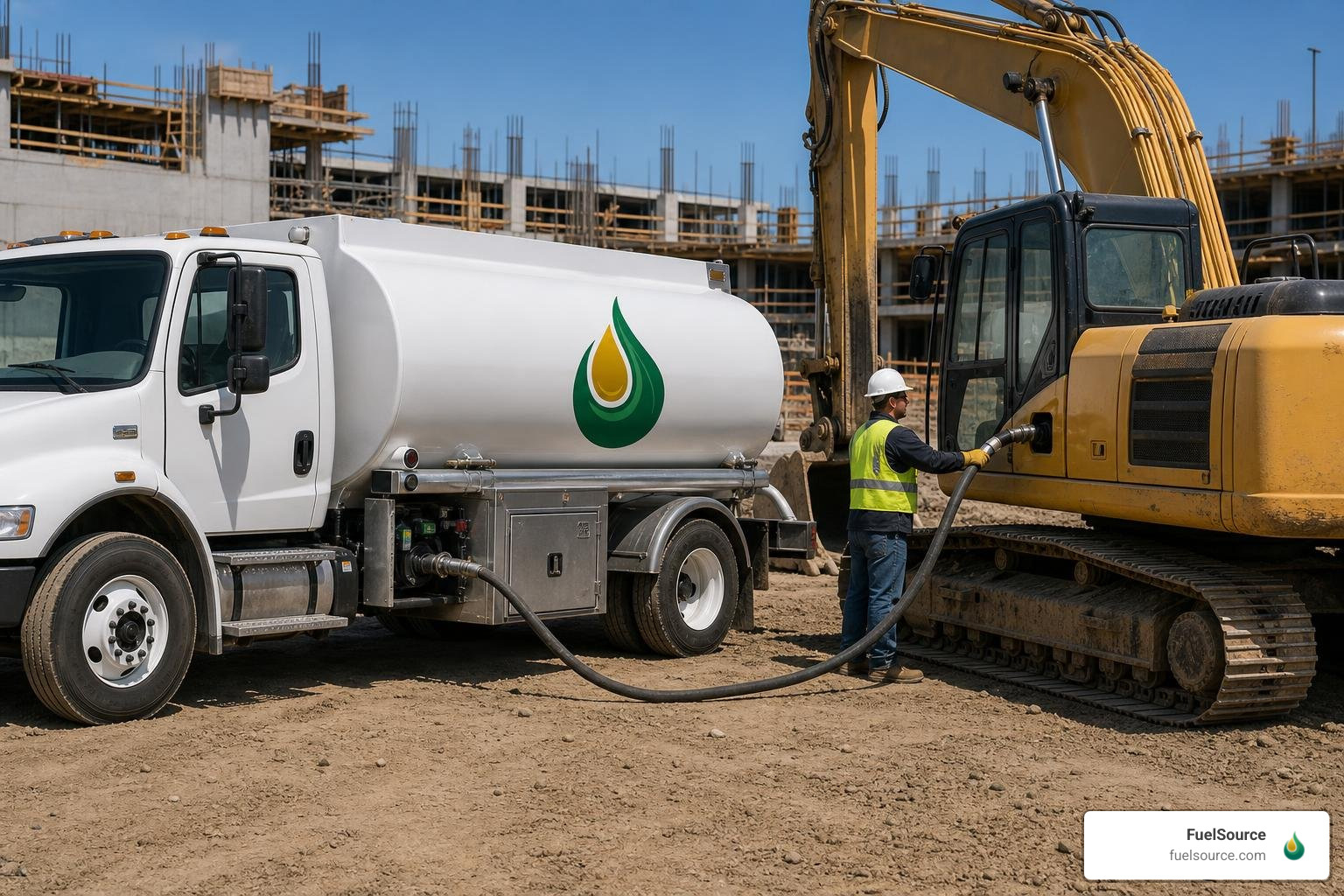
Mobile on-site refueling eliminates retail station runs entirely. Instead of dispatching trucks across congested roads, modern bulk delivery services bring Ultra-Low Sulfur Diesel, off-road dyed diesel, and DEF directly to your job site, yard tanks, or parked vehicles while they sit idle.
Understanding diesel fuel delivery starts with measuring labor recovery. By having fuel delivered directly into equipment tanks during off-hours, your team starts every shift fully fueled and ready to work.
Specialized commercial sectors benefit significantly:
- Construction & Earthmoving: Direct tank fueling for excavators, skid steers, and generators eliminates hazardous fuel transfer cans.
- Agriculture & Farming: Operations rely on on-site agricultural diesel delivery to keep tractors and harvesters running through tight planting and harvest windows without leaving the field.
- Logistics & Service Fleets: Utilizing diesel delivery in Atlanta GA or diesel delivery in Marietta GA streamlines distribution across Metro corridors.
Whether your team operates in Cobb, Forsyth, Paulding, Cherokee, or Gwinnett, mobile delivery transforms fueling from a daily logistical bottleneck into an automated background process.
Frequently Asked Questions About Diesel Stations
What is the difference between standard diesel and premium diesel blends?
Standard diesel meets baseline legal requirements for cetane index, lubricity, and sulfur content. Premium diesel blends incorporate proprietary additive packages containing high-potency detergents, cetane improvers, corrosion inhibitors, and lubricity agents. These additives prevent internal injector deposits, promote cleaner combustion, improve cold-start reliability, and extend the lifespan of high-pressure fuel pumps.
How do mobile fuel apps keep diesel pricing data accurate?
Fuel pricing apps rely on crowdsourced reporting from active spotter communities combined with real-time payment transaction feeds and automated price-scraping algorithms. Dedicated spotters earn community badges and points by verifying posted retail prices, updating fuel availability, and confirming payment options directly from the pump island.
Is it safe to buy diesel from older, low-traffic fuel stations?
Refueling at low-volume or poorly maintained stations carries elevated risk. Underground storage tanks that experience slow inventory turnover are prone to moisture condensation, sediment accumulation, and microbial growth (diesel algae). Pumping contaminated fuel can clog fuel filters, restrict injector flow, and introduce water into sensitive fuel systems. Whenever possible, refuel at high-turnover locations or rely on scheduled bulk delivery.
Conclusion
Finding reliable diesel near you comes down to balancing fuel quality, station accessibility, and overall route efficiency. While retail fuel apps and loyalty programs help reduce costs at the pump, managing commercial operations around public filling stations inevitably burns valuable labor hours.
For businesses running commercial fleets, heavy construction equipment, landscaping rigs, or farm machinery throughout Metro Atlanta and North Georgia, mobile refueling offers a more productive way forward. FuelSource delivers diesel, DEF, and gasoline directly to your vehicles and job sites with 30+ years of industry experience, state-of-the-art trucks, and a customer portal that delivers instant reports and simplified IFTA tracking.
To eliminate retail pump delays and keep your crews working, discover our comprehensive bulk diesel delivery solutions today.