How to Compare Fleet Fueling Services
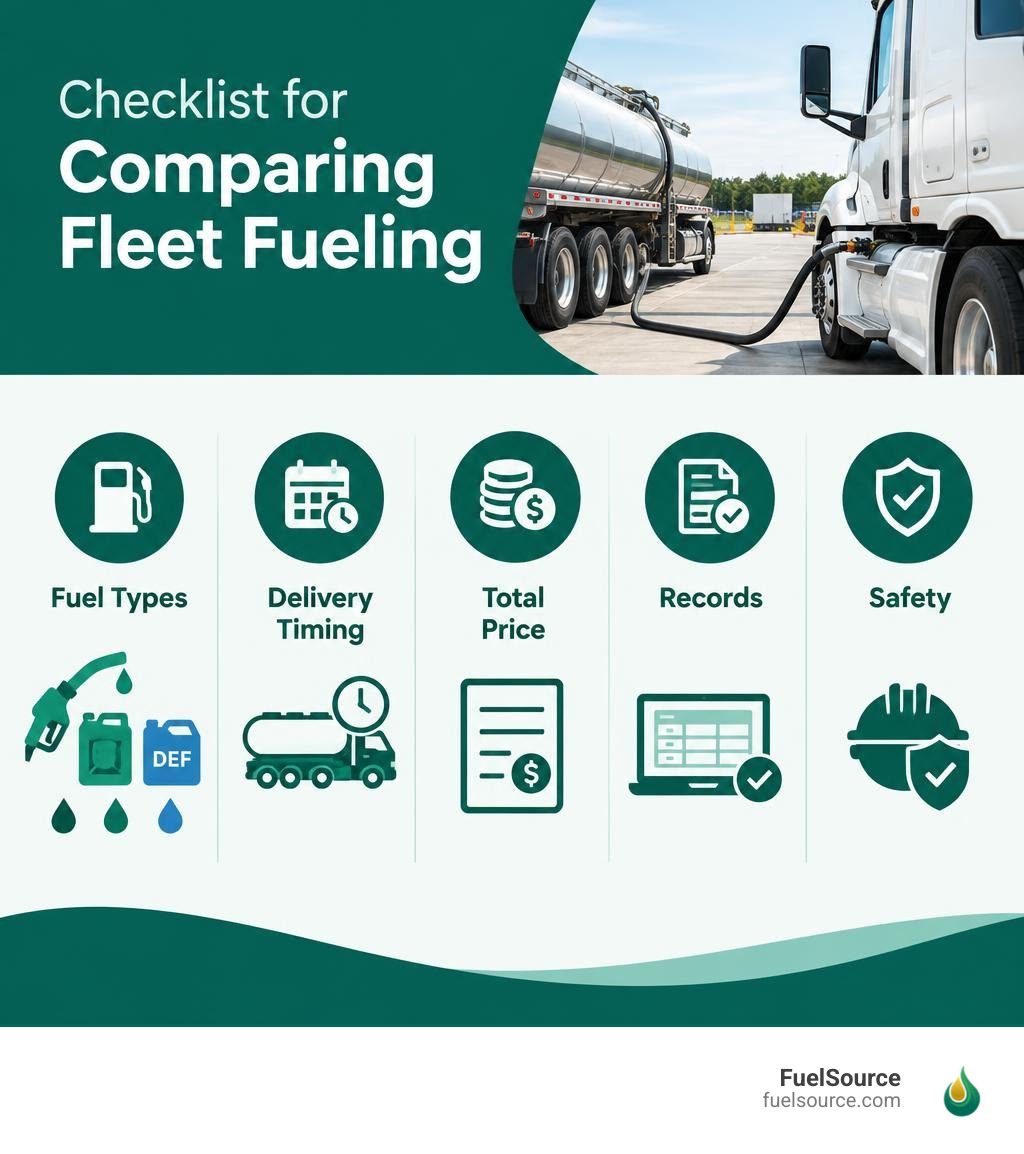
Start with what your fleet needs fueled, where, and when. Then compare providers on diesel, gasoline, and DEF availability; scheduled versus on-demand delivery; total price, including fees; and the fuel records they provide. Ask how they handle spills and service disruptions. The best quote is the one that keeps vehicles working at a cost you can understand.
For a construction site, farm, or delivery fleet, bringing fuel to parked vehicles and equipment can also cut trips to the pump. But those savings depend on your routes, driver time, and delivery schedule. A structured comparison should also account for how fuel delivery for fleets affects labor hours, asset availability, and administrative work beyond the price per gallon.
I’m Kyle Behnke, an Atlanta-based business professional at FuelSource with a background in business strategy and operations. I focus on practical ways to compare fleet fueling services, starting with the key checks below.
Key terms for fleet fueling services:
Core Capabilities of Modern Fleet Fueling Services
Managing commercial fleet operations requires precision, reliability, and cost discipline. When vehicles sit waiting for fuel or wander off-route to find retail pumps, your operational costs climb fast. Modern fleet fuel delivery solves this logistical bottleneck by providing seamless, multi-vehicle refueling directly where your vehicles park.
Fuel procurement strategies have shifted dramatically in recent years. Rather than leaving fueling logistics up to individual drivers, businesses partner with professional distributors to secure bulk fuel savings, streamline driver productivity, and support overall route optimization. At FuelSource, we bring over 30 years of industry experience across the Atlanta Metro and North Georgia regions, providing direct delivery solutions that keep businesses moving without disruptions.
Essential Fuel and Fluid Delivery Options
A complete fleet fueling program must handle all your engine and emissions requirements in a single visit. Splitting services between multiple suppliers creates administrative confusion and scheduling headaches.
The core products delivered directly to vehicle tanks include:
- Ultra-Low Sulfur Diesel (ULSD): Designed for on-road commercial haulers, delivery box trucks, and heavy highway vehicles. Securing a dependable bulk diesel supply protects your company from local station outages.
- Off-Road Diesel (Red-Dyed): Ideal for heavy construction equipment, generators, and agricultural machinery exempt from motor fuel excise taxes.
- Commercial Gasoline Delivery: Standard and premium blends pumped directly into utility trucks, vans, and light commercial vehicles.
- Diesel Exhaust Fluid (DEF): Required for modern diesel engines equipped with Selective Catalytic Reduction (SCR) systems. Partnering with a dedicated bulk DEF delivery partner ensures your vehicles never derate or stall due to empty fluid reservoirs.
By combining diesel, gasoline, and DEF delivery into an integrated service schedule, your entire fleet is topped off and ready to run every morning.
Evaluating On-Site Fueling Efficiency vs. Traditional Retail Fueling
Relying on retail gas stations and truck stops introduces hidden inefficiencies that eat into commercial profit margins. Drivers encounter retail fuel station bottlenecks, long payment lines, tight turning spaces, and off-route detour hours that inflate overtime costs.
Beyond lost labor hours, retail fueling creates financial vulnerabilities through fuel card slippage. When drivers use payment cards at off-site pumps, managers face unauthorized snack purchases, premium fuel upgrades, or occasional fuel theft.
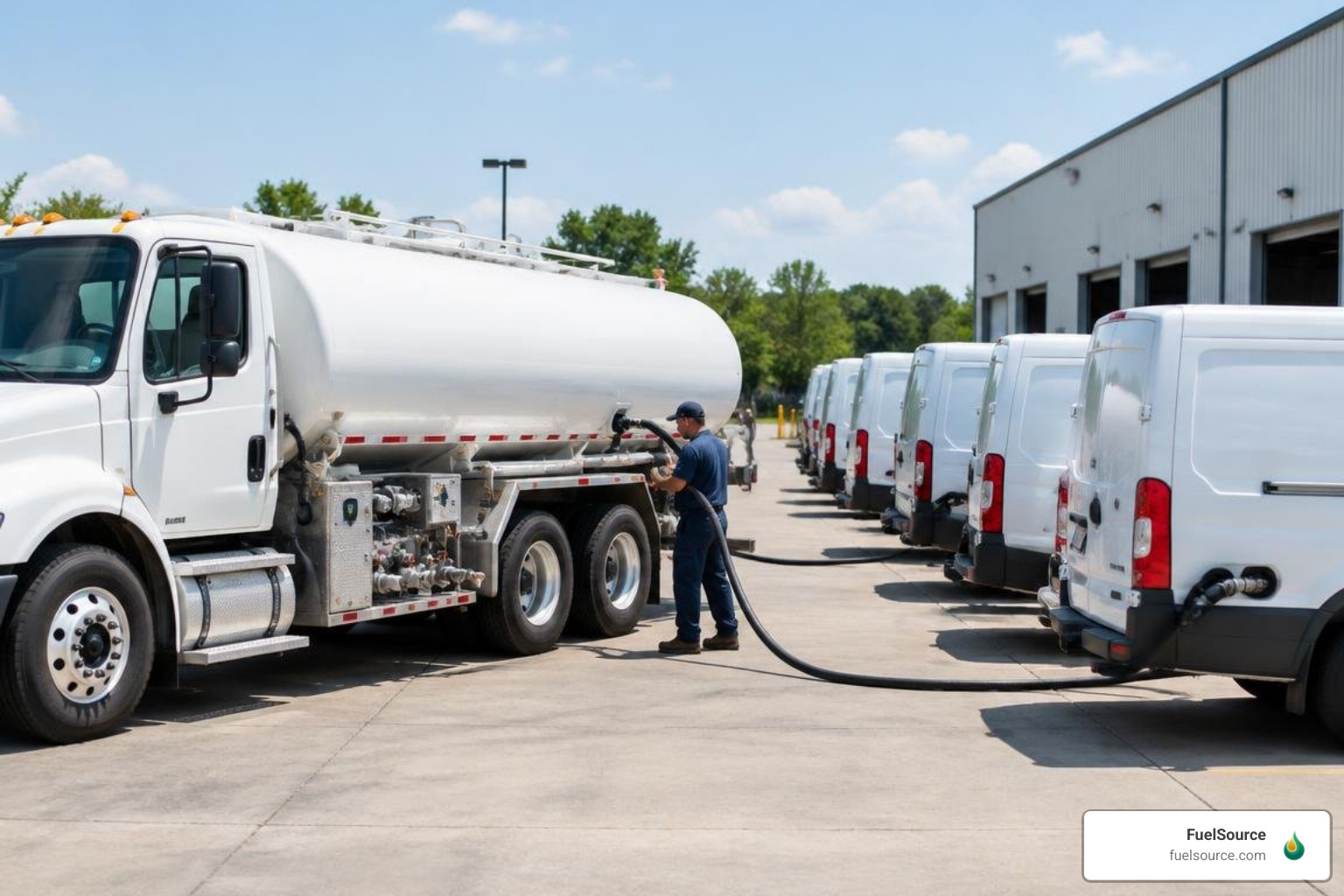
How Onsite Fleet Fueling Services Reduce Driver Downtime
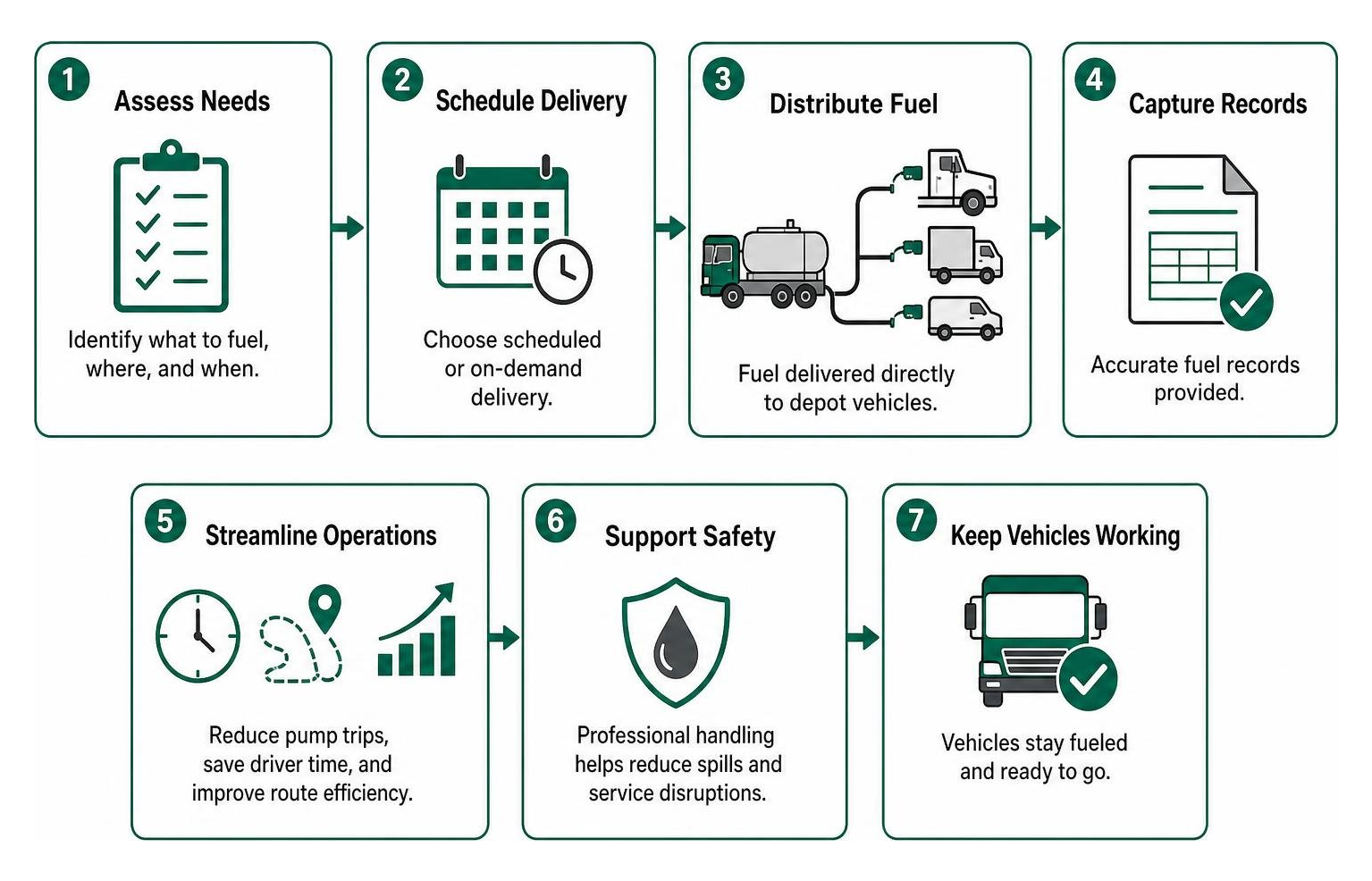
Implementing direct on-site fueling transforms your fleet’s daily workflow. Instead of drivers spending the first 30 minutes of their shift navigating traffic to locate an open pump, professional technicians refuel every asset during scheduled downtime.
When you stop driving to the pump and let fuel come to you, the measurable gains include:
- Direct Labor Savings: Onsite fleet fueling saves an average of 2 to 3 hours per driver per week by eliminating off-site fuel stops. Across a fleet of 20 drivers, that returns 40 to 60 productive hours to your operations every single week.
- Minimized Wear and Tear: Eliminating unnecessary trips to retail stations reduces idle time and cuts redundant mileage.
- Maximum Asset Utilization: Vehicles are 100% fueled when the morning shift begins, allowing drivers to start customer deliveries and job site tasks immediately.
Real-Time Telematics and Digital Fuel Management Reports
Modern fleet fuel delivery relies on precise digital reporting rather than manual paper receipts. Integrated flow meters, barcode scanning, and automated tank monitoring capture exactly how much product enters every truck.
Fleet managers can view real-time fuel delivery reports through a dedicated online portal. These systems eliminate manual data entry errors, flag unusual consumption rates, and generate automated, IFTA compliant fuel reports that simplify quarterly tax filings across state jurisdictions.
Fuel Pricing and Delivery Contracts
Fuel represents one of the largest ongoing expenses for any fleet operation. The average commercial fleet spends over $50,000 per year on fuel alone. Optimizing your fuel procurement structure can yield immediate budget improvements, often lowering overall fuel spend by up to 15% through bulk purchasing and scheduled delivery routes.
Comparing Scheduled vs. On-Demand Fleet Fueling Services
Choosing between scheduled recurring deliveries and on-demand dispatch depends on your operational tempo and facility storage capabilities.
- Scheduled Yard Delivery: Mobile fuel trucks arrive during non-operational hours (such as overnight or over weekends) on set days. This predictability ensures steady supply and allows suppliers to optimize routing efficiency, passing savings along to you.
- On-Demand Refueling: When weather emergencies, job-site shifts, or sudden contract expansions occur, flexible dispatch ensures your machinery never runs dry. Discovering why on-call fuel delivery is the secret to happy fleet managers comes down to having an agile safety net ready 24/7.
Transparent Pricing and Provider Evaluation
When vetting fuel suppliers, look beyond the base price per gallon. Finding a reliable fuel transport company requires evaluating carrier safety audits, environmental certifications, and pricing transparency.
Always clarify delivery fees, hazardous material surcharges, minimum volume commitments, and invoicing terms upfront. Clear margin breakdowns ensure you receive fair pricing tied to transparent market benchmarks without hidden fees. For broader context on fuel market dynamics, the U.S. Energy Information Administration publishes regular updates on diesel and gasoline price trends that can help you benchmark supplier quotes against regional averages.
Environmental Compliance, Safety Standards, and Tailored Industry Solutions
Handling petroleum products and emissions fluids requires strict adherence to environmental safety rules. Commercial fleets must maintain full compliance with Environmental Protection Agency (EPA) regulations and Department of Transportation (DOT) standards for hazardous material transportation.
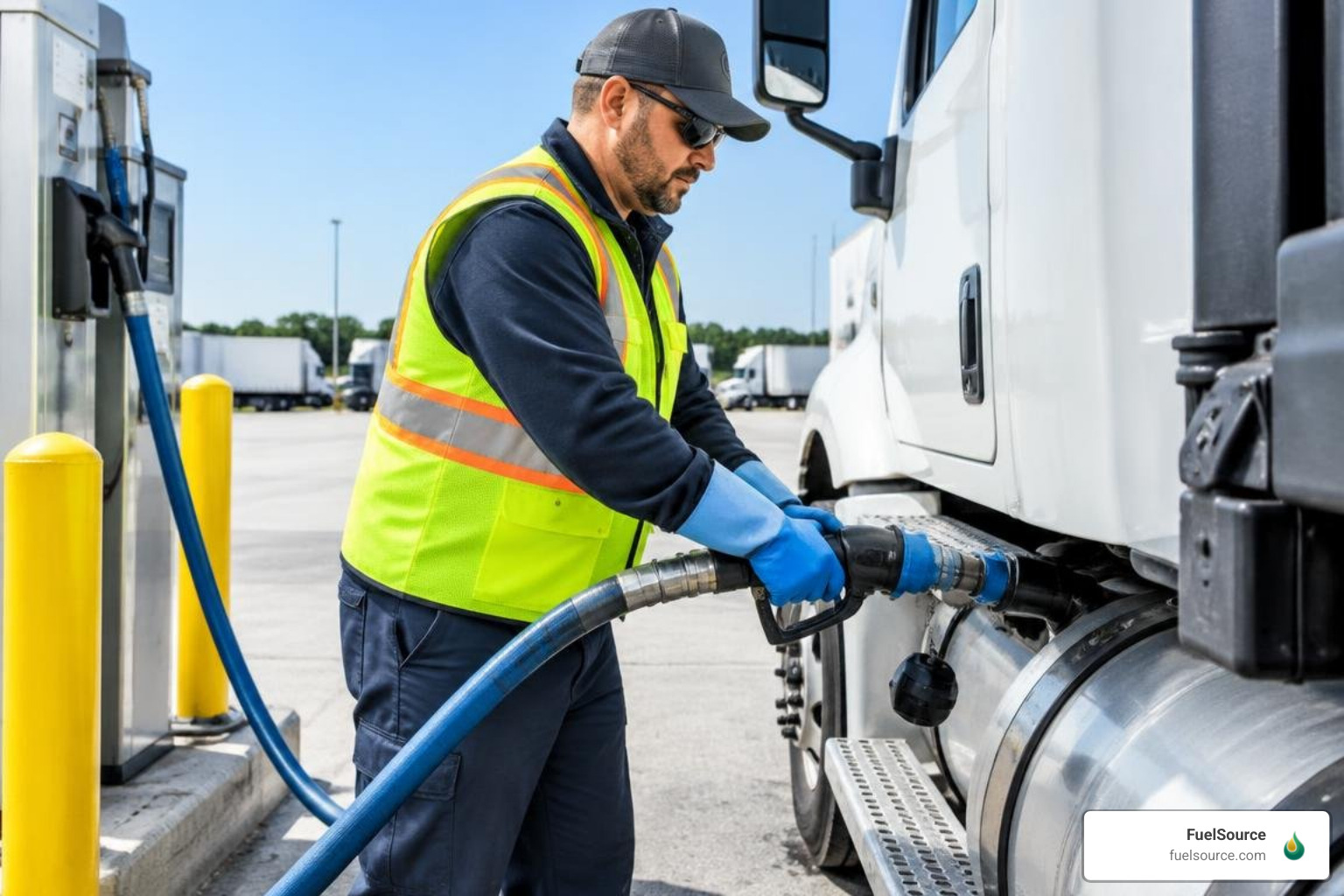
DEF Delivery and Spill Management
Diesel Exhaust Fluid handling requires strict purity controls. Contaminated DEF can damage SCR catalytic systems, leading to engine shutdowns and severe regulatory non-compliance fines of up to $10,000 per violation.
Professional providers utilize dedicated DEF delivery systems to protect fluid integrity during every transfer. For comprehensive protocols on storage and handling, review our essential guide to on-site fleet fueling and DEF delivery. Furthermore, mobile fueling units carry onboard spill containment gear, emergency shut-off valves, and absorbent materials to address minor leaks instantly and prevent environmental contamination.
Custom Refueling Logistics for Construction, Agriculture, and Fleets
Every industry presents unique refueling challenges:
- Construction Sites: Moving heavy excavators and bulldozers to off-site pumps is impossible. Utilizing dedicated construction site fuel delivery keeps heavy equipment operational directly across active jobsites.
- Agricultural Operations: Mobile fuel tankers navigate rural properties to refuel tractors and combines directly in fields, preventing seasonal harvesting delays.
- Logistics & Freight Carriers: Overnight yard fueling tops off refrigerated reefer units and long-haul tractors simultaneously, protecting temperature-sensitive cargo without interrupting driver rest cycles.
Frequently Asked Questions About Commercial Fleet Fueling
What is included in comprehensive fleet fueling services?
A complete fueling service provides mobile delivery of on-road diesel, off-road diesel, unleaded gasoline, and DEF directly into vehicle tanks or on-site storage tanks. Programs typically include automated digital reporting, gallon variance tracking, and scheduled yard fueling during driver downtime.
How can comparing fuel quotes lower bulk procurement costs?
Comparing quotes from vetted distributors allows fleet operators to identify hidden surcharges, compare rack-margin pricing formulas, and leverage volume discounts. Utilizing structured bidding processes can save businesses 5% to 10% on their overall annual fuel costs.
How does on-site mobile refueling support EPA and DOT compliance?
Professional mobile fueling services employ DOT-certified drivers and utilize EPA-compliant transfer equipment equipped with secondary spill containment and auto-shutoff nozzles. Providers also maintain accurate digital fuel tracking logs that simplify mandatory environmental and IFTA compliance reporting.
Conclusion
Maximizing operational efficiency in modern fleet management requires eliminating wasted labor and optimizing core operating expenses. Transitioning from scattered retail fuel stops to professional fuel delivery for fleets saves hours of driver downtime, protects equipment longevity, and provides automated accounting clarity.
At FuelSource, our three decades of industry experience, advanced delivery trucks, and intuitive digital reporting dashboards empower companies across Atlanta and North Georgia to take control of their fuel logistics. Contact our team today to establish tailored fleet fueling services designed around your specific operating schedule.