Understanding CAFU Diesel Delivery: How On-Demand Refueling Works
CAFU diesel delivery is an on-demand mobile refueling model that lets customers request fuel through a digital platform instead of driving to a retail station. CAFU’s own fuel delivery page describes petrol and diesel delivery in the UAE, with users choosing a time slot through the app and receiving fuel at their vehicle location. For U.S. businesses evaluating the same direct-to-tank concept, the main takeaway is the convenience of bringing the pump to parked vehicles, equipment yards, construction sites, farms, or generator pads. To learn more about customized fuel distribution options in Georgia, check out our dedicated Diesel Delivery Services page.
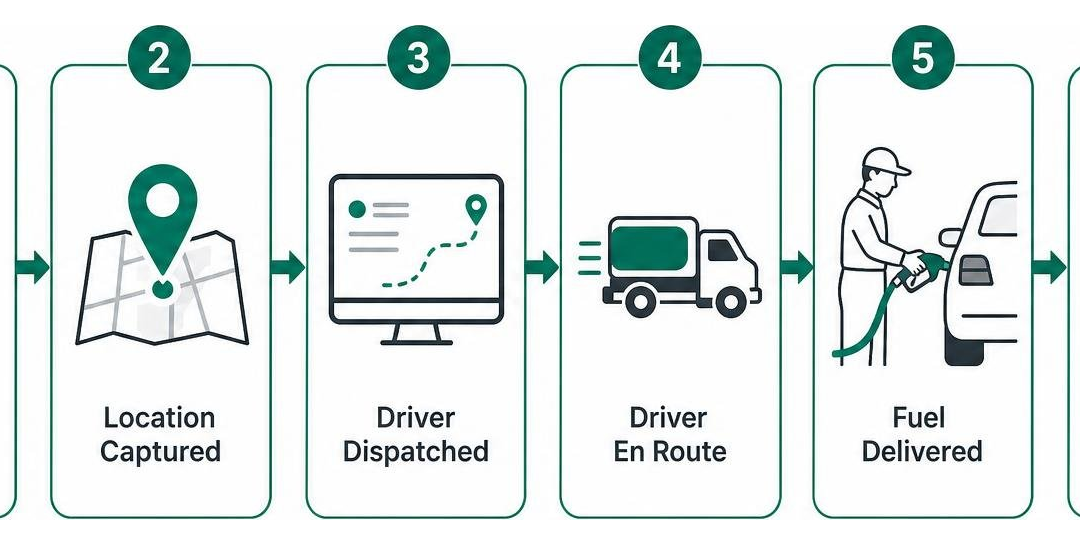
The overall workflow is straightforward: a user submits a delivery request, precise location coordinates are captured via GPS, and a specialized refueling truck is dispatched. When the delivery vehicle arrives, the service technician accesses the fuel fill cap or works with accessible fuel filler necks in open parking areas, then dispenses high-grade fuel directly into the fuel tank.
This direct-to-tank workflow eliminates unnecessary travel time, reduces engine wear caused by unnecessary idling during station trips, and streamlines accounting through automated digital receipts.
How the Mobile App Coordinates Refueling Operations
At the core of many modern on-demand diesel delivery operations is a digital ecosystem built on scheduling software, dispatch tools, and mobile-friendly customer communication. The software acts as a central command hub connecting the end user, automated dispatch software, and the delivery driver.
- Order Creation and Vehicle Profile: Users register their vehicle details in the mobile app or customer portal, including make, model, license plate number, fuel type such as diesel or gasoline, and a precise location pin.
- Automated Scheduling and Route Batching: The system batches orders into geographical clusters using smart route optimization. This ensures that driver travel time between delivery points is minimized.
- Dispatch and Status Updates: The customer receives automated real-time status updates when the driver is en route, when fueling begins, and when the process is completed.
- Contactless Execution: Refueling occurs safely without requiring the customer to physically meet the driver, provided the fuel door is accessible or unlocked and the site meets safety requirements.
By automating schedule generation and routing logic, modern mobile fuel systems maximize logistics efficiency while offering flexibility for individual orders, recurring fuel delivery for fleets, and scheduled commercial fueling.
Safety Standards, IoT Tech, and Quality Control
Transporting and dispensing combustible fuel in public or commercial spaces requires high-level safety precautions and sophisticated technology. Modern fuel delivery vehicles, such as specialized tankers built on robust commercial chassis, are engineered to reduce hazard risks and maintain safe fueling practices.
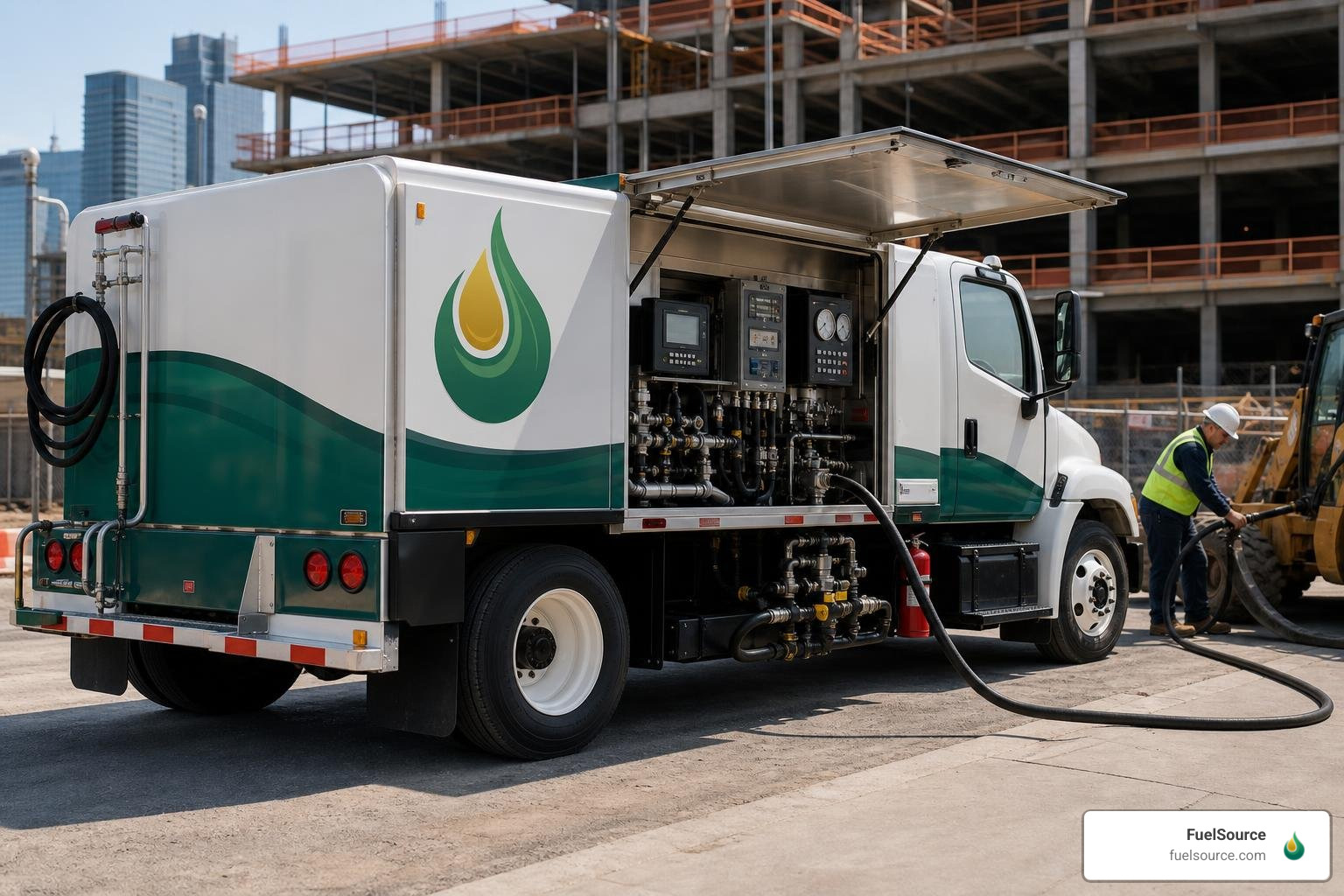
To maintain precise delivery standards and satisfy stringent environmental standards, mobile delivery units can incorporate high-end hardware:
- Dual-Compartment Tank Structures: Multi-fuel delivery trucks use separate compartments with dedicated pumps, meters, and delivery hoses. This split setup allows a single vehicle to carry more than one fuel type without cross-contamination.
- Smart Meters & Calibrated Dispensers: Electronic metering devices maintain high accuracy, giving customers transparency regarding exact gallons or liters delivered.
- Emergency Shut-Off Systems: Built-in emergency valves are designed to stop fuel flow quickly in the event of severe impacts, pressure drops, or other unsafe conditions.
- Anti-Static Grounding & Vapor Recovery Systems: Static bonding reels help prevent static spark ignition, while vapor recovery systems can capture fugitive emissions during discharge where required.
- Overfill Prevention Hardware: Anti-overflow probes and related safeguards help prevent overfill risks during bulk tank loading and delivery operations.
By combining IoT-enabled smart meters, anti-tamper valves, and real-time remote volume tracking, fuel delivery services safeguard product quality from depot loading to final tank drop.
Service Features, Pricing Structure, and Regional Coverage
Understanding the financial and operational structure of mobile fuel delivery is essential for both individual drivers and commercial project leaders. On-demand and scheduled fuel delivery models are designed around convenience, transparent rates, and strategic coverage.
Customers who utilize mobile refueling services benefit from predictable pricing structures tied to local fuel markets, delivery logistics, and service requirements. To explore how direct delivery transforms site productivity, read our complete guide on Why Diesel Fuel Delivery is a Total Game-Changer for Your Business.
Pricing and Service Plans for On-Demand Diesel Delivery
A major benefit of mobile fueling is its straightforward cost structure. Fuel is typically priced according to current market conditions, supplier costs, delivery volume, and account terms. Commercial customers often receive pricing based on usage patterns, delivery frequency, site access, and the fuel products required.
To cover logistics costs, delivery providers generally use clear pricing structures such as:
- On-Demand Pay-Per-Delivery: Customers pay for the exact fuel dispensed plus a delivery or service fee based on the order details and delivery location.
- Recurring Commercial Service Plans: Frequent users and fleet accounts can establish scheduled delivery programs that align with shift changes, equipment usage, or weekly site requirements.
Because the true savings come from reducing downtime, eliminating unnecessary station trips, and improving fuel accountability, mobile delivery can be especially valuable for companies operating multiple vehicles, generators, or pieces of off-road equipment.
Service Areas and Regional Availability
Mobile delivery services operate within defined operational boundaries to guarantee prompt service times and adhere to hazardous materials transit rules. Service zones are primarily concentrated in dense metropolitan hubs, suburban commercial districts, active industrial corridors, and construction-heavy regions.
When requesting on-demand or scheduled refueling, users must keep key parking and site guidelines in mind:
- Accessible Locations: Refueling vehicles require clear overhead clearance and open access. Services can be completed in open-air parking lots, outdoor commercial yards, driveway locations, and street-side spots.
- Restricted Hazards: Deliveries are prohibited inside enclosed underground parking structures, multi-level covered garages, or restricted spaces lacking proper ventilation and fire escape paths.
- Hazard Avoidance & Routing: Routing software directs delivery units around restricted tunnels, low bridges, and sensitive pedestrian zones to maintain compliance with transport safety authorities.
Commercial Fleet Fueling and Operational Logistics
While consumer mobile apps offer extreme convenience for individual drivers, the true financial power of direct-to-tank fuel delivery shines in B2B enterprise operations. Fleet managers operating delivery vans, heavy construction earthmovers, passenger buses, or stationary backup generators spend significant capital managing fuel supply lines.
Drivers in urban centers waste an estimated 10 to 30 minutes per petrol station visit—translating to 9 to 27 hours of wasted driver labor per vehicle every single year. Eliminating these unnecessary station stops yields immediate operational returns. Learn more about optimizing fleet efficiency with our Ultimate Guide to On-Site Fleet Fueling and DEF Delivery.
| Fueling Strategy | Travel & Downtime | Labor Overhead | Mileage Loss | Volume Tracking |
|---|---|---|---|---|
| Traditional Retail Station Trips | 15–30 mins lost per fill | Paid driver hourly wages wasted on transit | High “dead mileage” to/from pump | Manual paper receipts; higher human error |
| Direct On-Site Diesel Delivery | Zero minutes lost; filled while parked | 100% focused on active jobsites | Zero dead mileage added to odometers | Automated digital portal with IFTA reports |
B2B Solutions and Commercial Applications for Mobile Diesel Delivery
For enterprise commercial accounts, mobile diesel delivery is far more than a convenience service—it is a core supply chain strategy. Commercial fueling providers structure customized schedules around shift patterns, servicing assets overnight or during non-operational hours.
Commercial applications include:
- Construction Sites & Earthmoving Machinery: Direct refueling for excavators, bulldozers, wheel loaders, and cranes directly in the dirt eliminates costly jobsite downtime.
- Commercial Transport Fleets: Refueling box trucks, sprinters, and regional haulers while parked in central yards ensures drivers jump into fully fueled rigs at start-of-shift.
- Stationary Power & Emergency Backup: Direct diesel delivery to site generators, hospital back-up systems, and remote irrigation pumps guarantees uninterrupted power without emergency fuel runs.
- Automated Fuel Accounting: Enterprise fleet solutions, such as those provided by FuelSource across Metro Atlanta and North Georgia, give fleet managers access to integrated portals providing instant transaction logs, fuel burn metrics, and IFTA-compliant tax reporting. Explore our specialized Fleet Fueling Services to see how streamlined logging simplifies fleet management.
How On-Demand Fuel Platforms Generate Revenue and Overcome Challenges
Operating a mobile diesel fueling business requires balancing tight profit margins, high asset maintenance costs, and operational challenges:
- Revenue Streams: Mobile fuel platforms generate revenue through delivery service fees, monthly consumer subscription models, B2B commercial service contracts, and secondary car care add-ons (such as mobile waterless washes, oil changes, and battery jump-starts).
- Mitigating Dead Mileage: Transporting bulk fuel without dispensing product erodes fuel margins. Fleet dispatchers use automated demand mapping and batch routing to group nearby orders into localized delivery clusters.
- Inventory Shrinkage & Fuel Theft Control: Unaccounted fuel loss during storage transit is prevented through digital flow meters, anti-tamper fill valves, real-time IoT tank sensors, and automated volume reconciliation.
- Dynamic Price Volatility: Fuel market rates fluctuate constantly. Direct-delivery businesses hedge fuel procurement through bulk terminal supply agreements, ensuring consistent inventory access even during supply disruptions.
Frequently Asked Questions About CAFU Diesel Delivery and Mobile Refueling
How do mobile diesel delivery providers ensure safety and fuel quality?
Mobile fuel delivery providers adhere to strict environmental protection and transportation safety guidelines. Vehicles may carry compartmentalized tanks, emergency shut-off valves, static grounding wires, and emergency spill containment kits. Fuel is sourced from certified regional bulk fuel terminals and handled through controlled delivery procedures, helping ensure dependable fuel quality compared to traditional station-based fueling.
Is on-demand diesel delivery more expensive than traditional gas stations?
The delivered fuel price depends on market rates, delivery volume, location, account terms, and service frequency. For commercial business accounts, the operational service cost is often outweighed by savings gained from eliminating driver downtime, avoiding paid pump detour hours, and reducing dead mileage loss.
Can commercial fleets schedule recurring diesel fuel deliveries?
Yes, commercial account managers can establish custom recurring delivery schedules such as nightly, weekly, or specific weekend slots. Mobile delivery drivers arrive during scheduled off-hours, refuel all designated equipment or fleet vehicles directly in your yard, and upload automated digital delivery logs directly into your fuel accounting portal.
Conclusion
Mobile on-demand fuel distribution has proven to be a permanent, game-changing shift in energy logistics. Whether evaluated through consumer platforms or evaluated for commercial jobsite demands, bringing high-grade diesel directly to parked assets eliminates wasted time, cuts operational overhead, and offers ultimate scheduling convenience.
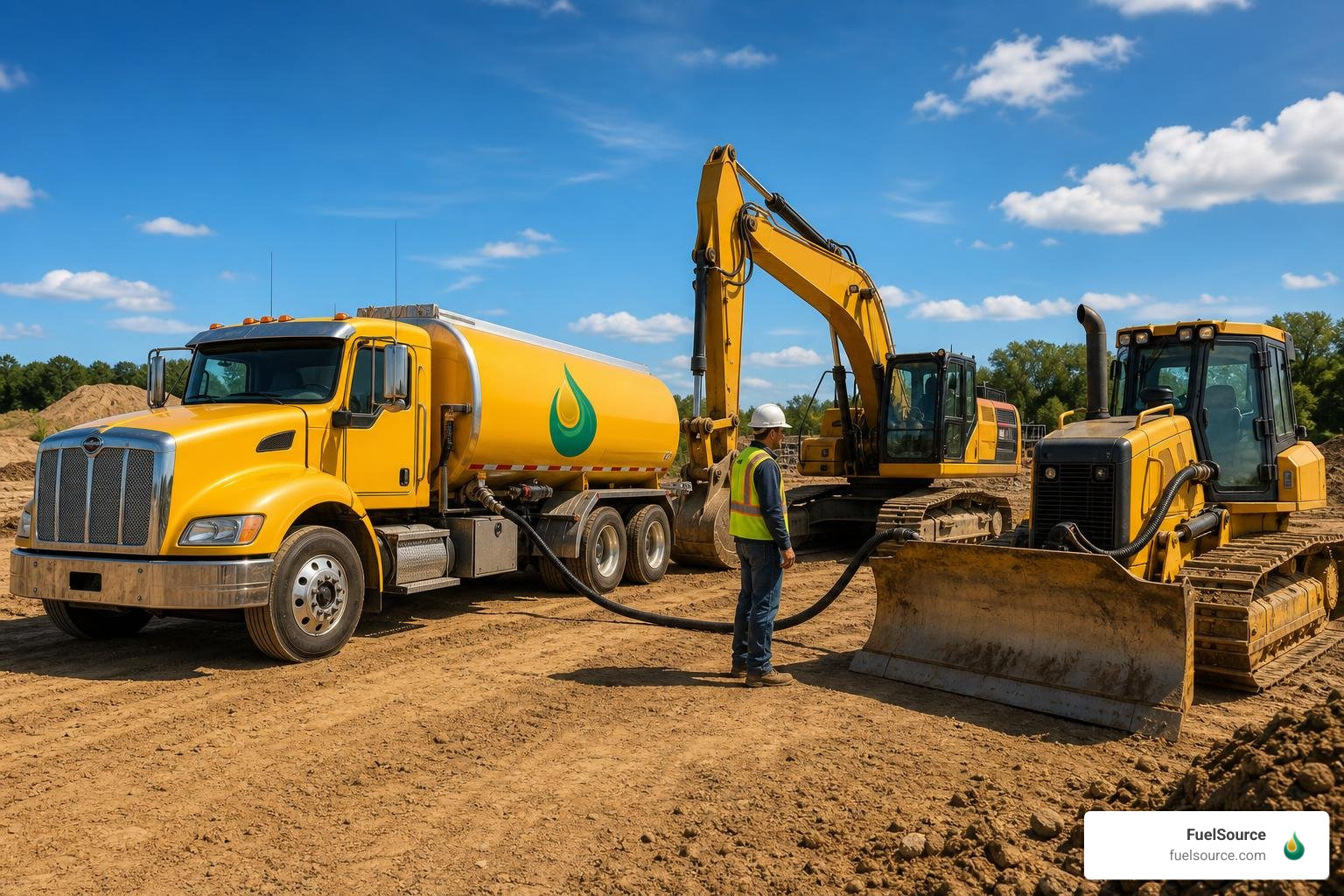
While mobile app ordering offers friction-free simplicity for individual motorists, managing large-scale commercial equipment demands deep operational experience, heavy-duty mobile equipment, and absolute reliability.
With over 30 years of industry experience, FuelSource is the premier mobile fuel delivery partner for fleets, construction sites, farming operations, and emergency power systems across Metro Atlanta and North Georgia—including Marietta, Decatur, Canton, and surrounding counties. Equipped with state-of-the-art delivery vehicles and an advanced customer portal providing instant transaction reporting and effortless IFTA tax tracking, we keep your equipment moving without lost station trips.
Ready to cut downtime and simplify your site fueling? Visit our Diesel Delivery Solutions page today to customize an on-site fueling plan built specifically around your business goals!