Why Fuel Delivery for Construction Sites Keeps Projects Moving
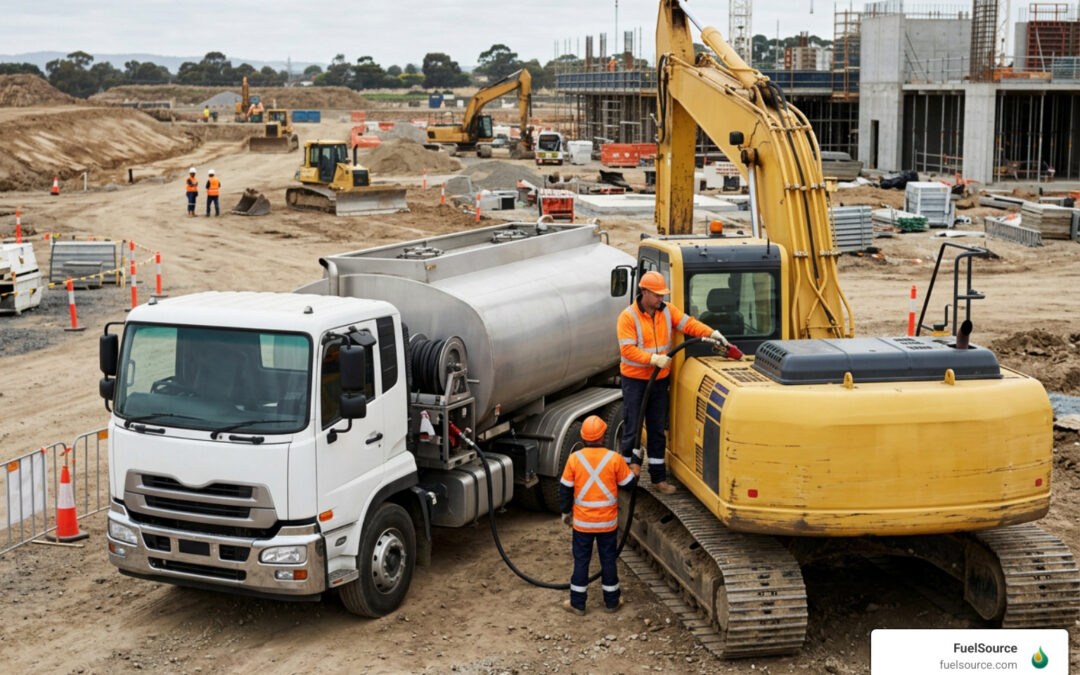
Fuel delivery for construction sites brings diesel, gasoline, DEF, and other essential fluids directly to equipment, generators, or approved on-site tanks. Instead of sending operators to a retail pump, a fuel provider schedules deliveries around the job so machines can start work fueled and ready.
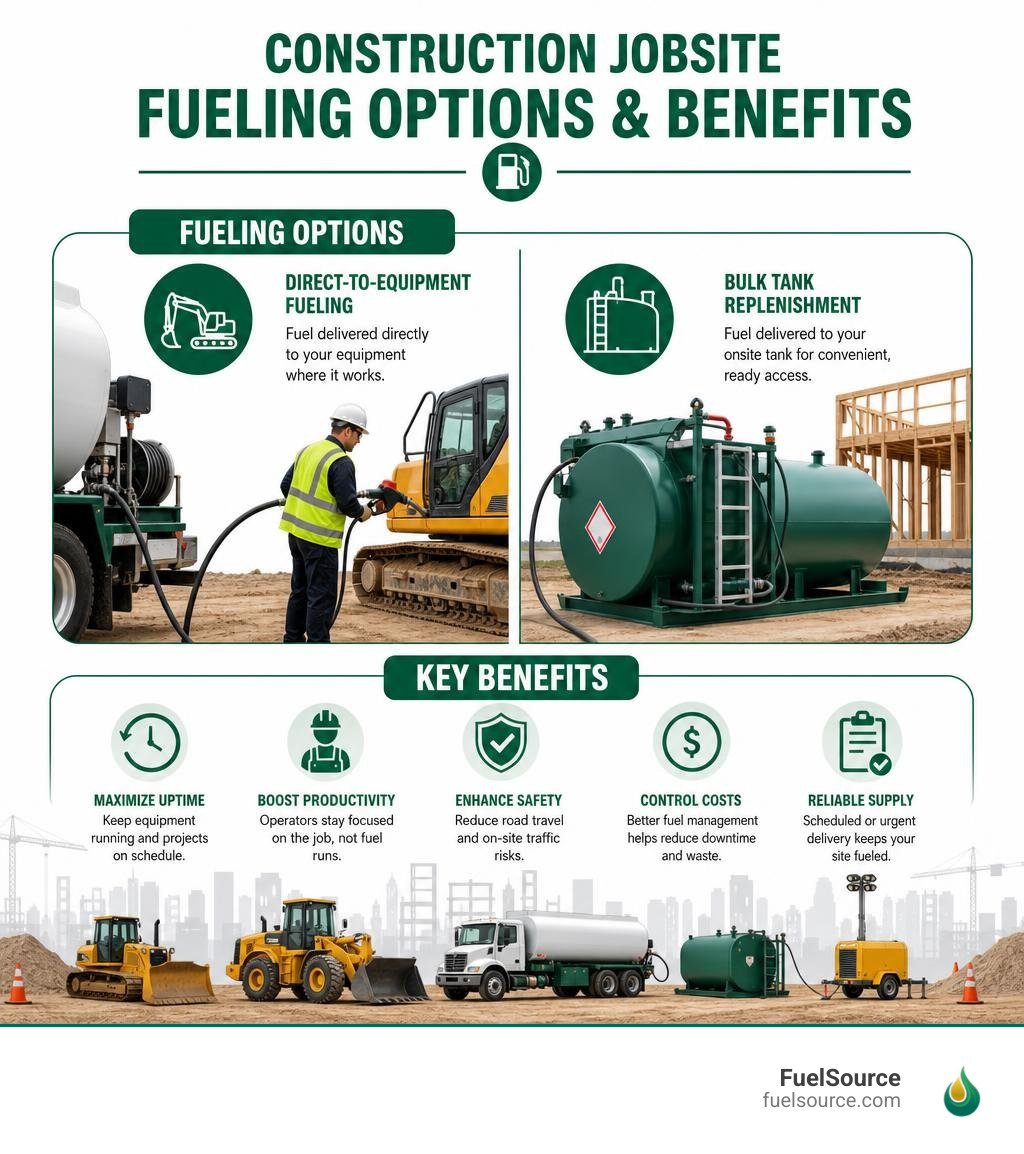
- Direct-to-equipment fueling: A delivery truck fuels machines such as excavators, loaders, dozers, and skid steers where they sit.
- Bulk tank replenishment: Fuel is delivered into a temporary or permanent jobsite storage tank.
- Planned or urgent service: Deliveries may be scheduled daily, weekly, after hours, or requested for an unexpected shortage.
For construction teams in Atlanta Metro and North Georgia, a fuel shortage can mean idle operators, delayed deliveries, and equipment that cannot complete a shift. The right fueling plan helps keep heavy equipment, on-road trucks, and backup generators supplied without turning refueling into another task for the crew.
I am Kyle Behnke, a business operations professional with FuelSource in the Atlanta area and a background in strategy from Emory University’s Goizueta Business School. I focus on practical fuel delivery for construction sites that helps contractors manage urgent needs, everyday fuel logistics, and jobsite uptime.
Types of Fuel Delivery for Construction Sites
When managing a jobsite across Fulton, Gwinnett, or Cobb County, no single fueling method fits every project stage. A civil grading phase heavy on earthmovers requires a different approach than a vertical commercial build relying on stationary generators and light towers. Professional fuel delivery for construction sites generally falls into two core operational methods: direct-to-equipment fueling (wet-hosing) and bulk tank replenishment.
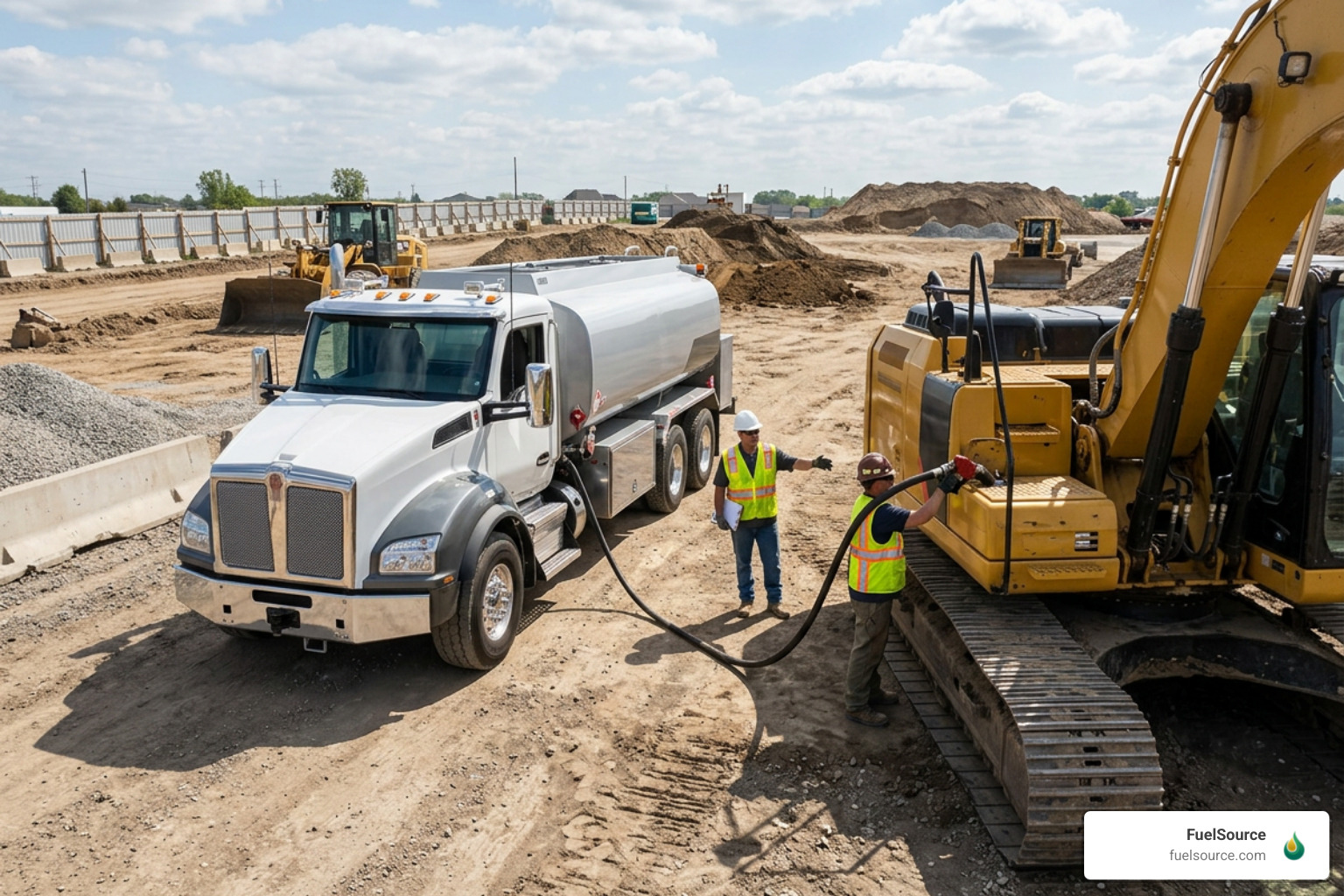
Understanding how these models function—and how they can be combined—allows project managers and superintendents to eliminate wasted labor and keep machinery running smoothly.
Direct-to-Equipment Wet-Hosing for Fuel Delivery for Construction Sites
Direct-to-equipment fueling, commonly referred to in the industry as wet-hosing or mobile refuel, involves a certified tank truck arriving directly at your jobsite to pump fuel straight into the tanks of individual machines. Whether your equipment is parked across a sprawling site in Cherokee County or staged along a highway corridor in Forsyth County, our drivers locate each piece of machinery and fill it up.
This approach offers distinct operational advantages:
- Zero Operator Downtime: Refueling typically takes place during off-hours, such as overnight or between shift changes. When your operators arrive at 6:00 AM, every excavator, bulldozer, skid steer, and loader is topped off and ready to turn the key.
- Elimination of Site Congestion: Without a central fueling point on site, you avoid morning queues of heavy machinery idling while waiting for fuel.
- Improved Jobsite Safety: Wet-hosing eliminates the need for site workers to haul fuel cans or operate transfer pumps manually, reducing physical strain and spill risks.
By shifting refueling to off-hours, contractors ensure maximum productivity throughout active working shifts. You can learn more about on-site fueling options to see how wet-hosing streamlines daily shift starts.
Bulk Storage Replenishment and Fuel Storage Tank Rentals
For mid-to-large-scale job sites with high daily fuel consumption, maintaining an on-site fuel supply is often the most cost-effective solution. Bulk storage replenishment involves setting up temporary, double-walled above-ground storage tanks on the jobsite, which are then filled on a recurring or keep-full schedule.
Jobsite tanks typically range in capacity from 500 gallons to 5,000 gallons. Modern temporary tank rentals come equipped with electric or solar-powered pumps, heavy-duty hoses, automatic shut-off nozzles, and integrated digital monitoring.
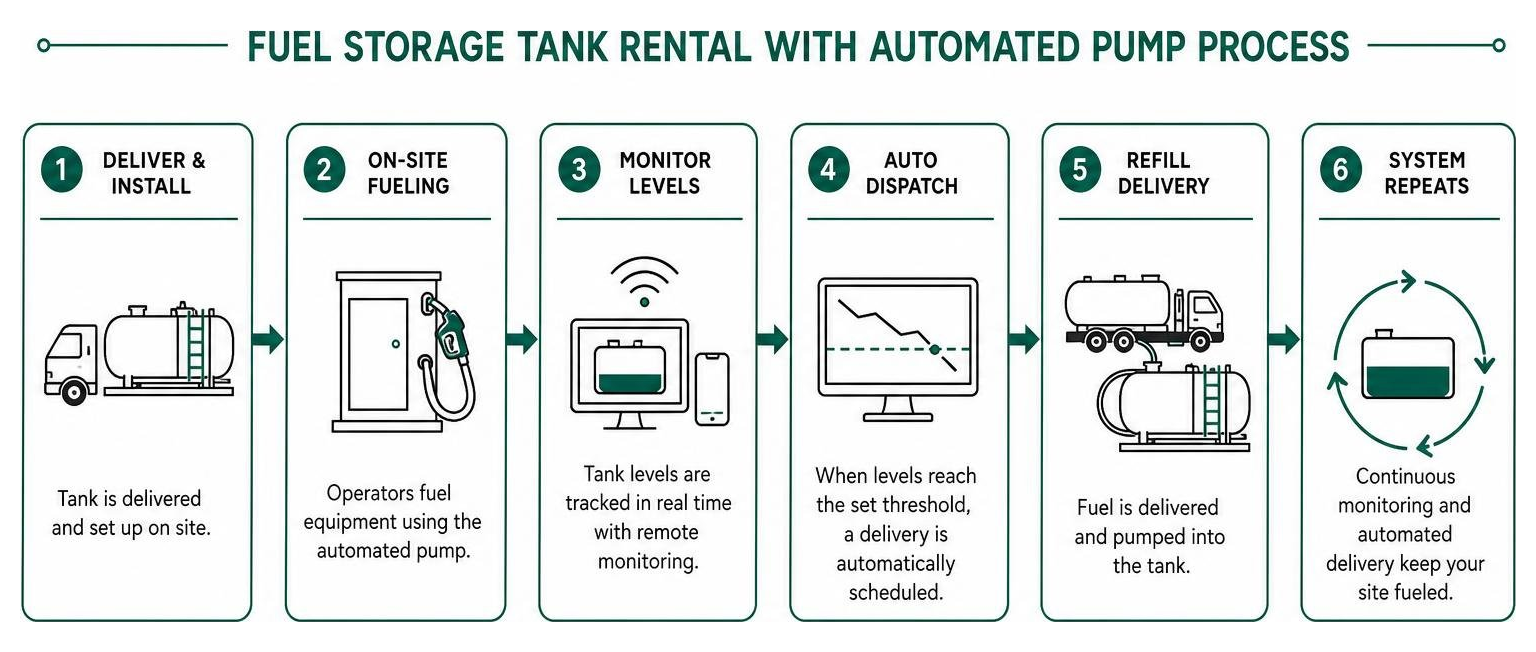
Key benefits of on-site tank rentals include:
- Instant Access: Equipment operators or site mechanics can top off machines during lunch breaks or between tasks without waiting for a mobile delivery truck.
- Remote Tank Monitoring: Advanced telemetry sensors track fuel levels in real time. We monitor your fuel consumption remotely and dispatch tank trucks automatically before your volume drops below critical thresholds.
- Environmental Safety & EPA Compliance: Double-walled steel construction provides built-in secondary containment, preventing fuel spills and ensuring compliance with federal and local regulations.
Choosing the appropriate tank capacity depends on site footprint, daily burn rate, and site access. Read our comprehensive guide to me choosing fuel storage tanks to determine the best setup for your project.
Essential Fuels and Fluids Delivered Directly to Job Sites
Modern construction jobsites operate diverse fleets of machinery, off-highway units, highway trucks, and auxiliary equipment. Managing multiple suppliers for off-road fuel, highway diesel, gasoline, and engine fluids adds administrative burden and operational risk. A turnkey delivery service brings all required petroleum products directly to your site in a single coordinated delivery.
| Fuel / Fluid Type | Tax Status | Primary Jobsite Applications | Key Operational Advantage |
|---|---|---|---|
| Off-Road Diesel (Dyed Ultra-Low Sulfur) | Tax-Exempt (No state/federal highway tax) | Excavators, dozers, cranes, pavers, generators, pumps | Lowers fuel costs for non-highway machinery |
| On-Road Diesel (Clear Ultra-Low Sulfur) | Standard Highway Tax | Dump trucks, flatbed haulers, pick-up fleets, mobile cranes | Full legal compliance for public road usage |
| Unleaded Gasoline | Standard Fuel Tax | Light trucks, utility vehicles, power tools, light towers | Convenient refueling for support equipment |
| Diesel Exhaust Fluid (DEF) | N/A | Tier 4 Final diesel engines (SCR equipped machinery) | Prevents engine derate and maintains regulatory emissions compliance |
| Heavy-Duty Lubricants | N/A | Engine crankcases, hydraulic systems, gearboxes, greasing | Extends component lifespan and reduces wear |
On-Road vs Off-Road Diesel Fuel Delivery for Construction Sites
One of the largest financial leakages on a job site occurs when contractors inadvertently use tax-paid on-road diesel in off-highway machinery. Standard highway diesel includes federal and state transportation taxes intended to maintain public roads. However, equipment that operates exclusively within jobsite boundaries—such as earthmovers, backhoes, and stationary generators—is legally exempt from these highway taxes.
Off-road diesel (dyed red for regulatory identification) is chemically identical to clear Ultra-Low Sulfur Diesel (ULSD) but carries significant tax savings per gallon. Utilizing dedicated off-road diesel for site machinery directly optimizes your operational expenditure. To explore how switching to tailored fuel delivery impacts your bottom line, review why diesel fuel delivery transforms jobsite efficiency.
Delivering DEF and Heavy-Duty Lubricants to Heavy Equipment
Selective Catalytic Reduction (SCR) technology is standard across modern Tier 4 Final heavy machinery. To remain operable and comply with EPA clean air standards, these engines require Diesel Exhaust Fluid (DEF). If a machine runs out of DEF, its engine control module automatically derates engine power or prevents operation altogether, bringing work to an abrupt halt.
Delivering DEF alongside your diesel supply ensures your fleet remains fully operational. DEF requires careful handling; contamination by dust or improper storage containers can damage delicate SCR dosing systems. We supply high-purity DEF in jugs, totes, or bulk transfers directly into machine DEF tanks using dedicated, contamination-free equipment.
In addition to DEF, heavy construction equipment demands regular fluid top-offs, including heavy-duty motor oils, hydraulic fluids, gear oils, and greases. Sourcing your fluids alongside fuel deliveries streamlines procurement and prevents unexpected machinery downtime. Check out our detailed article everything you need to know about DEF for heavy equipment and discover our specialized options for DEF Fluid Delivery.
Financial and Operational Advantages of On-Site Fueling
Outsourcing fuel logistics to a dedicated provider is far more than a convenience—it is a strategic decision that drives substantial productivity gains and cost reductions.

Consider the traditional alternative: driving support trucks or heavy equipment off-site to commercial fuel stations, or sending employees with transfer tanks in pick-ups.
- Direct Labor Savings: If an operator spends just 30 minutes per shift traveling to fill up or waiting around a jobsite transfer tank, that equals 2.5 hours of lost billable labor per worker every week. Multiplying that across a crew of 15 operators reveals hundreds of wasted hours each month.
- Elimination of Equipment Wear: Moving heavy equipment off-site or driving work trucks back and forth adds unnecessary hours to machine hour meters and puts extra wear on undercarriages and tires.
- Elimination of Fuel Theft and Fuel Card Misuse: Fueling directly into equipment tanks or secure on-site storage eliminates non-jobsite fueling, fuel card slippage, and unauthorized fills.
- Accurate Job-Costing: Automated delivery invoices match exact gallonage to specific pieces of equipment or job codes. This granular tracking simplifies tax filing and internal reporting.
Customized Delivery Schedules and Emergency Refueling Services
Construction projects in North Georgia operate on tight schedules influenced by weather, inspections, and trade coordination. A fueling program must adapt flexibly to changing project phases. Whether your project in Decatur, Canton, or Marietta requires daily overnight wet-hosing or weekly bulk tank fills, flexible delivery scheduling accommodates your workflow.
Unexpected situations inevitably arise—a concrete pour running late into the night, prolonged storm cleanup, or a sudden surge in generator power demand. During critical moments, reliable dispatch services provide rapid-response emergency deliveries.
Having access to 24/7 emergency dispatch ensures that backup power generators and earthmoving gear never stall mid-operation. Read our panic-free Atlanta emergency fuel guide to learn how rapid dispatch keeps projects moving under tight deadlines.
Environmental Compliance, Safety, and Regional Coverage
Handling bulk fuel on active construction sites involves strict regulatory oversight. Federal Spill Prevention, Control, and Countermeasure (SPCC) rules require proper containment, monitoring, and spill response protocols.
Professional fuel delivery providers maintain rigorous environmental standards:
- Certified Equipment: Delivery trucks are equipped with calibrated meters, high-grade hoses, dry-break couplers, and automatic shut-off nozzles.
- Spill Containment Protocols: Technicians carry onboard spill kits and secondary containment mats during every fuel transfer.
- Double-Walled Steel Tanks: Jobsite storage tank rentals meet EPA standards for secondary containment, eliminating single-wall risk.
- Regulatory Knowledge: Alignment with local county safety regulations ensures sites comply with environmental requirements. Learn more about regional environmental guidelines through the Rockdale County General Services Department.
Our primary service coverage spans across the entire Metro Atlanta region and North Georgia, including Bartow, Cherokee, Forsyth, Paulding, Cobb, Gwinnett, Barrow, Douglas, Fulton, DeKalb, Rockdale, Walton, Newton, Henry, Fayette, Spalding, and Coweta counties.
Industries and Project Types That Benefit Most
On-site fuel management provides high value across various heavy industry sectors:
- Heavy Highway & Civil Infrastructure: Large-scale road widening, grading, and bridge construction requiring continuous fuel for excavators, scrapers, and compactors.
- Commercial Site Development: Industrial park and retail construction utilizing multi-machine fleets working tight deadlines.
- Residential Subdivisions: Homebuilders and earthmovers working across suburban tracts throughout Gwinnett and Cherokee counties.
- Utility & Pipeline Contractors: Trenching and utility pipe installation moving across linear corridors.
- Landscaping & Site Maintenance: Fleet operations requiring steady gasoline, diesel, and fluid replenishments.
To review additional site setups and tailored programs, read our article on the best fuel delivery services for construction sites.
Frequently Asked Questions About Jobsite Fuel Delivery
What fuel storage rental options are available for temporary construction sites?
Temporary jobsite fuel storage options range from 500-gallon skid tanks to multi-thousand-gallon double-walled storage units. Tanks come equipped with electric, solar, or hand-operated fuel pumps, heavy-duty hoses, and level gauges. These units provide turn-key fuel management for projects of any size while maintaining EPA compliance for practical equipment setups.
How do emergency or same-day fuel deliveries work during unexpected shortages?
When an unexpected fuel shortage occurs, rapid response dispatch connects your jobsite superintendent with an emergency delivery truck. Services operate 24 hours a day, 7 days a week, allowing fuel transport directly to your site during off-hours, weekends, or shift breaks so active construction never grinds to a halt.
Can gasoline, DEF, and heavy-duty lubricants be delivered alongside diesel fuel?
Yes. Multi-compartment delivery trucks can transport off-road diesel, clear diesel, unleaded gasoline, bulk DEF, and boxed or drummed heavy-duty lubricants in a single site visit. Sourcing all essential fluids on one invoice simplifies accounting, saves time, and lowers delivery fees.
Conclusion
Managing jobsite fuel logistics manually drains valuable labor hours, increases project costs, and introduces unnecessary equipment downtime. Partnering with a dedicated service for fuel delivery for construction sites ensures your machinery, support trucks, and generators remain continuously fueled and ready to perform.
At FuelSource, we leverage over 30 years of industry experience, state-of-the-art delivery equipment, and an advanced online customer portal that delivers real-time fueling reports and simplified IFTA tracking. Whether you operate a heavy civil job site in Fulton County or manage a commercial fleet across Metro Atlanta and North Georgia, our direct-to-equipment wet-hosing, bulk tank rentals, and DEF deliveries ensure your operations never run on empty.
Ready to streamline your site operations and boost productivity? Contact FuelSource today or visit our page on gasoline delivery in Buford GA to schedule your customized jobsite fueling program!