Why On-Site Fueling Is a Game-Changer for Fleet Operations
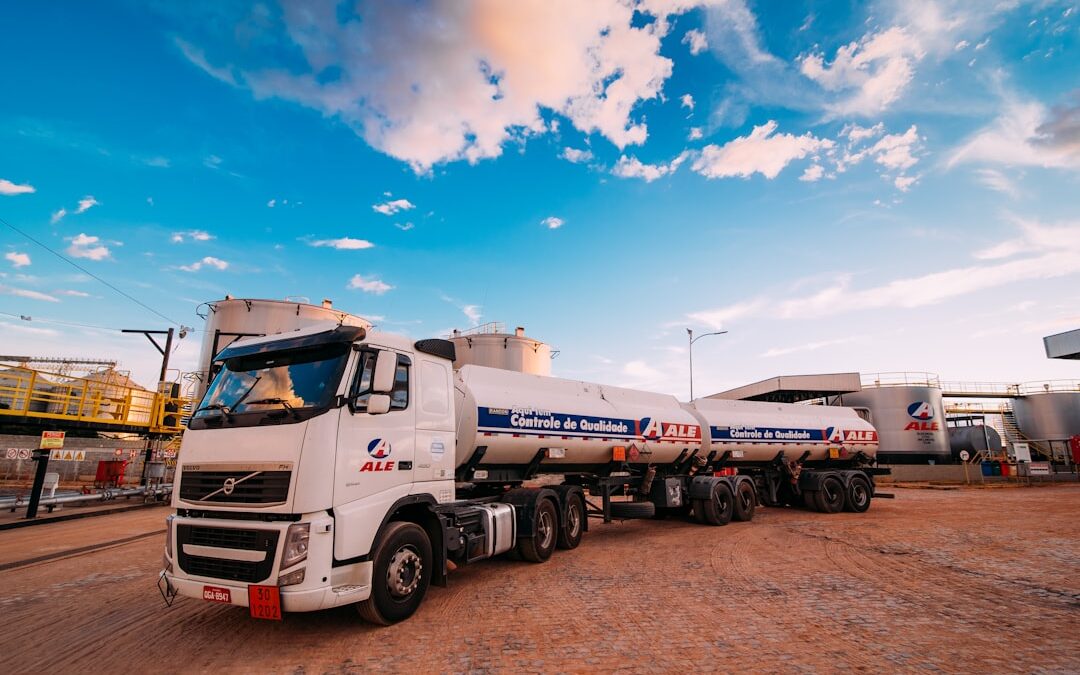
On-site fueling delivers diesel, gasoline, and DEF directly to your vehicles, equipment, or tanks — without your drivers ever leaving the yard or jobsite.
Here’s the short answer on what it offers:
- Saves time — eliminates 20+ operator hours per week spent at retail stations
- Cuts fuel costs — bulk pricing saves 20-24 cents per gallon vs. retail
- Protects revenue — keeps drivers on the clock doing productive work
- Improves safety — fueling happens in a controlled environment by trained operators
- Simplifies compliance — digital records support IFTA reporting and accounting
- Works 24/7 — fuel arrives during off-hours so trucks are ready at shift start
Every truck in your fleet has one job: generate revenue. The moment a driver leaves the yard to fill up at a retail pump, that truck stops earning. A single fueling stop eats roughly 30 minutes — 10 minutes off-route and 20 minutes at the pump. Multiply that across a fleet of 10, 20, or 50 vehicles, and the lost productivity adds up fast.
For fleet managers and business owners in construction, logistics, agriculture, and landscaping — especially across the Atlanta metro and North Georgia — those lost hours mean missed deliveries, idle equipment, and real dollars walking out the door.
On-site fueling solves this by flipping the model: instead of your drivers going to the fuel, the fuel comes to your drivers.
I’m Kyle Behnke, a business strategy and operations professional working with FuelSource Inc. in the Atlanta area. My work focuses on helping fleets across Georgia eliminate the hidden costs of traditional fueling through smarter on-site fueling programs. In this guide, I’ll walk you through exactly how it works, what it costs, and how to find the right provider for your operation.
Learn more about on-site fueling:
What On-Site Fueling Is and How It Works
At its core, on-site fueling (also known as mobile fueling or “wet hosing”) is a service where a fuel truck arrives at your location to pump fuel directly into your vehicles or equipment. It eliminates the middleman of the gas station and the liability of maintaining your own massive storage tanks.
Whether you have a fleet of delivery vans in Marietta, heavy bulldozers on a jobsite in Cherokee County, or backup generators in a downtown Atlanta parking garage, the process is designed to be invisible to your daily operations. We arrive when your equipment is idle, usually overnight or between shifts, so your team can hit the ground running the next morning.

What on-site fueling means for fleets
For a fleet manager, on-site fueling means peace of mind. Instead of worrying if your drivers will start their day with a quarter-tank and a “detour” to the nearest station, you know every vehicle is route-ready. This is a contactless, highly efficient method of on-site fuel delivery that recovers lost labor. When your vehicles are fueled during off-use hours, you effectively buy back the time your drivers used to spend standing at a pump.
Step-by-step: how on-site fueling works in real operations
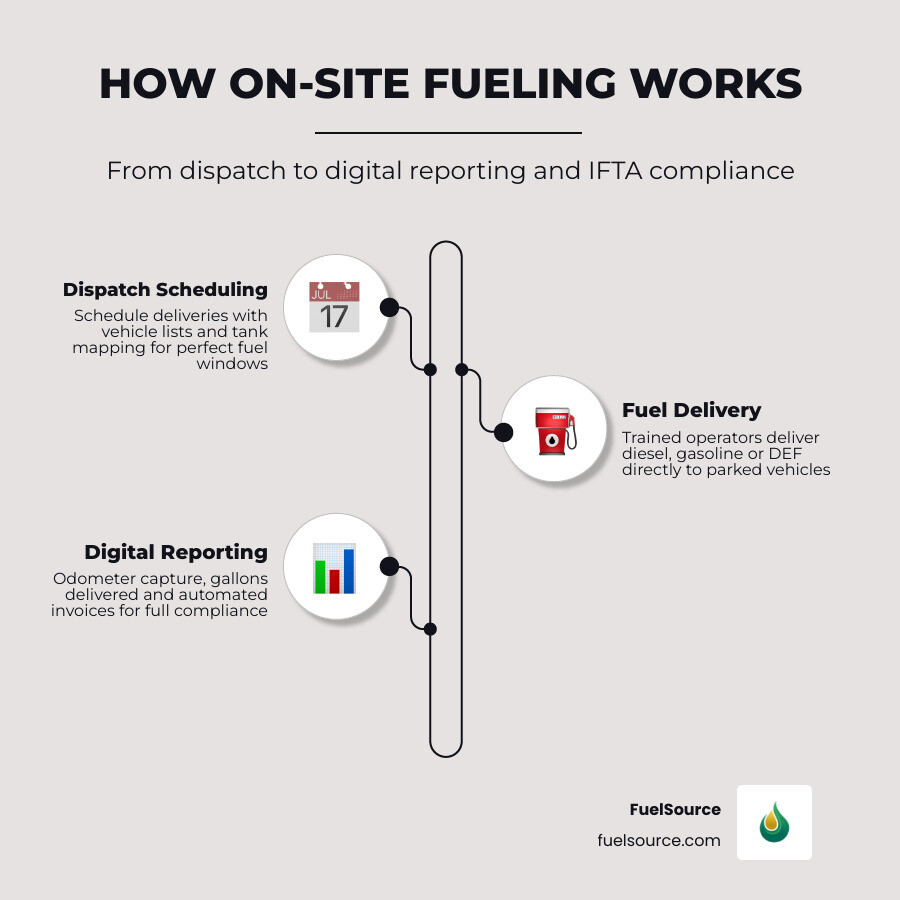
- Dispatch & Scheduling: We work with you to establish a fuel window—typically at night or during the weekend—when your fleet is parked.
- Asset Mapping: We create a list of your vehicles, often using barcode decals on each fuel tank to ensure the right fuel goes into the right asset.
- The Delivery: Our state-of-the-art trucks arrive and fuel each vehicle directly. We capture data like the odometer reading and the exact gallons delivered.
- DEF Top-Offs: We don’t just stop at diesel; we can replenish Diesel Exhaust Fluid (DEF) at the same time.
- Completion Reports: Before your drivers even arrive for work, an automated report is sent to your inbox, detailing exactly how much fuel was used by every single truck.
What fuels and add-on services are typically available
A professional on-site fueling program isn’t limited to just one product. To keep a modern operation moving, we provide:
- On-road Diesel: For your transport and logistics trucks.
- Off-road Diesel: For construction equipment and tractors (often at a lower tax rate).
- Unleaded Gasoline: For light-duty trucks and vans.
- DEF: Essential for modern diesel engines to meet emissions standards. Learn more about DEF fluid delivery.
- Generator Fueling: Ensuring business continuity for data centers or facilities during power outages.
Why On-Site Fueling Saves Time, Labor, and Revenue
The “hidden cost” of fueling is one of the biggest drains on a company’s bottom line. When a driver is at a gas station, you aren’t just paying for the fuel—you’re paying for the driver’s wages, the benefits, the wear and tear on the truck, and the lost opportunity to be making a delivery or finishing a job.
| Feature | Retail Fueling | On-Site Fueling |
|---|---|---|
| Time Spent | 30+ Minutes per trip | 0 Minutes (Done during downtime) |
| Labor Cost | High (Driver is on the clock) | Zero (Fueling happens during off-hours) |
| Route Efficiency | Low (Requires detours) | High (Vehicles start shifts full) |
| Admin Burden | High (Managing receipts/cards) | Low (Automated digital reports) |
| Theft Risk | Moderate (Fuel card abuse) | Minimal (Asset-level tracking) |
The hidden cost of station fueling
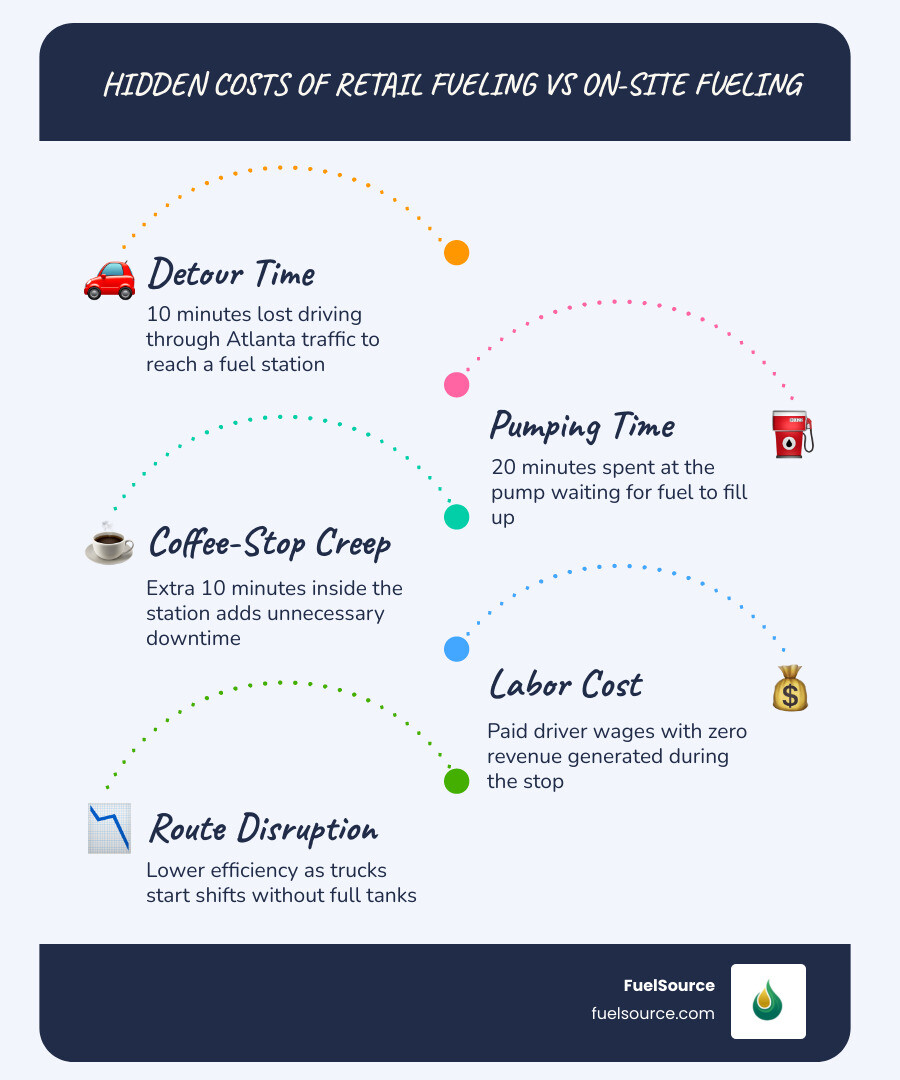
Think about the standard 30-minute refueling trip. It’s rarely just 30 minutes. It’s the 10-minute detour through Atlanta traffic, the 20 minutes spent pumping, and the inevitable “coffee-stop creep” where a driver spends an extra 10 minutes inside the station. This is paid driver time that generates zero revenue. By bringing the fuel to the yard, you eliminate these detours entirely.
The numbers behind productivity gains
The data is clear: on-site fueling can save a fleet an average of 20 to 24 cents per gallon compared to retail stations. But the labor savings are even more impressive. Research shows that on-site fueling can save at least 20 operator hours per week for a mid-sized fleet.
Assuming a labor rate of $14/hour (though many Georgia drivers earn significantly more), you’re looking at nearly $1,000 in annual labor savings per driver. When you factor in lost revenue—estimated at $1.66 to $3.33 per gallon due to reduced productivity—the switch becomes a no-brainer. Stop driving to the pump and let the fuel come to you.
Where savings come from beyond price per gallon
Beyond the pump price, you save through:
- Bulk Pricing: Purchasing in larger quantities often secures better rates.
- Reduced Wear and Tear: Fewer miles driven specifically for fuel means less maintenance over time.
- Simplified Billing: Instead of chasing 50 different fuel receipts, you get one consolidated invoice.
- Revenue Uptime: Your trucks stay on their routes, maximizing their Hours of Service (HOS).
Why waiting for fuel is so last year—modern businesses prioritize uptime.
Safety, Compliance, and Fuel Control Benefits
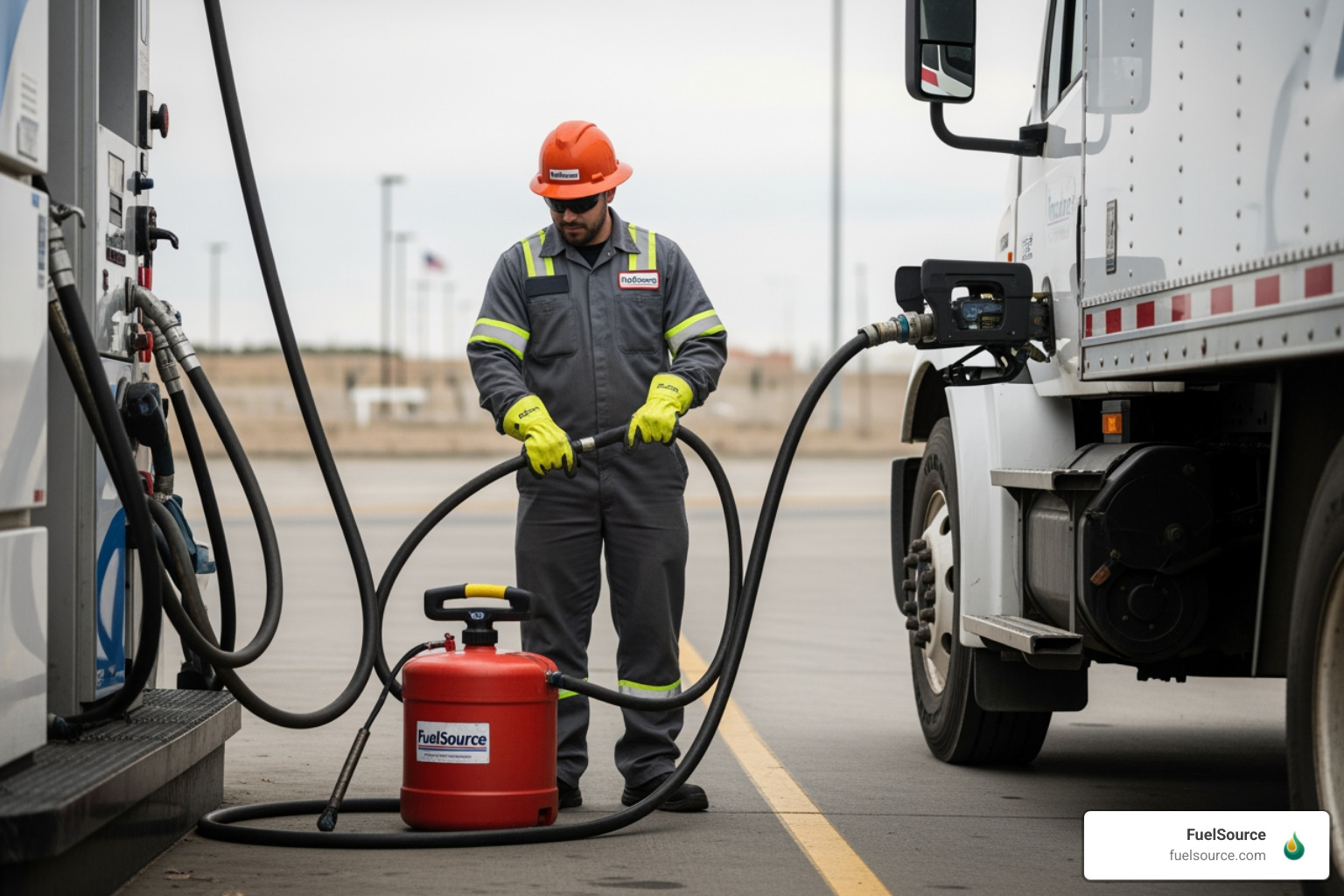
Beyond the financial gains, on-site fueling significantly improves the safety and oversight of your operation. Fueling at a crowded retail station increases the risk of minor accidents, slips, and spills. In contrast, mobile fueling occurs in a controlled environment.
How on-site fueling reduces safety risks
Our operators are highly trained professionals who follow rigorous safety protocols. Because fueling happens at your site during off-hours, there is less congestion and a lower risk of accidents involving other motorists. We use specialized equipment, including spill kits and advanced hose procedures, to ensure every drop goes exactly where it’s supposed to.
Compliance, reporting, and accurate fuel tracking
One of the biggest headaches for fleet managers is IFTA (International Fuel Tax Agreement) reporting. On-site fueling simplifies this by providing digital delivery records that track gallons by specific asset. You can access these reports through a customer portal, exporting data into Excel or PDF for your accounting team. This level of detail helps eliminate “fuel shrinkage”-the polite term for fuel theft or unauthorized use that often happens with retail fuel cards. Find the fastest fuel delivery near you right now to start tightening your fuel controls.
How mobile fueling improves control without adding infrastructure burden
Maintaining your own “yard tanks” comes with a mountain of environmental regulations, insurance costs, and maintenance requirements. Mobile fueling gives you the benefits of having fuel on-site without the liability of owning the tanks. It’s an outsourced solution that provides total digital accountability.
Sustainability and Best-Fit Industries for On-Site Fueling
In May 2026, sustainability isn’t just a buzzword; it’s a requirement for many government and corporate contracts. On-site fueling supports these goals by reducing the total miles your fleet travels and minimizing idling time at stations.
How on-site fueling supports environmental goals
By eliminating the “out-of-route” miles driven just to find a gas station, you reduce your fleet’s overall carbon footprint. Furthermore, advanced fuel management systems allow you to track emissions more accurately, providing the data needed for environmental compliance and ESG reporting.
Industries that benefit most from on-site fueling
While any business with a vehicle can benefit, certain industries see a massive ROI:
- Construction: Fueling a bulldozer without leaving the dirt keeps projects on schedule.
- Logistics & Trucking: Maximizing HOS for long-haul and regional deliveries.
- Landscaping: Keeping your mowers moving during the busy Georgia growing season.
- Agriculture: Ensuring tractors are fueled in the field during harvest.
- Emergency Services: Keeping generators and response vehicles ready 24/7.
When on-site fueling makes the most sense
If your fleet returns to a central yard daily, or if you operate across multiple shifts where downtime is non-existent, on-site fueling is the optimal choice. It’s also a lifesaver for remote jobsites in places like Bartow or Cherokee County where the nearest diesel station might be miles away.
How to Choose the Right On-Site Fueling Provider
Not all fuel providers are created equal. When you’re looking for a partner in the Atlanta Metro or North Georgia area, you need someone who understands the local terrain and the specific needs of Georgia businesses.
Questions to ask before signing an agreement
- What is your service area? Do they cover your specific locations in Cobb, Gwinnett, or Fulton County?
- What are your lead times? Can they handle emergency requests or storm prep?
- What technology do you use? Do they offer a customer portal with real-time reporting and IFTA-ready data?
- Do you provide DEF? Managing AdBlue/DEF can be a pain; your provider should handle it seamlessly.
Technology and service features that matter most
The best providers offer more than just fuel; they offer data. Look for features like barcode scanning for assets, which ensures 100% accuracy in billing. Real-time visibility into your fuel spend allows you to spot inefficiencies before they become expensive problems. The ultimate guide to gasoline delivery services and mobile DEF suppliers can help you narrow down the technical requirements for your fleet.
Local considerations for Georgia businesses
In North Georgia, weather can disrupt even the best-laid plans. You need a partner with a proven track record of 24/7 reliability, even during ice storms or hurricane-related supply crunches. Local expertise means knowing the shortcuts through Atlanta traffic to ensure the fuel truck arrives at your yard exactly when promised.
Frequently Asked Questions About On-Site Fueling
Is on-site fueling better than retail stations for most fleets?
Yes. For almost any fleet with more than five vehicles, the labor savings alone outweigh any minor difference in pump price. When you add the convenience of morning readiness and the safety of a controlled environment, it’s the superior choice.
Can on-site fueling handle diesel, gasoline, and DEF in one program?
Absolutely. Modern multi-compartment fuel trucks can deliver on-road diesel, off-road diesel, unleaded gasoline, and DEF all in a single visit. This is perfect for mixed fleets that include everything from heavy machinery to passenger vans.
How quickly can a business get started with on-site fueling?
The setup is faster than you might think. After a quick site review and asset list creation, most businesses can have their first delivery scheduled within a week.
Conclusion
Switching to on-site fueling is one of the fastest ways to improve your fleet’s ROI. By eliminating the 30-minute station trip, you’re not just saving fuel—you’re buying back the time your business needs to grow. From the busy streets of Decatur to the construction sites of Forsyth County, FuelSource provides the 30+ years of experience and state-of-the-art equipment needed to keep Georgia moving.
Ready to reclaim those 20+ operator hours every week?