Key Characteristics of a Top-Tier Mobile DEF Supplier
Selecting the right mobile def supplier requires looking far beyond basic transport logistics. When choosing a delivery partner, fleet managers typically encounter three primary types of market participants: dedicated service providers, wholesale distributors, and equipment manufacturers. While equipment manufacturers focus on building specialized carts and transfer skids, and traditional distributors focus on high-volume logistics, a true full-service mobile partner integrates both aspects—providing both high-grade fluid and the precise technology required to dispense it without contamination.
A top-tier mobile def supplier maintains rigid operational protocols to protect your Selective Catalytic Reduction (SCR) engines. Diesel Exhaust Fluid (DEF) purity is non-negotiable; even trace amounts of minerals, dust, or non-compliant metals can poison an SCR catalyst, leading to costly engine derating, sudden downtime, and expensive repairs. Top-tier providers ensure that all dispensing hardware strictly adheres to ISO 22241 standards for fluid handling, using dedicated hoses, stainless steel or approved composite fittings, and closed-loop transfer mechanics.
To explore more about how structured delivery networks keep commercial fleets compliant and operational, read Everything You Need to Know About Mobile DEF Suppliers.
Evaluating Equipment Specifications of a Mobile DEF Supplier
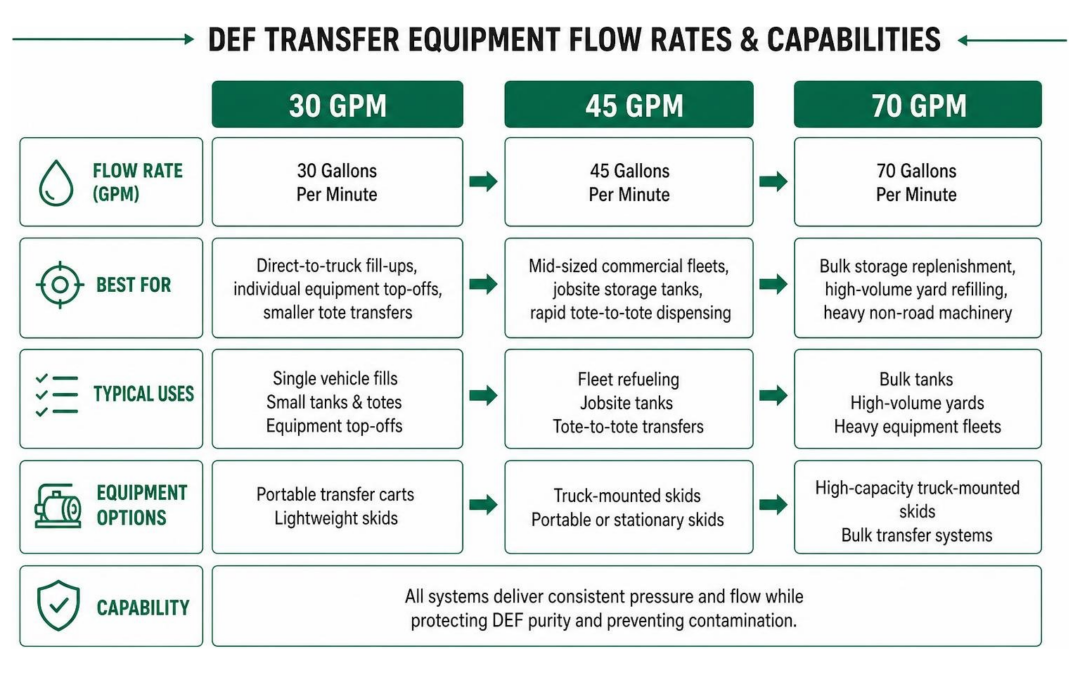
The hardware your delivery partner uses directly impacts how quickly and safely your equipment gets back to work. Mobile transfer equipment relies on dedicated pumping systems mounted on delivery trucks, box trucks, or portable skid platforms. When evaluating a supplier’s field capabilities, pay close attention to system flow rates, which generally fall into three standard categories:
- 30 GPM (Gallons Per Minute): Ideal for direct-to-truck fill-ups, individual equipment top-offs, and smaller tote transfers where precise control is required.
- 45 GPM: A versatile middle-ground standard for mid-sized commercial fleets, jobsite storage tanks, and rapid tote-to-tote dispensing.
- 70 GPM: High-capacity transfer systems designed for bulk storage replenishment, high-volume yard refilling, and rapid turnaround of heavy non-road machinery.
Whether utilizing portable transfer carts or heavy-duty truck-mounted skids, the pumping system must deliver consistent fluid pressure while protecting fluid integrity from ambient debris and harsh environmental elements.
Purity Standards and ISO Compliance in DEF Handling
Diesel Exhaust Fluid is a precise mixture of 32.5% high-purity synthetic urea and 67.5% deionized water. Because urea solution reacts aggressively with standard carbon steel, zinc, copper, and aluminum, strict compliance with the ISO 22241-3 standard is mandatory for all fluid-contact components.
When fluid passes through a supplier’s transfer pump, internal seals, meters, and nozzles must be manufactured exclusively from approved materials such as high-grade stainless steel or specialized fluoropolymers. To understand bulk storage dynamics and fluid protection standards, learn about Everything You Need to Know About Bulk DEF Delivery Near You.
Overcoming Mobile DEF Logistics and Operational Challenges
Managing DEF replenishment across dynamic jobsites and sprawling commercial yards comes with distinct operational hurdles. Historically, fleets were forced to rely on rigid “tote exchange” programs—swapping out an entire 275- or 330-gallon tote whenever it ran low, regardless of how much fluid remained inside. This created wasted space, unnecessary freight fees, and partial fluid loss.
Modern mobile delivery solves this by offering partial deliveries and wet-hose dispensing directly into vehicle tanks or existing totes. Fleet managers no longer need to manage heavy tote logistics, coordinate heavy equipment for moves, or monitor unpredictable fluid degradation over extended storage windows.
By integrating DEF delivery directly alongside scheduled fleet fuel delivery programs, operations run smoothly without interrupting drivers, delaying routes, or overburdening site mechanics. Discover how combining fluid services simplifies yard management in The Fleet Manager’s Guide to Mobile DEF and Fuel Management.
How Mobile DEF Supplier Logistics Streamline On-Site Fleet Delivery
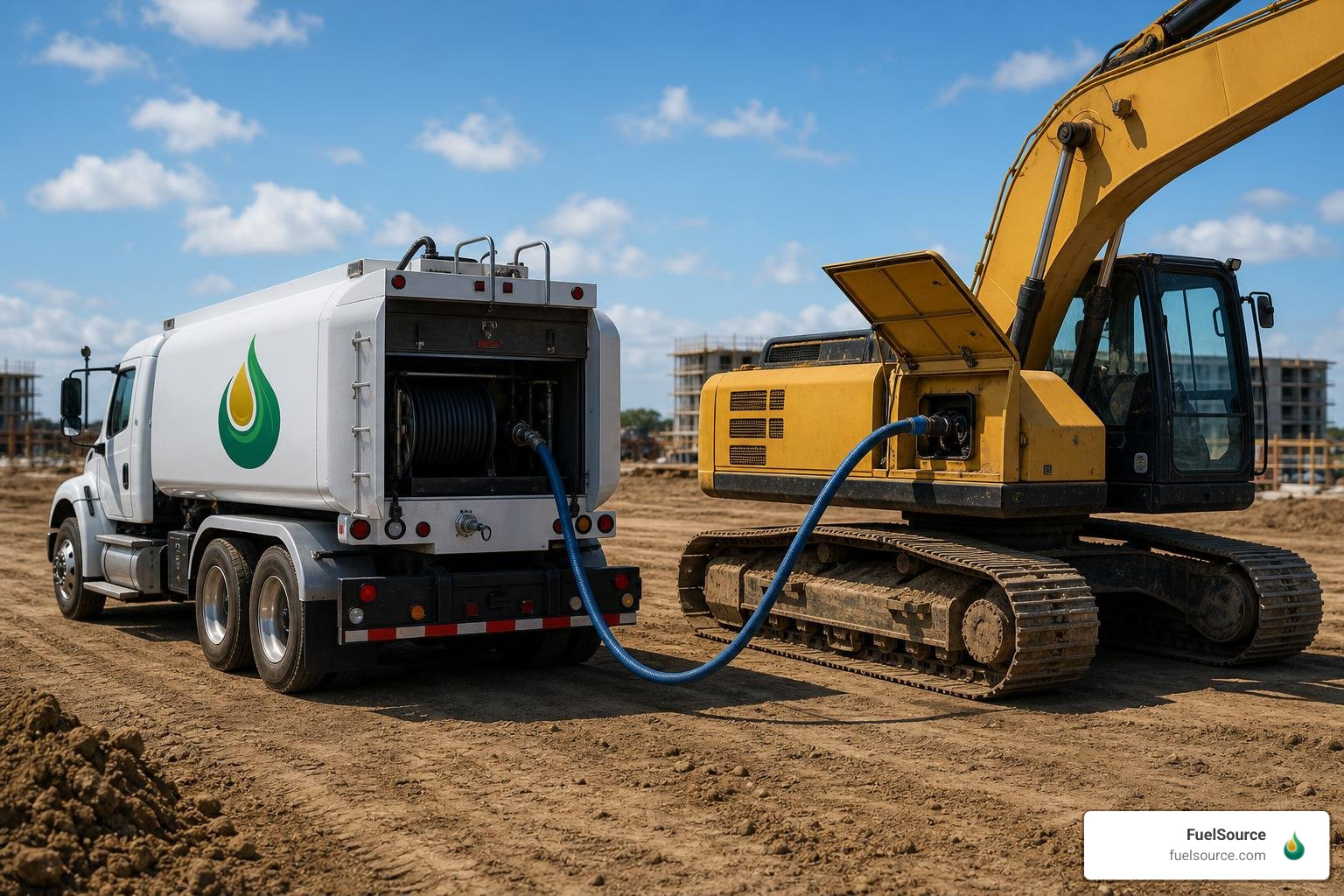
For non-road machinery operating on active construction sites, agricultural fields, or quarrying operations, moving equipment to a central refueling location wastes billable engine hours and burns unnecessary diesel. On-site mobile delivery brings the fluid directly to where the machine is parked.
This level of jobber flexibility provides distinct advantages for jobsite superintendents:
- Reduced Downtime: Machinery is refueled and topped off with DEF during scheduled yard hours or shift changes.
- Eliminated Spill Risks: Mobile technicians handle specialized transfer equipment, preventing field spills and improper funnel use.
- Tailored Quantities: You pay only for the exact gallons pumped into your machinery or bulk tanks, avoiding unused tote rentals.
To see how combined fuel delivery for fleets and DEF delivery improves daily jobsite productivity, refer to The Essential Guide to On-Site Fleet Fueling and DEF Delivery.
Technology Integration and Hazardous Environment Safety
Safety standards are paramount when operating mobile equipment around fuel farms, chemical storage sites, and heavy machinery operations. Modern delivery vehicles and field technicians use industrial data capture systems to track every gallon pumped in real time.
In environments classified under ATEX directive or IECEx Zone 1/21 standards (where explosive gas or dust atmospheres may occur during normal operations), electronic tracking devices must be intrinsically safe. Devices like the M8 intrinsically safe 5G smartphone are purpose-built for these volatile zones (rated Ex ic IIC T4 Gc / Ex ic IIIC T135°C Dc). Featuring a field-replaceable 9600mAh battery that delivers over 24 hours of continuous operational runtime, these rugged devices allow technicians to capture barcode data, verify fluid purity certificates, and log digital delivery receipts directly in hazardous work environments without creating an ignition hazard.
Sustainability, Device Recycling, and Field Connectivity
Maintaining high operational efficiency requires balancing efficient bulk logistics with responsible equipment practices. Comparing delivery approaches helps show how bulk refilling reduces administrative overhead and plastic packaging waste:
| Operation Metric | Traditional Tote Exchange | Mobile Bulk / Partial DEF Transfer |
|---|---|---|
| Delivery Flexibility | Full container swap only | Variable gallons filled to exact tank level |
| Fluid Purity Control | Risk during manual hookups | Sealed, dedicated transfer hardware |
| Site Footprint | Requires dedicated tote storage yards | Zero extra storage; direct-to-tank filling |
| Packaging Waste | High (plastic totes, pallet disposal) | Zero (bulk delivery into existing tanks) |
| Labor Requirement | High (site crews handle heavy tote moves) | Zero (supplier technician performs delivery) |
Beyond fluid delivery mechanics, modern supply chains are incorporating circular economy principles. Enterprise field technology suppliers, such as Skyrise Group with over 15 years of industry experience in B2B recycling and refurbishment, assist industrial logistics firms in sourcing quality-certified refurbished devices. Utilizing refurbished field hardware significantly reduces electronic waste while supporting cost-effective, sustainable field logistics.
Similarly, keeping remote drivers, agricultural operators, and delivery fleets connected requires robust field telecommunications networks. Federal initiatives like the Lifeline program (supported by carriers such as Defy Mobile) connect eligible consumers with free government phones, reliable coverage, and monthly savings. Businesses looking to expand telecommunications access within their remote logistics communities can even participate as Master Agents, building local support networks while ensuring operational connectivity across rural service routes.
Frequently Asked Questions about Mobile DEF Services
What flow rates are standard for mobile DEF transfer systems?
The standard flow rates for commercial mobile DEF transfer systems are 30 GPM, 45 GPM, and 70 GPM. A 30 GPM rate is typically used for direct vehicle refueling and small tank top-offs, while 45 GPM and 70 GPM systems excel at rapid tote-to-tote transfers, bulk storage refilling, and servicing large commercial fleets quickly.
How do mobile DEF suppliers maintain fluid purity during delivery?
A professional mobile def supplier ensures fluid purity by strictly adhering to ISO 22241-3 standards. This includes using closed-loop delivery hardware, dedicated transfer pumps, sealed hoses, and fluid-contact components made exclusively of high-grade stainless steel or approved fluoropolymers to prevent chemical contamination during transit and pumping.
What certifications are required for mobile devices in DEF handling zones?
For electronic devices used near fuel storage, chemical sites, or explosive environments, ATEX and IECEx Zone 1/21 certifications are critical. Intrinsically safe devices—such as ATEX-rated 5G smartphones—ensure that digital data logging, route management, and delivery verification occur safely without spark hazards in classified zones.
Streamline Your Operations with Dependable Mobile DEF Services
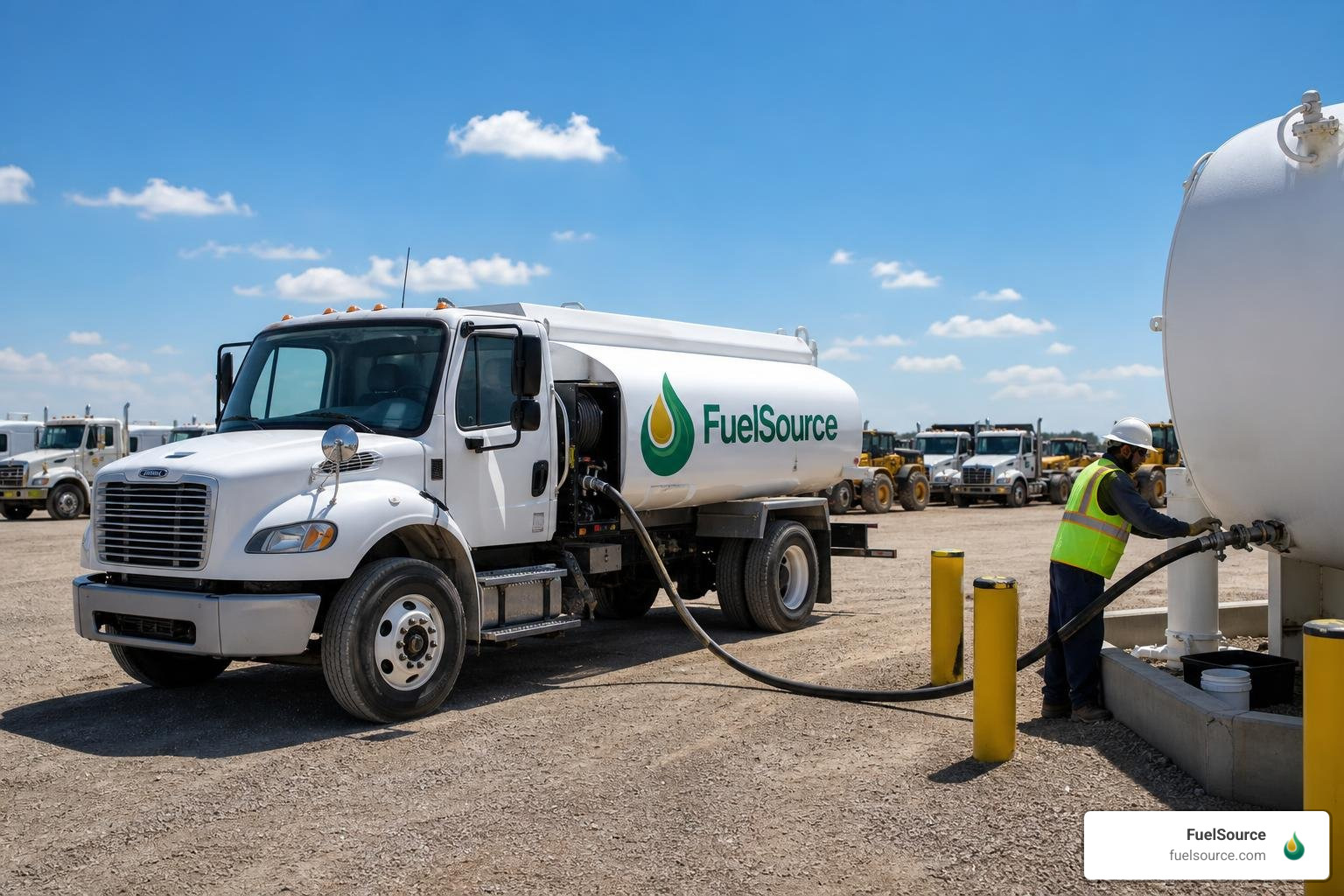
Managing your fleet’s fluid demands shouldn’t cause operational headaches or unexpected equipment downtime. Partnering with a skilled, highly equipped mobile def supplier ensures your diesel vehicles, non-road machinery, and emergency backup systems remain compliant, clean, and continuously operational.
With over 30 years of experience serving Atlanta Metro, North Georgia, and surrounding communities – including Cobb, Fulton, DeKalb, Gwinnett, Cherokee, Forsyth, and Paulding counties – FuelSource delivers top-tier diesel, gasoline, and ISO-compliant DEF directly to your jobsite or yard. Our state-of-the-art transfer trucks and real-time customer portal give fleet managers complete visibility with instant delivery reports and detailed IFTA tracking.
For operations spread across Marietta, Decatur, Canton, Fulton County, Bartow County, Douglas County, Rockdale County, Walton County, Newton County, Henry County, Fayette County, Spalding County, Coweta County, and nearby Georgia service areas, consistent fleet fuel delivery and DEF support can reduce last-minute dispatch problems. Scheduled on-site service helps keep route trucks, construction assets, landscaping crews, farm equipment, and standby generators ready without pulling people away from their core work.
Ready to protect your SCR engines, reduce administrative stress, and optimize your on-site fueling schedule? Streamline Your Fleet Refueling with DEF Delivery Services and see how our tailored fleet fuel delivery services keep your business moving forward.