Understanding the Mechanics of Mobile Fleet Fueling
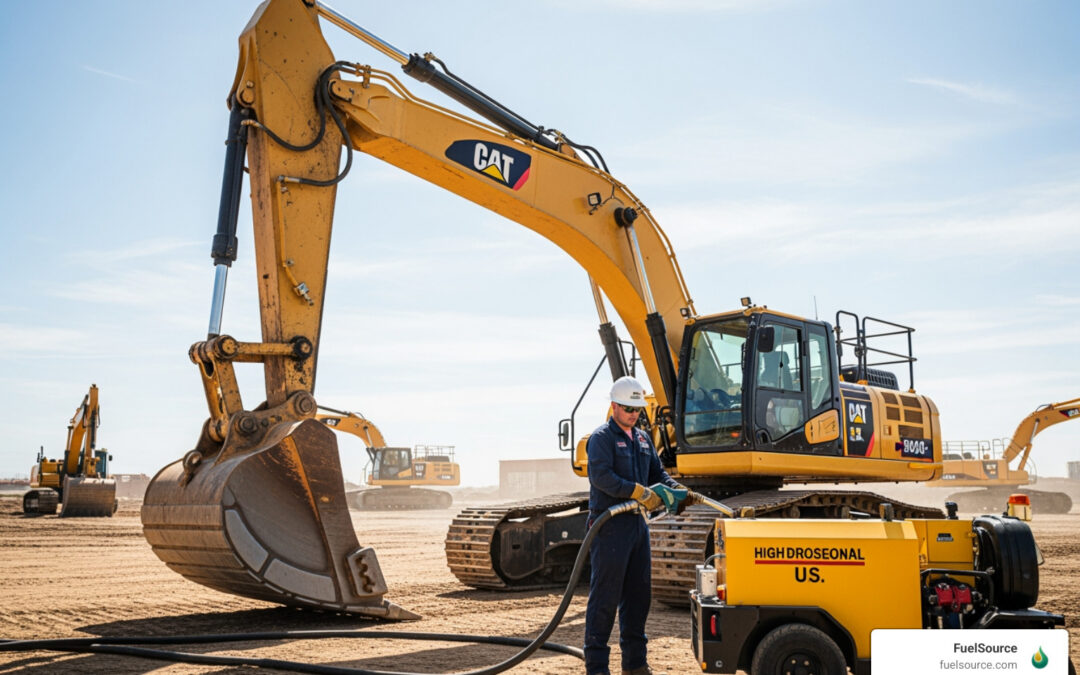
To understand mobile fleet fueling, you have to look at it as a specialized logistics service. Often referred to in the industry as “wet hosing” or “direct truck-to-truck fueling,” this process involves a specialized fuel delivery vehicle—often called a “bobtail”—traveling to your yard, job site, or parking facility.
Instead of your drivers starting their day by searching for a gas station that can accommodate a Class 8 truck, our technicians arrive while your fleet is stationary. We pull up to each individual asset and pump fuel directly into the tank. This direct-to-equipment approach ensures that every vehicle in your line-up is topped off and ready to roll the moment your drivers clock in.
The History and Evolution of On-Site Fueling
The shift toward mobile fleet fueling wasn’t just about convenience; it was driven by necessity and regulation. Back in the late 1990s, the EPA enacted strict regulations regarding underground storage tanks (USTs). These rules required expensive upgrades, including advanced leak detection and double-wall containment.
For many businesses in Georgia, the cost of maintaining these tanks became a financial burden. Rather than investing tens of thousands of dollars into aging infrastructure, many fleet managers opted to remove their tanks entirely. This created a massive demand for a scalable, mobile solution. Today, mobile fueling has evolved from a niche service for heavy construction into a tech-heavy industry that supports everything from local delivery vans in Decatur to massive logistics hubs in Fulton County.
How Mobile Fleet Fueling Works for Modern Businesses
Modern mobile fleet fueling is a far cry from just “a guy with a hose.” It is a data-driven operation. When we partner with a new business, the process follows a streamlined path:
- Account Setup & Mapping: We identify every asset that needs fuel and establish a delivery window (usually at night).
- Asset Identification: We often use barcode scanning or RFID tags on each vehicle’s fuel port.
- Automated Dispensing: Our technicians scan the asset, which authorizes the pump. This ensures the right fuel (like on-road diesel vs. off-road dyed diesel) goes into the right tank.
- Electronic Invoicing: As soon as the nozzle is hung up, the data is synced. You get a digital ticket showing exactly how many gallons went into which truck, along with a GPS timestamp.
This level of precision is why waiting for fuel is so last year. It replaces messy paper receipts with a clean, digital audit trail.
The Economic Impact: Saving Time, Money, and the Environment
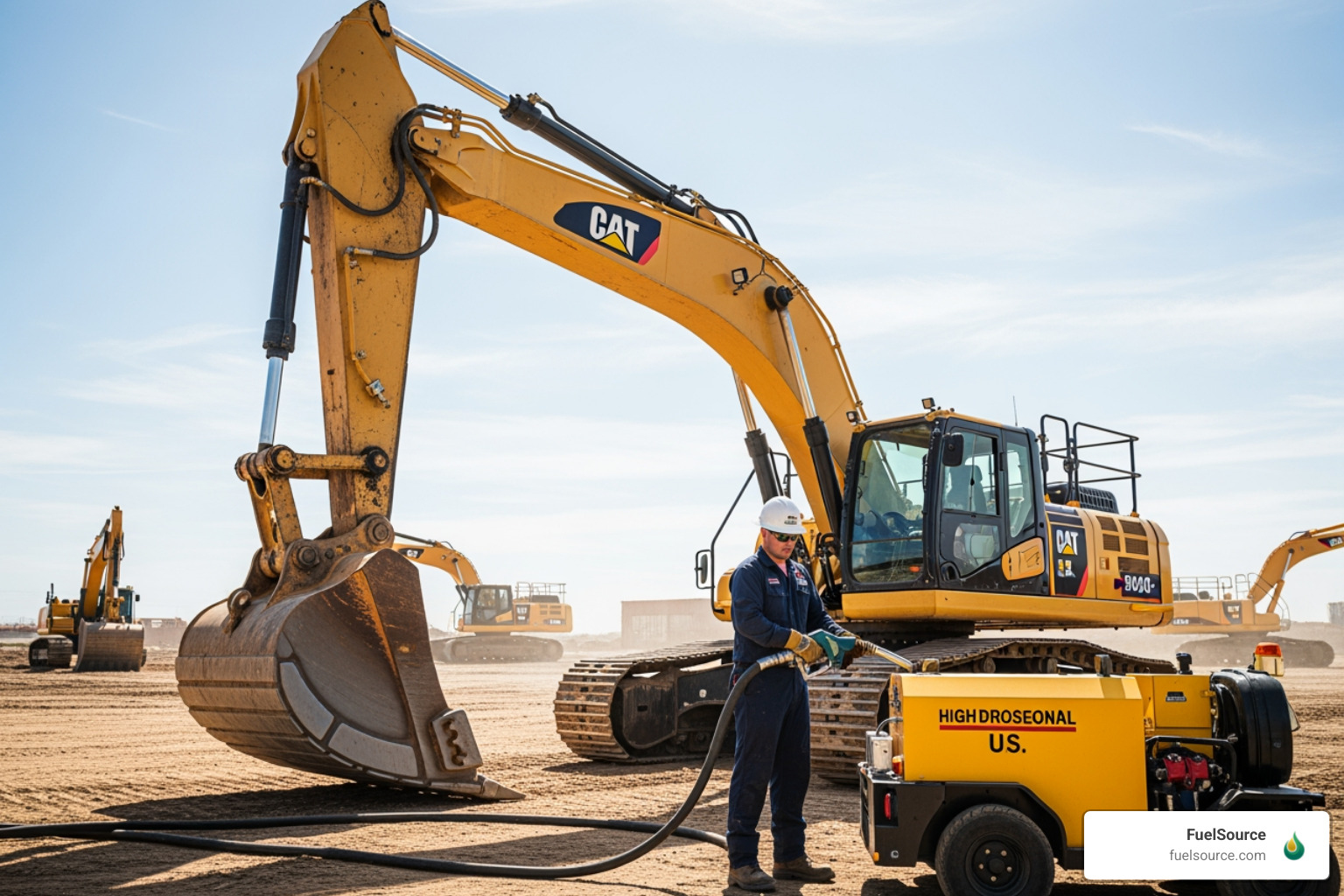
The true cost of fuel isn’t just the price per gallon displayed on a marquee. It’s the “hidden” cost of the labor and equipment wear-and-tear required to get that fuel. When a driver takes a 20-minute detour to a station, you aren’t just paying for the fuel; you’re paying for 20 minutes of wages, 20 minutes of vehicle depreciation, and the risk of accidents in a crowded retail lot.
Maximizing Efficiency with Mobile Fleet Fueling
Businesses that switch to mobile fleet fueling typically see a 5–10% reduction in total fuel-related expenses. In high-volume operations, like those we serve in the Atlanta Metro area, the savings can be even more dramatic. Some logistics directors have reported saving upwards of $1,000 per day by eliminating non-revenue-producing “pump time.”
By recouping those 61 wasted hours per vehicle annually, your drivers stay focused on their routes. This boost in driver productivity is a major reason why Atlanta fuel delivery services are the lifeblood of Georgia business. Every minute saved at a gas station is a minute that can be spent making another delivery or finishing a job site task.
Reducing Carbon Footprints and Emissions
The environmental impact of traditional refueling is often overlooked. If a diesel truck travels just a few miles out of its way to find a station, it’s idling and burning fuel needlessly. Over a year, those “refueling trips” contribute roughly 587 lbs of CO2 per vehicle.
With the transportation sector responsible for 28% of U.S. greenhouse gas emissions, fleet fuel delivery offers a simple way to go greener. By bringing the fuel to a central location, we optimize the “last mile” of fuel delivery, significantly reducing the total miles driven by heavy vehicles just to stay powered.
Essential Services: Diesel, Gasoline, and DEF Delivery
A comprehensive mobile fleet fueling program covers more than just standard diesel. Modern engines require a variety of fluids to stay compliant and operational.
- On-Road Diesel: For your highway-legal trucks and vans.
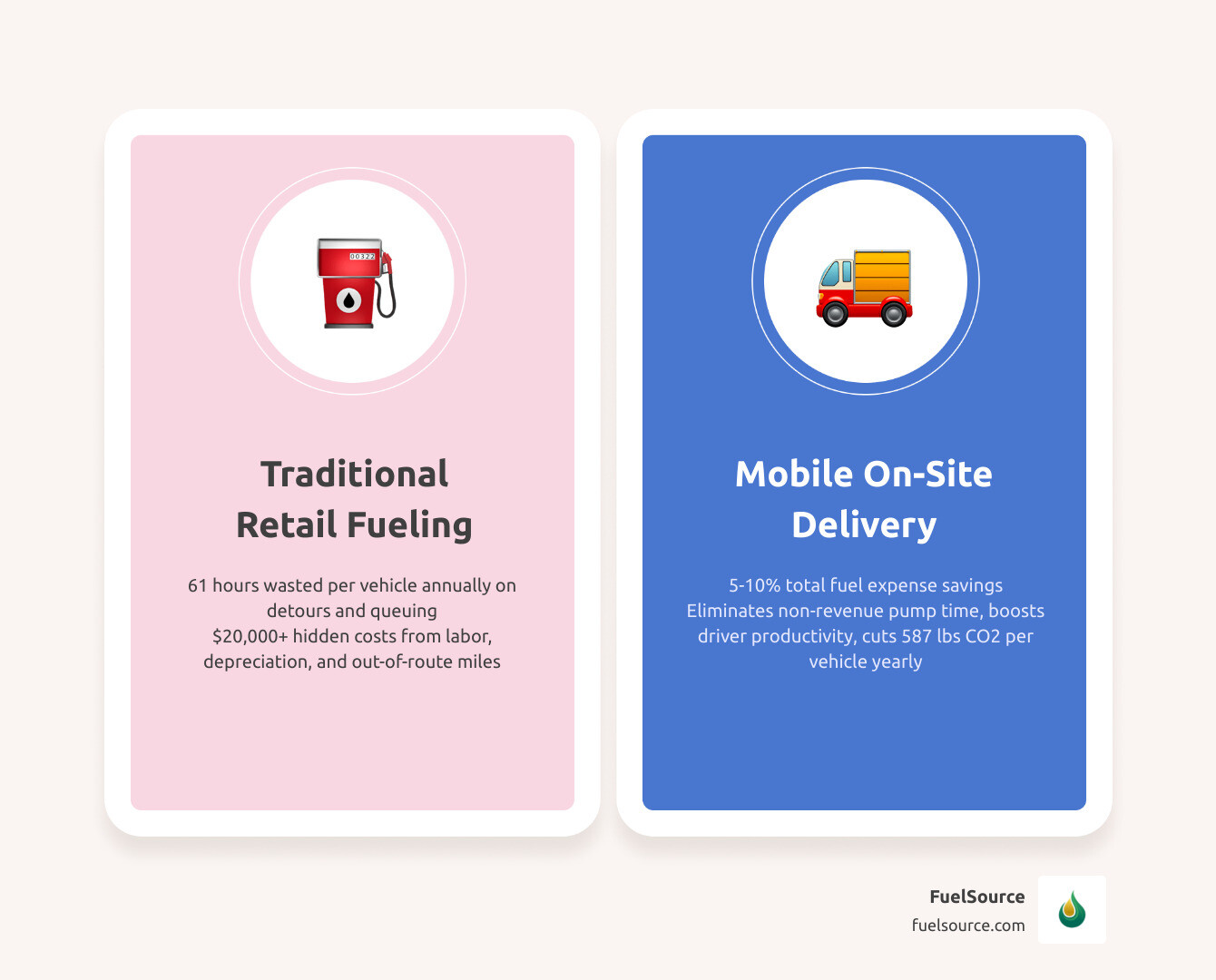
- Off-Road (Dyed) Diesel: For construction equipment, generators, and farm machinery, often qualifying for tax incentives.
- Unleaded Gasoline: For light-duty service trucks and passenger vehicle fleets.
- DEF (Diesel Exhaust Fluid): Most modern diesel engines won’t run without it. We provide DEF fluid delivery services alongside our fuel, ensuring your SCR systems are topped off without drivers having to handle heavy jugs or messy pumps.
Industries Benefiting from On-Site Delivery
We see a wide variety of industries across North Georgia utilizing on-site fueling:
- Construction: Keeping dozers and cranes moving on jobs in Gwinnett and Cobb counties.
- Logistics & Parcel: Ensuring delivery vans are full before the morning rush.
- Landscaping & Agriculture: Refueling mowers, tractors, and skid steers where they park.
- Municipalities: Keeping emergency vehicles and utility trucks ready for action.
Specialized Equipment and Tank Solutions
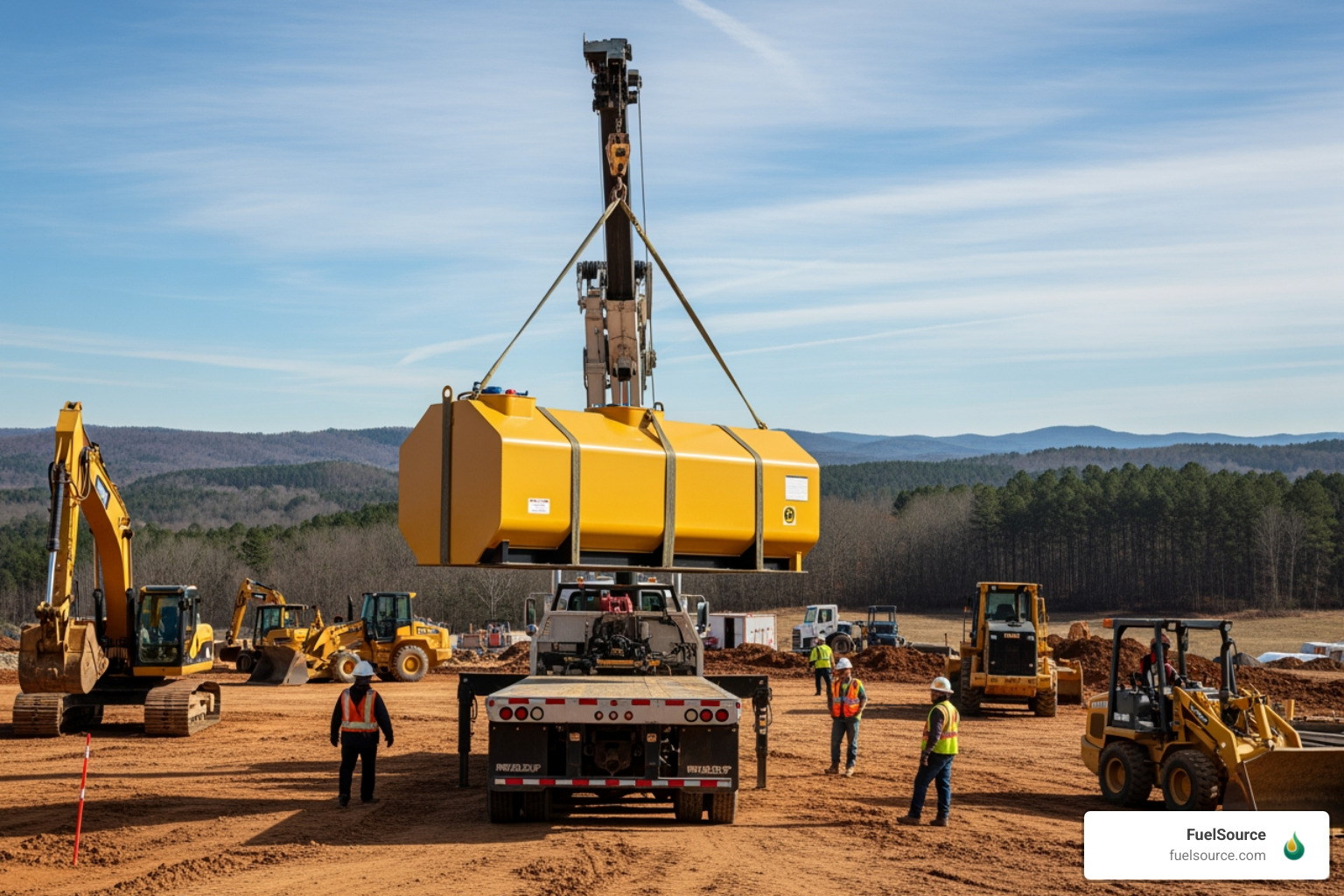
Sometimes, you need more than just truck-to-truck fueling. For high-demand sites, we offer tank rentals and skid tanks ranging from 300 to 2,000 gallons. These double-wall tanks provide an extra layer of protection against spills and environmental contamination.
For businesses with their own storage, we provide reliable diesel delivery coupled with GPS-monitored tank levels. We can see when your tank is getting low and schedule an automatic refill before you ever have to pick up the phone. We also offer fuel polishing services to keep your stored fuel fresh and free of contaminants that can clog filters and damage engines.
Advanced Technology and Per-Asset Tracking Features
One of the biggest advantages of modern mobile fleet fueling is the data. In the past, fleet managers had to chase down paper receipts and manually enter data into spreadsheets. Today, systems like Spartan Sentry Mobile and our own FuelSource customer portal have changed the game.
The Future of Mobile Fleet Fueling Technology
Every gallon we pump is tracked in real-time. This cloud-based data allows for:
- Fraud Prevention: By scanning the asset before pumping, we ensure fuel is only going into authorized vehicles.
- AI-Powered Insights: We can help you spot anomalies in fuel consumption that might indicate a maintenance issue or inefficient driving habits.
- Seamless Integration: Our data can often be pushed directly to your existing fleet management software via API, making on-call fuel delivery the secret to happy fleet managers.
Streamlining Compliance and IFTA Reporting
If you operate across state lines, you know the headache of IFTA (International Fuel Tax Agreement) reporting. Our instant fleet fuel reports provide the exact data you need—gallons by vehicle, fuel type, and location—to make tax filing a breeze. This is especially helpful for businesses using dyed diesel for off-road equipment, as it provides the clear audit trail required to claim tax incentives. You can view fleet category insights on our portal to see how this data is organized for maximum transparency.
Safety Standards and Emergency Disaster Response
Handling hazardous materials like diesel and gasoline requires a relentless focus on safety. Our drivers are trained in OSHA and DOT standards, and our trucks are equipped with spill kits and secondary containment systems. We also offer contact-free delivery, which has become a preferred safety standard for many of our industrial clients.
24/7 Emergency and Disaster Recovery
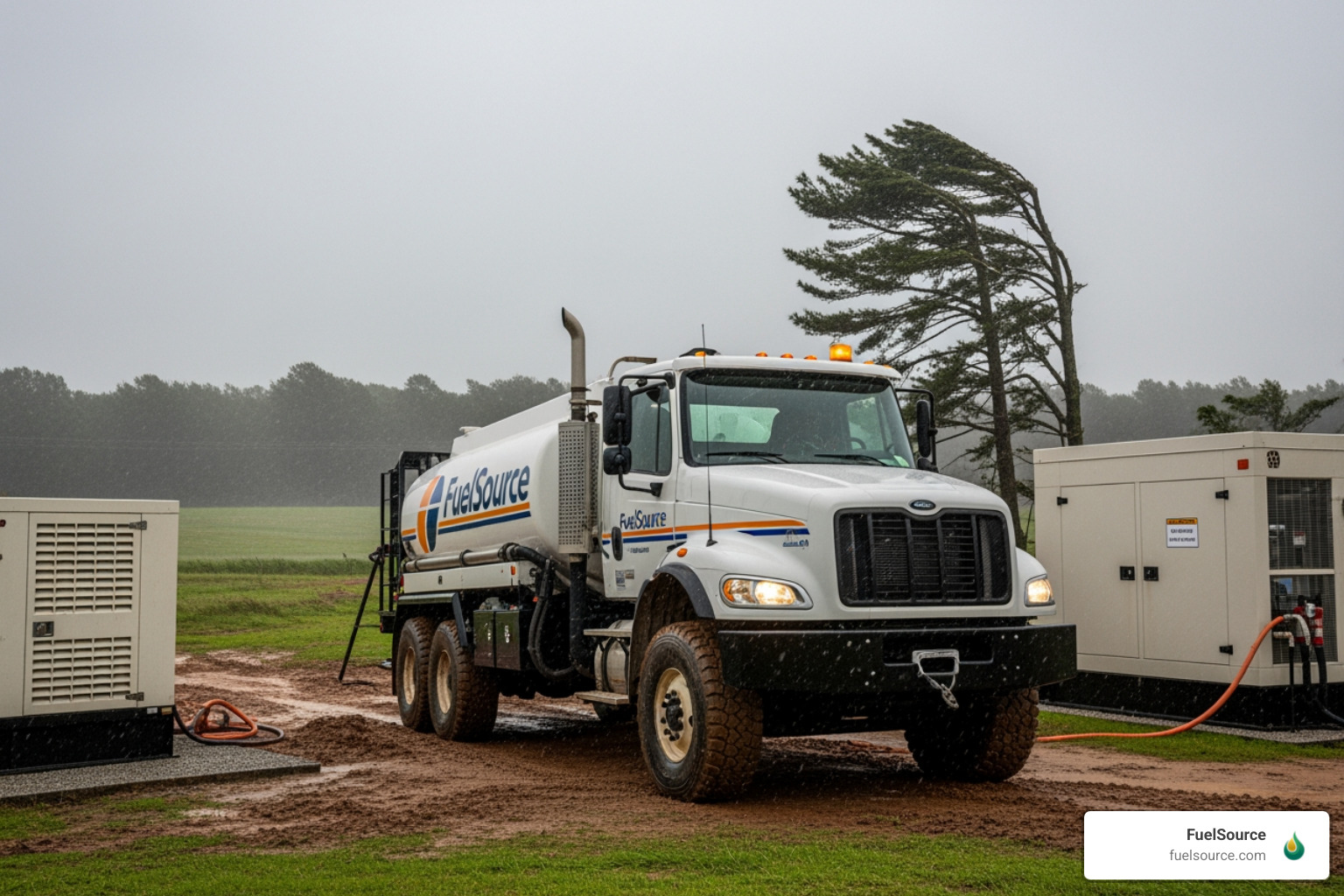
When the power goes out or a storm hits Georgia, fuel becomes the most valuable resource on the map. Whether it’s keeping backup generators running at a hospital in Atlanta or refueling utility trucks after a hurricane, we are built for response.
We utilize specialized 4×4 fuel trucks that can navigate ice-covered roads or muddy disaster zones where standard tankers would get stuck. This reliability is why your business needs a reliable Atlanta fuel company—because when the chips are down, you need a partner who can actually reach your equipment.
Frequently Asked Questions
How is pricing structured for mobile fueling?
Pricing is typically transparent and based on market benchmarks like the OPIS (Oil Price Information Service) averages. Factors that affect your cost include the volume of fuel you use, the frequency of our visits, and the specific types of fuel required. Generally, the more frequently we visit a site, the lower the individual delivery fees become.
Do I need to be present for the fuel delivery?
No. In fact, most of our mobile fleet fueling happens at night while your team is home. As long as our drivers have access to your yard and the fuel caps are accessible, we handle everything autonomously. You’ll wake up to digital delivery tickets in your inbox and a fleet that’s ready to work.
What types of vehicles can be fueled on-site?
If it has a fuel tank, we can fill it. This includes everything from Class 1 delivery vans to Class 8 semi-trucks, box trucks, tractors, reefers (refrigerated trailers), and even small specialty equipment like generators and power washers.
Conclusion
At FuelSource, we bring over 30 years of experience to every gallon we deliver. Serving the Atlanta Metro and North Georgia regions—from Bartow and Cherokee down to Fulton and DeKalb—we pride ourselves on being more than just a vendor. We are an operational partner dedicated to helping you reclaim wasted hours and eliminate the hidden costs of traditional fueling.
With state-of-the-art equipment, a robust customer portal for instant IFTA reporting, and a team that understands the local landscape, we make fleet management simpler.
Ready to stop wasting time at the pump? Order fuel for your fleet today and experience the efficiency of professional on-site delivery.