The Strategic Value of Instant Fleet Fuel Reports
In the past, fleet management was a game of “wait and see.” You waited for the driver to turn in a crumpled receipt, waited for the accounting department to enter the data, and waited for the monthly statement to see how much you actually spent. By the time you realized a vehicle was burning 20% more fuel than it should, that money was already gone.
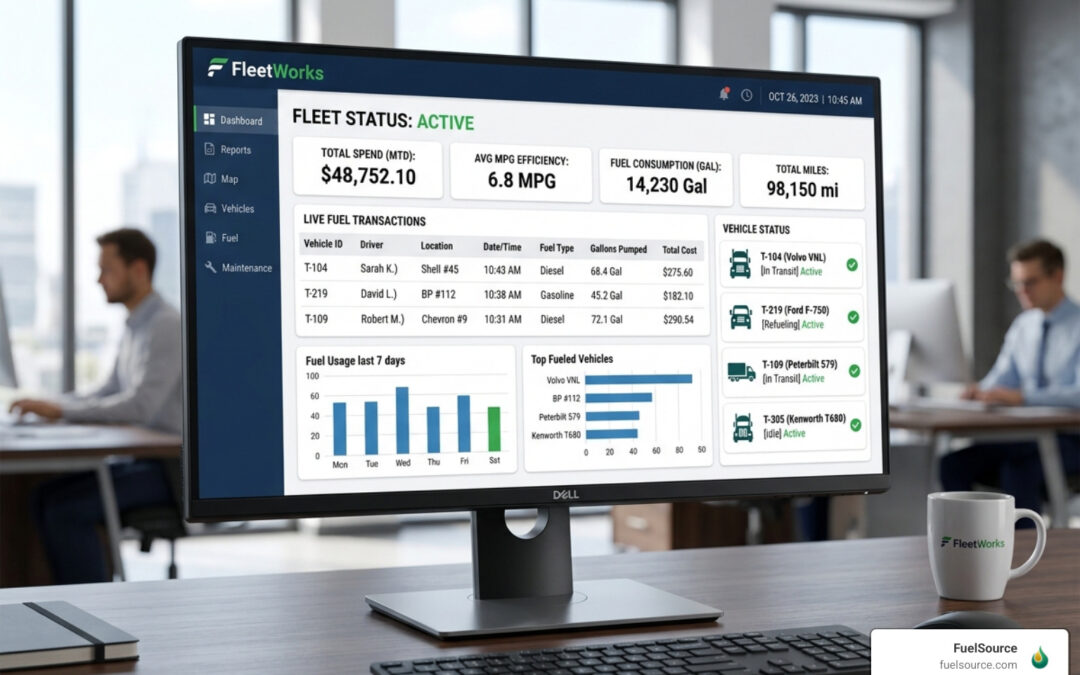
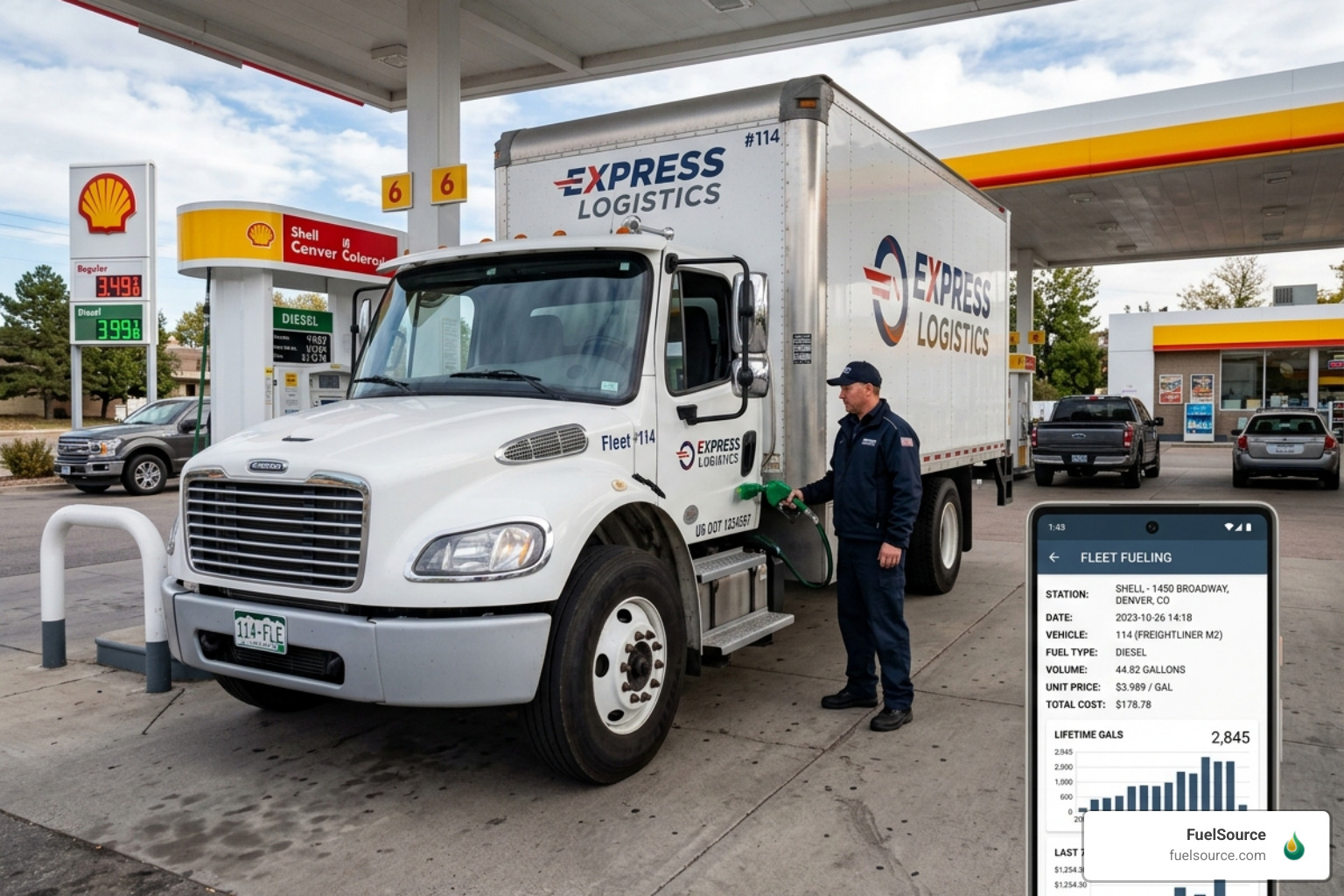
Instant fleet fuel reports eliminate this data lag. When we talk about “instant,” we mean real-time synchronization. The moment a nozzle is placed back in the pump or a mobile fuel delivery is completed, the data is pushed to a cloud-based platform. This level of transparency is powered by “Level 3 data.” While a standard credit card charge might just show the merchant name and amount, Level 3 reporting captures over 165 distinct data points, including:
- Gallons pumped
- Fuel type (Diesel, Gasoline, DEF)
- Odometer reading
- Unit price
- Vehicle ID and Driver PIN
- Exact GPS location of the transaction
This granularity is essential for Fuel Card Reporting for Ops, Accounting, and Managers. It allows you to move away from manual logs that are prone to human error and move toward a system where every drop is accounted for. For businesses in North Georgia, integrating these reports with fleet fueling services means you can stop chasing paper and start managing your margin.
The Evolution of Real-Time Fuel Expense Tracking
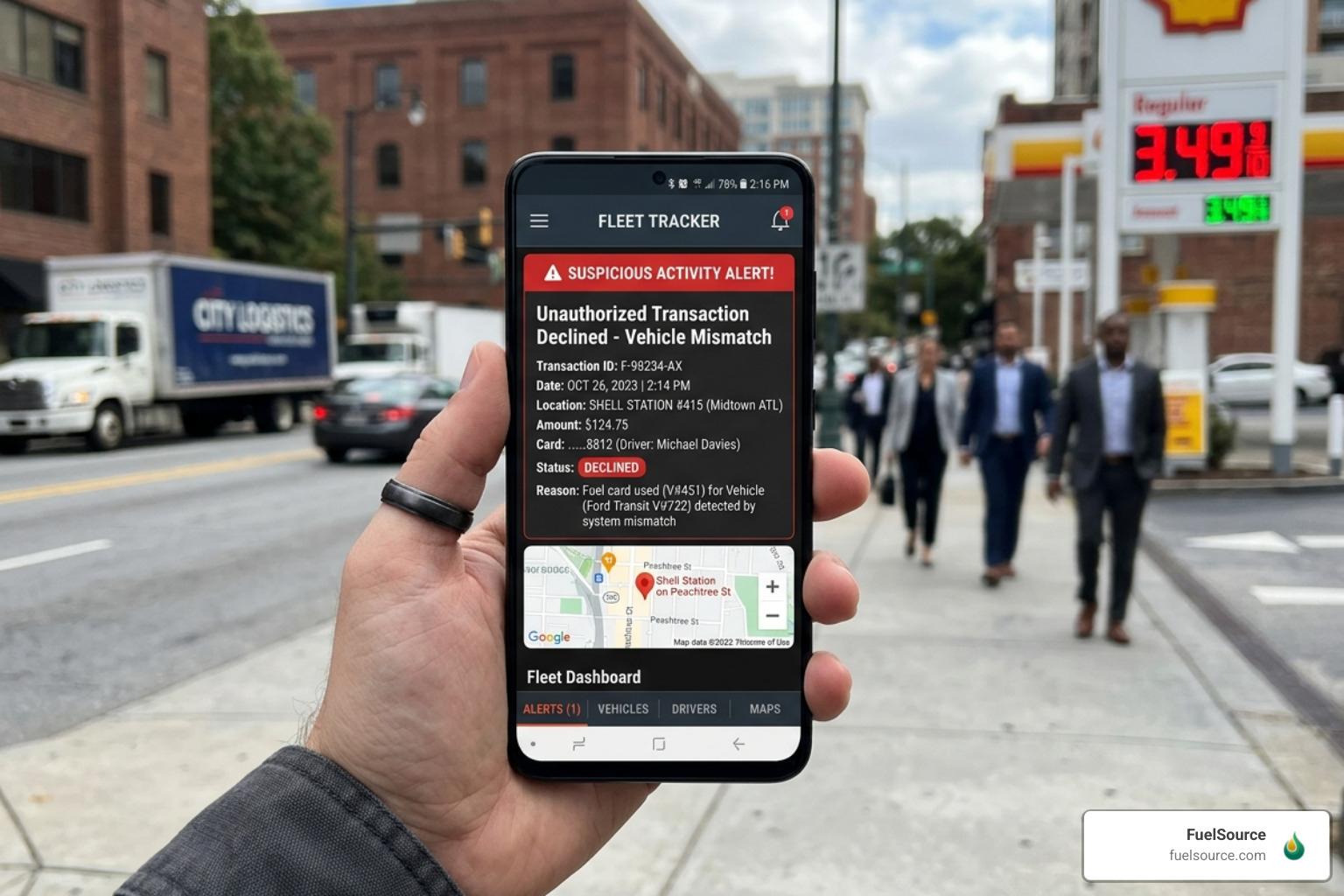
The industry has moved far beyond simple spreadsheets. Modern tracking utilizes digital timestamps and GPS validation to ensure that the fuel being paid for is actually going into the vehicle it’s assigned to. If a transaction occurs at a station in Marietta, but the vehicle’s telematics show it’s currently in Decatur, the system can flag that discrepancy instantly. Mobile accessibility allows you to receive these alerts on your smartphone, giving you the power to shut down a compromised card before the next gallon is pumped.
Key Benefits of Real-Time Reporting for Modern Fleets
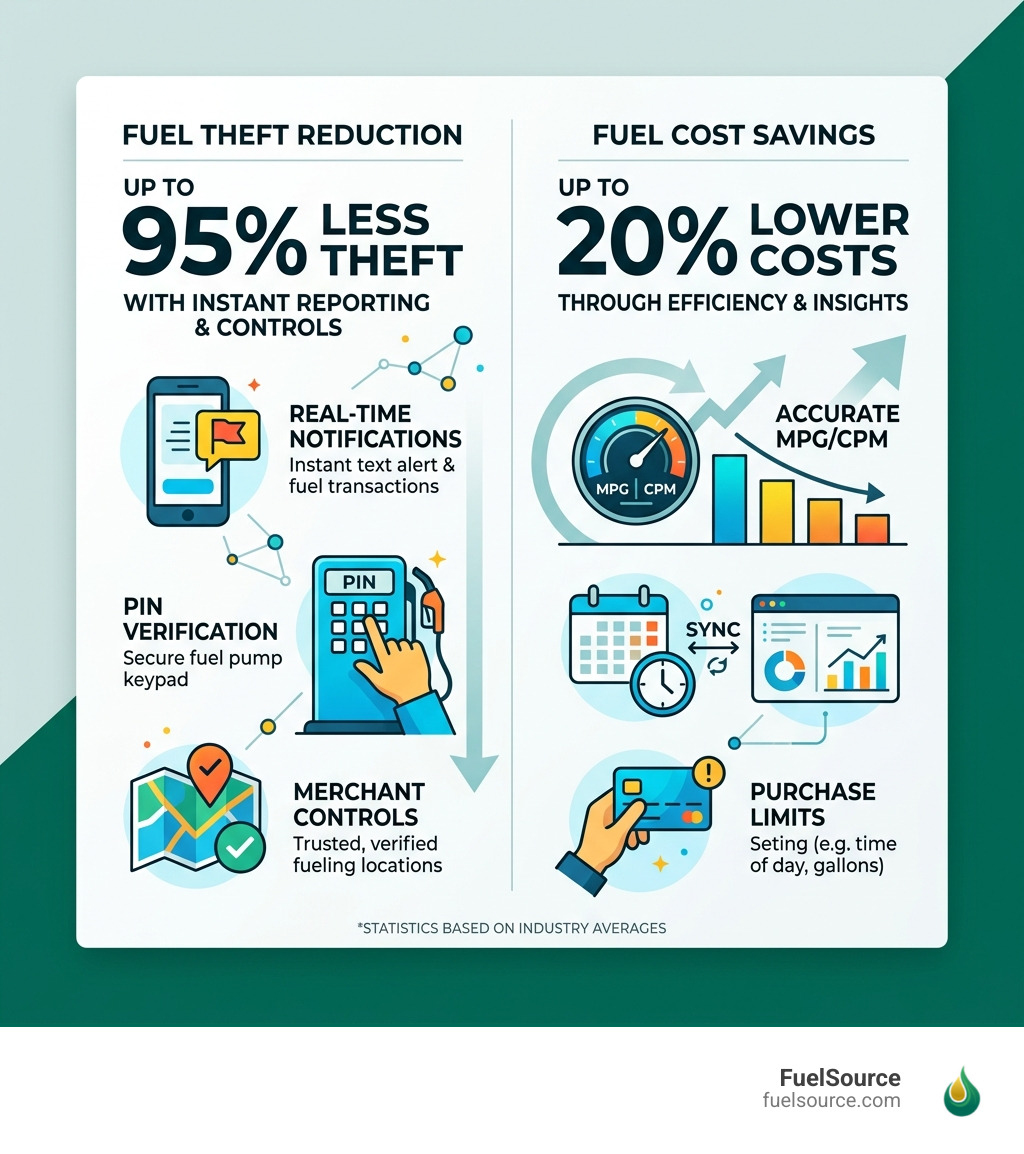
Why make the switch? Because the numbers don’t lie. Research shows that fuel management systems can reduce overall fuel costs by up to 20%. When you consider that fuel accounts for 30% or more of the operational budget for category fleets, a 20% reduction isn’t just a “nice to have”—it’s a massive boost to service profitability.
One of the most immediate benefits is driver accountability. When drivers know that their fuel efficiency and idling times are being monitored in real-time, behavior changes. Poor driving habits—like aggressive acceleration and excessive speeding—can reduce fuel efficiency by 10-25%. However, with real-time monitoring and coaching, fleets typically see a 10-15% improvement in efficiency within just three to six months.
Maximizing Efficiency with Instant Fleet Fuel Reports
Beyond just catching “the bad stuff,” instant fleet fuel reports help you find the “good stuff”—the opportunities to optimize.
- Route Optimization: By analyzing fuel consumption trends across different routes in Metro Atlanta, you can identify which paths are costing you the most in stop-and-go traffic.
- Idling Reduction: Systems like Samsara have helped customers save millions by identifying excessive idling. If a truck is idling for two hours on a job site in Fulton County, you’ll know about it instantly, not next month.
- Maintenance Alerts: A sudden spike in fuel consumption for a specific vehicle is often the first sign of a mechanical issue, such as a clogged fuel injector or under-inflated tires. Real-time reports act as an early warning system for your maintenance team.
Essential Features of a High-Performance Reporting System
If you are evaluating a new reporting tool in 2026, you shouldn’t settle for basic features. A high-performance system needs to be proactive, not just reactive.
| Feature | Manual Reconciliation | Instant Digital Reporting |
|---|---|---|
| Data Accuracy | High risk of human error | 99.9% automated accuracy |
| Fraud Detection | Detected weeks later | Real-time alerts & declines |
| Admin Time | Hours of data entry weekly | Automated sync to accounting |
| Visibility | Monthly snapshots | 24/7 live dashboard |
| Compliance | Manual IFTA calculations | One-click IFTA reporting |
Key features to look for include:
- Purchase Controls: The ability to set limits by time of day, day of the week, or even specific fuel types. If your fleet doesn’t run on Sundays, your fuel cards shouldn’t either.
- Geofencing: This creates a virtual “fence” around your job sites or preferred fueling stations. If a card is used outside of these zones, it can be automatically declined.
- Odometer Tracking: Requiring an odometer entry at the pump allows the system to calculate accurate MPG (miles per gallon) and CPM (cost per mile) metrics instantly.
- API Integrations: Your fuel data shouldn’t live on an island. It should flow seamlessly into your telematics (like Geotab) and your accounting software (like NetSuite or QuickBooks). This is especially useful when coordinating on-site fueling with your overall mobile strategy.
How Instant Fleet Fuel Reports Simplify IFTA Compliance
For fleets operating across state lines—or even those just wanting to be audit-ready in Georgia—IFTA (International Fuel Tax Agreement) compliance is a recurring nightmare. Traditionally, this involved collecting every trip sheet and fuel receipt to calculate taxes owed to different jurisdictions.
Instant fleet fuel reports automate this entire process. By combining GPS data with fuel purchase records, the system automatically tracks miles driven and gallons purchased in each jurisdiction. This not only protects you during an audit but also ensures you are claiming every fuel tax refund you are entitled to, such as for “off-road” fuel used in construction equipment or reefers. For more on this, check out Fuel & Mileage Reporting resources.
Combatting Fraud and Theft with Instant Data
Fuel theft is a quiet profit killer. It typically costs fleets 5-7% of their total fuel spend annually. This isn’t always someone siphoning a tank in the middle of the night; often, it’s “slippage”—a driver putting 20 gallons in the truck and 5 gallons in a personal gas can, or a card being skimmed at a gas station.
With instant fleet fuel reports, you can achieve an 80-95% reduction in fuel theft. Here’s how:
- Real-Time Notifications: Get a text message the second a purchase is made. If you see a 50-gallon diesel purchase for a vehicle that only has a 30-gallon tank, you can act immediately.
- PIN Verification: Every transaction requires a unique driver PIN, ensuring that “lost” cards cannot be used by unauthorized personnel.
- Merchant-Level Controls: You can restrict cards to only work at specific brands or locations that you know are secure and offer the best discounts.
Frequently Asked Questions about Fleet Fuel Reporting
How quickly can a fleet implement instant reporting?
Implementation is faster than most managers expect. If you are choosing a cloud-based fuel card system, activation can happen in just a few days. For more complex systems involving telematics hardware, a full deployment across a medium-sized fleet usually takes about 30 days. However, the data flow starts the moment the first card is swiped or the first delivery is logged in the portal.
Can small fleets see a significant ROI from these reports?
Absolutely. In fact, small fleets often see a disproportionate benefit because they lack the administrative staff to manually track expenses. A 10-truck fleet can save $20,000 to $30,000 a year through a combination of fraud prevention and improved driver behavior. For a small business in Bartow or Cherokee County, that’s the difference between hiring a new employee or staying stagnant.
How do these reports integrate with existing accounting software?
Most modern reporting systems offer multiple ways to move data. You can use standard CSV or Excel exports for manual uploads, or use Open APIs to create a direct bridge to software like NetSuite or Sage. This allows for “automated book-closing,” where your fuel expenses are reconciled daily rather than at the end of the month.
Conclusion
The days of managing a fleet by looking in the rearview mirror are over. To stay competitive in 2026, you need to know what’s happening with your fuel right now. Instant fleet fuel reports provide the visibility, security, and data-driven insights necessary to protect your bottom line.
At FuelSource, we’ve spent over 30 years helping businesses across the Atlanta Metro and North Georgia—from Cobb and Gwinnett to Fulton and DeKalb—optimize their fueling operations. Our state-of-the-art equipment and customer portal provide the instant reports and IFTA data you need to stay compliant and profitable.
Whether you need diesel for a construction site in Canton or gasoline for a landscaping fleet in Marietta, we provide reliable fuel delivery services with the technology to back it up.
Ready to take control of your fuel costs? Order Fuel today or contact us to learn more about our Fleet Fueling Services.