Keep Concrete Pumps Running With Reliable Diesel Supply
To source diesel for concrete pumps without risking a stopped pour, estimate each pump’s shift demand, confirm the required fuel specification in the engine manual, and schedule on-site delivery before the tank reaches a critical low level. For modern equipment, use clean ultra-low sulfur diesel and maintain diesel exhaust fluid (DEF) where the engine’s emissions system requires it.
Diesel-powered stationary, trailer, and boom pumps often run under heavy hydraulic load for long periods. A fuel shortage can stop concrete placement, create cleanup work, and put the schedule at risk. This matters most on remote jobsites, major slab pours, bridge work, and any site where a pump cannot easily leave to refuel.
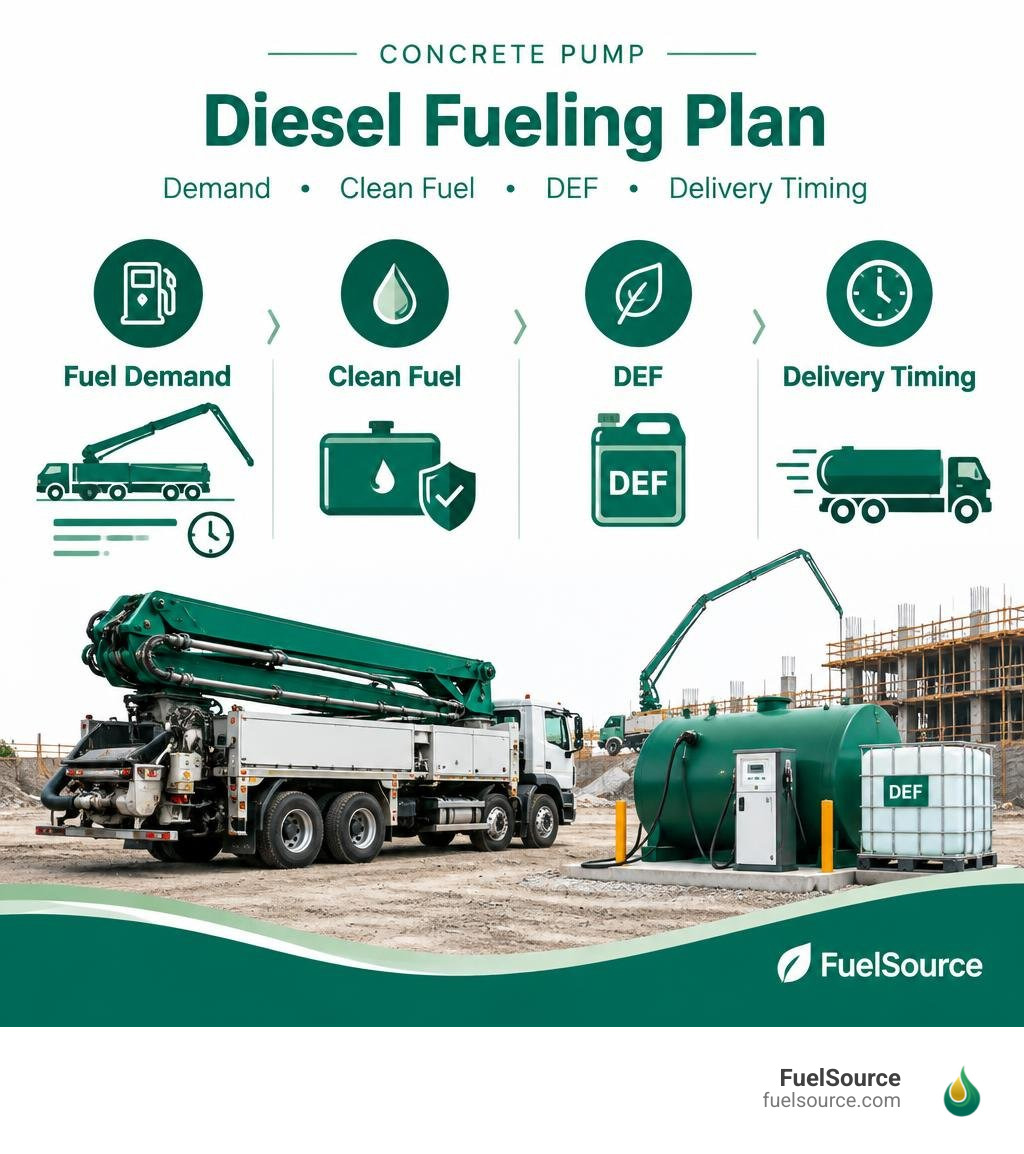
A practical fueling plan should cover:
- Fuel demand: Match delivery volume and timing to the pump’s engine size, expected run time, and workload.
- Fuel quality: Keep water, dirt, and aged fuel out of the tank to protect injectors, filters, and hydraulic pumping performance.
- Emissions needs: Stock DEF for Tier 4 Final or Stage V engines that use selective catalytic reduction.
- Contingency coverage: Arrange responsive diesel delivery so an unexpected extension of the pour does not leave the pump dry.
Diesel mixer pumps commonly deliver about 30 to 40 m3 per hour and may use engines in the 66 kW to 82 kW range. Boom and stationary pumps vary more widely, but all depend on steady fuel, proper lubrication, and reliable cooling to maintain the hydraulic pressure that moves concrete through the line.
I am Kyle Behnke, an Atlanta-area business professional with a background in operations, business strategy, and practical solutions for fast-moving industries. In this guide, I will cover the diesel for concrete pumps planning steps that help fleet managers and jobsite teams reduce avoidable downtime.
Understanding Diesel Engine Demands in Concrete Mixer and Boom Pumps
Concrete pumping is one of the most unforgiving applications for an internal combustion engine. Unlike general construction equipment that cycles between high and low effort, a concrete pump operates under sustained hydraulic loads for hours on end. Whether driving twin-cylinder reciprocating pump ends or mixing drums, the engine must supply consistent rotational force to sustain line pressure without fluctuating.

In mobile trailer pumps, stationary line pumps, and massive boom trucks, engine selection dictates operational capability. Leading manufacturers such as DEUTZ, Cummins, Yuchai, and Isuzu design power units specifically tuned for high-demand hydraulic circuits (for guidance on power matching, see choosing the right diesel engine for concrete pumps from DEUTZ). For instance, smaller line pumps like the Jacon S30 utilize a compact DEUTZ engine producing 55 kW at 2,200 RPM, while mid-range models like the Jacon S45 rely on air-cooled powerhouses like the BF4L914. Larger units such as the LS400 utilize the BF4L2011 rated at 57 kW.
When concrete pumping systems stop mid-pour, the costs multiply fast. The hydraulic fluid stops circulating, the concrete loses plasticity, and the risk of pack-outs skyrockets. Matching reliable fuel delivery to these engine requirements ensures the equipment never starves during critical continuous pours.
High Torque at Low RPM and Continuous Hydraulic Duty
The primary mechanical objective when operating a concrete pump is maintaining maximum torque at lower RPM bands. Unlike transport trucks that rely on peak horsepower at high road speeds, hydraulic concrete pumps demand massive low-end grunt. When an engine delivers strong torque at 1,800 to 2,200 RPM, the primary hydraulic pump can maintain required operating pressures—often up to 32 MPa within the hydraulic circuit—while generating a pumping pressure of 9 to 10 MPa at the material cylinder.
Running at moderate engine speeds while sustaining maximum hydraulic output provides clear operational benefits:
- Reduced Thermal Stress: Heavy hydraulic duty creates substantial heat. Keeping engine RPM controlled prevents both hydraulic fluid and engine coolant from exceeding critical thermal limits.
- Improved Fuel Economy: Forcing an undersized engine to scream at redline burns excess fuel and accelerates component fatigue. High-torque configurations keep hourly fuel burn predictable.
- Stable Material Flow: Smooth engine torque prevents pressure drops across the S-valve or rock valve changeover, eliminating surging at the placing hose.
Tier 4 Final and Stage V Emissions Compliance
Modern diesel engines powering concrete pumps must meet stringent clean air standards, including EPA Tier 4 Final in the United States and European Stage V internationally. To comply, manufacturers integrate advanced exhaust aftertreatment systems, including Diesel Oxidation Catalysts (DOC), Diesel Particulate Filters (DPF), and Selective Catalytic Reduction (SCR).
Operating Tier 4 Final machinery demands strict operational discipline. For engines equipped with SCR, running out of Diesel Exhaust Fluid (DEF) triggers automatic engine derating, dropping available horsepower and torque right in the middle of a pour. Fleet managers and site superintendents must understand proper DEF management for heavy equipment to ensure fluid levels match fuel delivery schedules. Additionally, using low-quality or non-spec diesel will rapidly clog DPF systems, initiating forced regenerations that halt pumping operations entirely.
Sourcing and Managing Diesel for Concrete Pumps on Active Jobsites
Logistical failures cause more jobsite delays than mechanical breakdowns. A trailer pump or boom truck stationed inside an excavation pit, on an elevated bridge deck, or across a rough rural grade cannot simply drive down the road to refuel when the fuel gauge drops below a quarter tank.
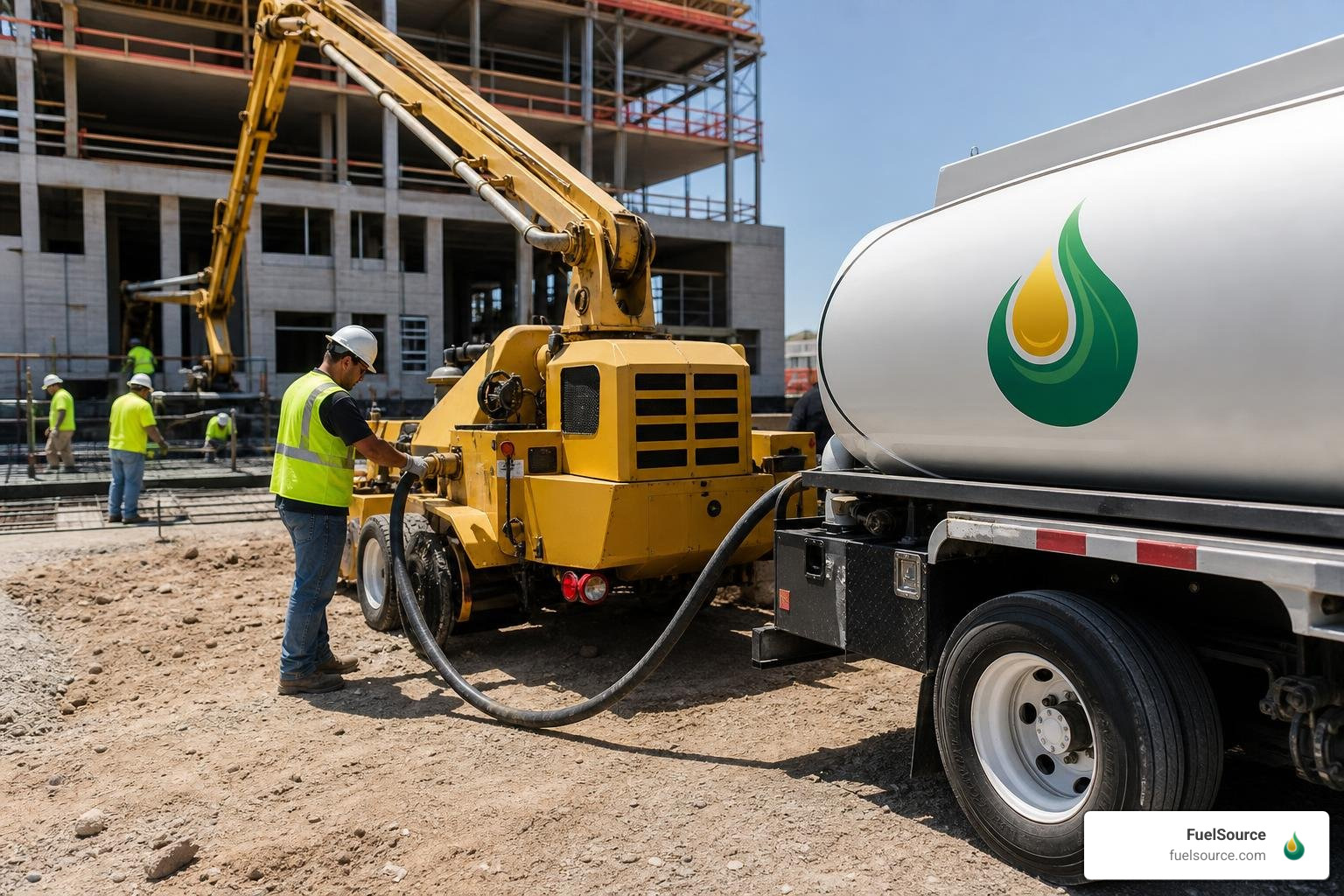
Pouring schedules are time-critical. Concrete trucks arrive in rapid succession, and stopping the line to fetch fuel in hand-carried five-gallon jugs is inefficient and hazardous. Forward-thinking contractors rely on construction site fuel delivery to guarantee that fuel supply matches the pour schedule seamlessly.
Fuel Consumption and Requirements: Diesel for Concrete Pumps Explained
Fuel consumption on a concrete pumping job depends directly on the pump’s output volume, line resistance, horizontal reach, and aggregate slump. A diesel concrete mixer pump handling 30 to 40 m³/h output typically consumes fuel at a rate linked to its 66 kW to 82 kW engine rating.
Pumping concrete 140 to 150 meters vertically or pushing dense aggregate mixes 500 to 600 meters horizontally forces the engine to operate near its continuous peak capacity. Under these conditions, fuel burn rates increase noticeably.
| Model / Type | Typical Capacity (m³/h) | Engine Power Rating (kW) | Max Pumping Pressure | Est. Fuel Consumption (gal/hr) | Primary Jobsite Application |
|---|---|---|---|---|---|
| JBS30R / Mini Line | 30 m³/h | 66 kW (approx. 88 hp) | 9.0 MPa | 3.5 – 5.0 gal/hr | Residential slabs, footings, rural paving |
| JBTS-30 Line Pump | 30 m³/h | 82 kW (approx. 110 hp) | 10.0 MPa | 4.5 – 6.0 gal/hr | Bridge abutments, drainage culverts |
| JBTS-40 / JBS40R | 40 m³/h | 82 kW (approx. 110 hp) | 10.0 MPa | 5.0 – 7.5 gal/hr | Commercial foundations, mid-rise construction |
| High-Volume Boom Pump | 100+ m³/h | 140+ kW (approx. 187+ hp) | 11.0+ MPa | 8.0 – 14.0 gal/hr | Infrastructure, high-rise structural pours |
Planning fuel allocations based on theoretical maximums rather than idle times prevents unexpected fuel depletion during pours that encounter transit or material delays.
Best Practices for Storing and Delivering Diesel for Concrete Pumps
Concrete jobsites are abrasive, dusty, and dynamic environments. Storing diesel on-site requires strict procedures to maintain fuel integrity and environmental safety:
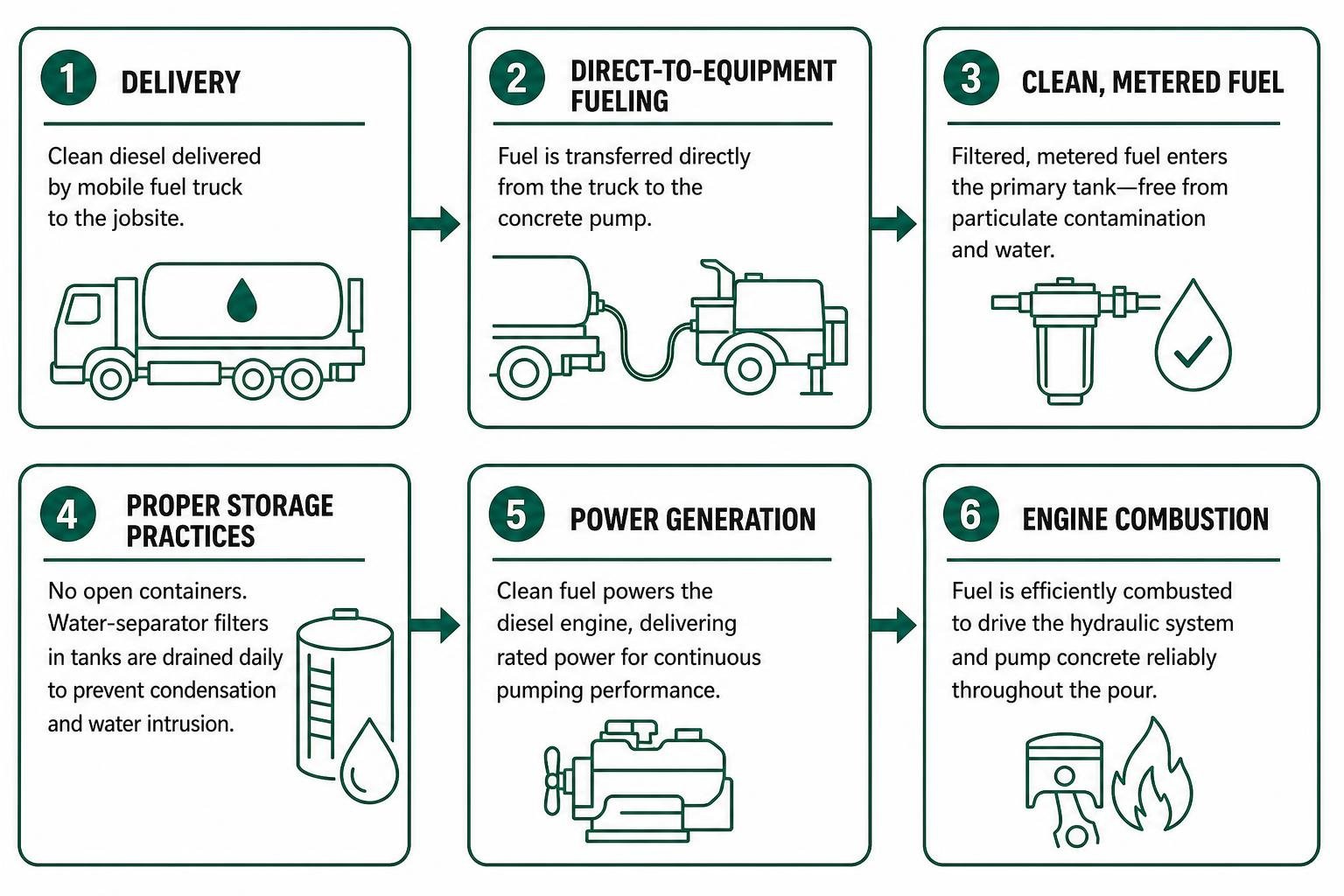
- Eliminate Particulate Contamination: Open storage containers, dirty funnels, and exposed transfer nozzles introduce abrasive cement dust and silica into fuel systems, eroding high-pressure common rail (HPCR) injectors.
- Prevent Water Condensation: Temperature swings between humid Georgia afternoons and cool nights cause moisture condensation along tank walls. Fuel tanks must feature clean water-separator filters, drained daily.
- Deploy Direct-to-Equipment Fueling: The safest way to eliminate fueling bottlenecks is scheduling direct-to-equipment on-site fueling. Having a mobile fuel truck fuel the pump directly eliminates on-site storage liabilities and guarantees clean, metered fuel right into the machine’s primary tank.
Fuel and Lubrication Maintenance for Reliable Pumping Cycles
A diesel concrete pump functions as a synchronized two-part machine: the diesel power unit and the hydraulic pump end. If either system experiences maintenance neglect, the entire pour shuts down. Maintaining strict service standards across both engine oil and hydraulic lubrication systems ensures mechanical longevity and project reliability.
When an engine reaches the end of its serviceable life after thousands of operating hours under continuous load, complete equipment replacement is not always required. Professional workshops and equipment owners frequently extend machine life through targeted concrete pump repairs, servicing, and repowers, swapping factory-remanufactured engines into operational chassis.
Essential Engine Lubrication and Filtration Standards
High-load diesel engines powering industrial pumps experience severe thermal breakdown in their lubricating oils. Operating an engine at continuous high torque demands heavy-duty oil formulations with high shear stability and soot-handling capabilities.
- Viscosity and Standards: Heavy-duty formulations like CH-4 20W-50 lubricating oil (such as Jinda 4000, commonly specified for SANY and Zoomlion pump assemblies) provide critical boundary lubrication. The 20W-50 grade delivers adequate flow at initial startup while maintaining robust film thickness when engine bay temperatures climb during continuous operation.
- Centralized Progressive Lubrication: Modern concrete pumps utilize automated, high-pressure centralized lubrication systems. These progressive distributors pump grease continuously to the S-valve bearings, mixer shaft seals, and drive cylinders. If the central lubrication reservoir runs dry, friction can seize moving pump components within minutes.
- Filtration Schedules: Fuel filters, air intake filters, and primary hydraulic return filters should follow strict operating-hour intervals. In dusty ready-mix environments, dual-stage air filtration is mandatory to protect engine cylinders from ingesting airborne particulate matter.
Managing Fuel Quality to Prevent Costly Pour Delays
Diesel fuel quality degrades over time due to oxidation, microbial contamination (diesel bug), and moisture accumulation. In high-pressure injection systems operating above 2,000 bar (29,000 psi), microscopic particulates or water droplets will score injector needles and damage fuel pumps.
Contractors should secure a dependable bulk diesel supply to ensure that equipment receives fresh, ultra-clean Ultra-Low Sulfur Diesel (ULSD). Clean fuel burns completely, minimizes soot loading in the exhaust aftertreatment system, and guarantees full power delivery when pumping high-slump concrete over challenging elevations.
Overcoming Remote Site Challenges with Mobile Fueling Infrastructure
Construction projects often take place far from established commercial infrastructure. Tunnel projects, mountain highway bridges, rural drainage installations, and sprawling industrial foundations rarely offer convenient grid electrical hookups or commercial fueling options.
In off-grid situations, a diesel-powered mixer pump is completely self-sufficient. Units like the JBS-R series combine concrete batching, mixing, and high-pressure pumping onto a single mobile chassis. Because these machines produce their own mechanical and hydraulic power, they eliminate the need for high-voltage commercial electrical drops or massive on-site generator trailers.
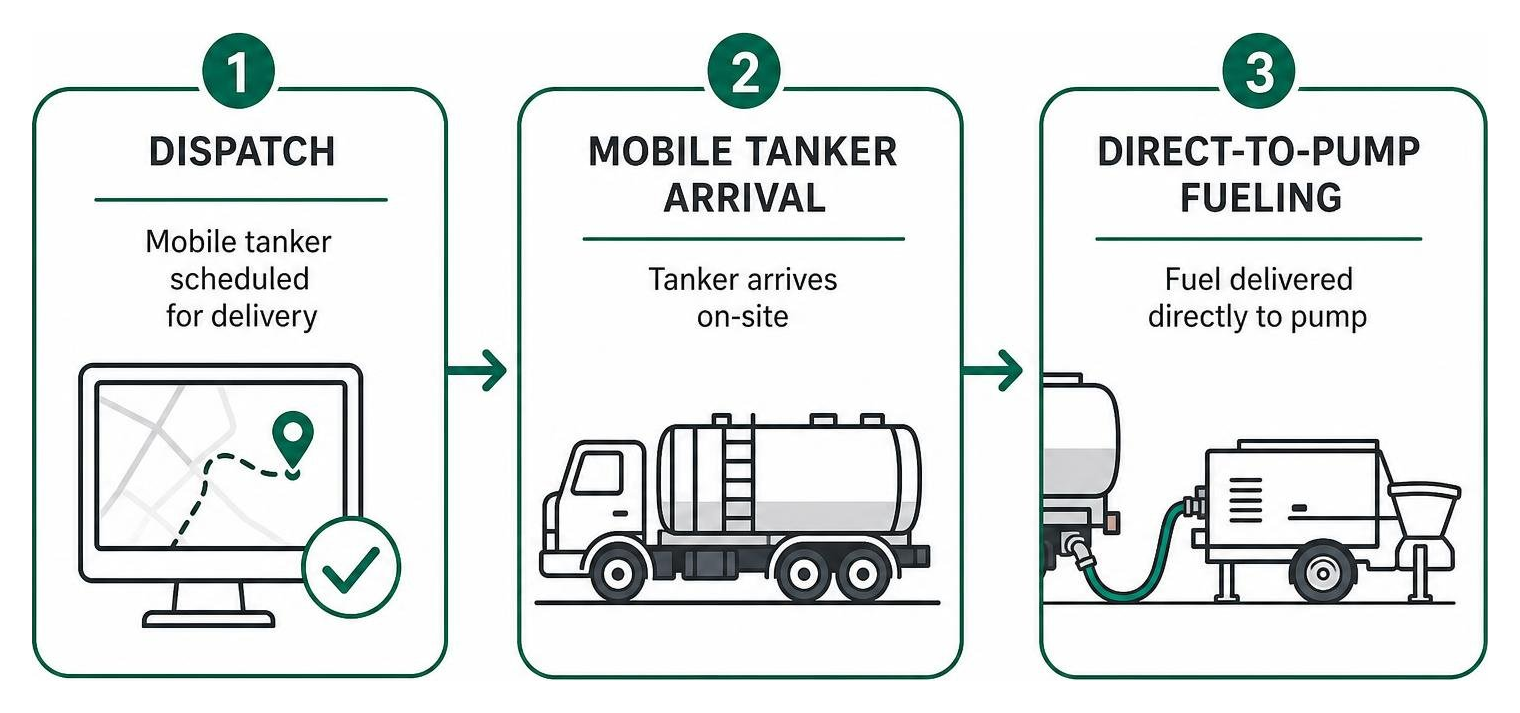
To keep these critical machines operating without interruption across North Georgia, project managers coordinate reliable diesel delivery in Atlanta and surrounding counties. Mobile fuel delivery routes can be scheduled during shift changes, early mornings, or directly during active pumping windows to maintain steady production.
Frequently Asked Questions about Concrete Pump Fueling
How much fuel does a typical diesel concrete pump consume per hour?
A typical trailer or mixer pump equipped with an engine in the 55 kW to 82 kW range burns between 3.5 and 7.5 gallons of diesel per hour, depending on load. Pumping lightweight concrete horizontally uses significantly less fuel than pushing low-slump, high-density concrete vertically up multiple stories, where the hydraulic system operates near maximum relief pressure.
What happens if a concrete pump runs out of diesel mid-pour?
If a diesel engine dies during an active pour, the situation turns critical fast. Without hydraulic power:
- Concrete stops moving through the delivery line, initiating setting within 30 to 90 minutes depending on ambient temperature and chemical admixtures.
- If fuel cannot be restored immediately, operators must quickly activate emergency air lines or secondary wash-out circuits to flush hundreds of feet of pipeline.
- If concrete hardens inside the delivery pipes, S-tube, or material cylinders, clearing the blockage requires days of manual chipping, pipe replacement, and costly equipment repairs.
What grade of diesel and engine oil is recommended for heavy-duty concrete pumps?
Modern Tier 4 Final and Stage V concrete pumps require Ultra-Low Sulfur Diesel (ULSD, 15 ppm sulfur max) to prevent catalytic poisoning of emissions components. For engine lubrication, manufacturers commonly recommend heavy-duty diesel engine oils such as API CK-4 or CH-4 20W-50 formulations for high-load, high-temperature operations, combined with ISO VG 46 or 68 anti-wear hydraulic oil for the pumping end.
Fuel Management for Uninterrupted Concrete Placement
A concrete pour is a high-stakes, time-sensitive operation. The performance of your stationary, trailer, or boom concrete pumps depends on consistent mechanical power, proper hydraulic lubrication, and an uninterrupted supply of clean diesel fuel. Running dry mid-pour leads to cold joints, compromised structural integrity, line blockages, and thousands of dollars in emergency cleanup and repair costs.
At FuelSource, we bring over 30 years of operational experience to your jobsites across Metro Atlanta and North Georgia. Our modern fleet of mobile fuel delivery trucks delivers Ultra-Low Sulfur Diesel, non-road diesel, and Diesel Exhaust Fluid directly to your equipment tanks—whether your pumps are situated on highway bridges, rural developments, or dense commercial building sites. With automated delivery tracking and our dedicated customer portal providing real-time reporting, you can focus on placing concrete while we handle your complete fueling logistics.
Ensure your pours finish on time, every time. Discover dependable fuel delivery services for construction sites and set up a fueling schedule tailored to your concrete pumping operations today.