
Why Farming DEF Bulk Delivery Can Make or Break Your Operation
If you rely on diesel-powered equipment, farming DEF bulk delivery is one of the most important logistics decisions you’ll make this season.
Quick Answer: How to Order Agricultural Bulk DEF Delivery
- Estimate your usage — DEF consumption averages 2.25% of diesel fuel used (roughly 1 gallon of DEF per 200 miles for typical farm equipment).
- Choose your container format — options include 55-gallon drums, 275- or 330-gallon totes, or bulk pumped directly to your on-site tank.
- Confirm minimum order requirements — most suppliers require a 150-gallon minimum for bulk delivery.
- Verify API certification — only accept DEF that meets ISO 22241 standards to protect your SCR system.
- Schedule around peak seasons — align deliveries with planting and harvest to avoid costly shortages.
Any modern tractor, combine, or sprayer built after 2010 runs on a Selective Catalytic Reduction (SCR) system. That system requires a steady supply of Diesel Exhaust Fluid (DEF) to function. Without it, your equipment will trigger warning lights, lose power, or shut down entirely — right in the middle of your busiest days.
A DEF shortage during planting or harvest isn’t just inconvenient. It can bring your entire operation to a standstill.
That’s the kind of risk that bulk delivery is designed to eliminate.
My name is Kyle Behnke, and I work with FuelSource Inc. to help farm operators, fleet managers, and construction businesses across the Atlanta metro and North Georgia solve exactly these kinds of fuel logistics challenges — including farming DEF bulk delivery. With a background in business strategy from Emory University’s Go智慧ta Business School, I’ve spent my career building practical fuel supply solutions for operations that can’t afford downtime.
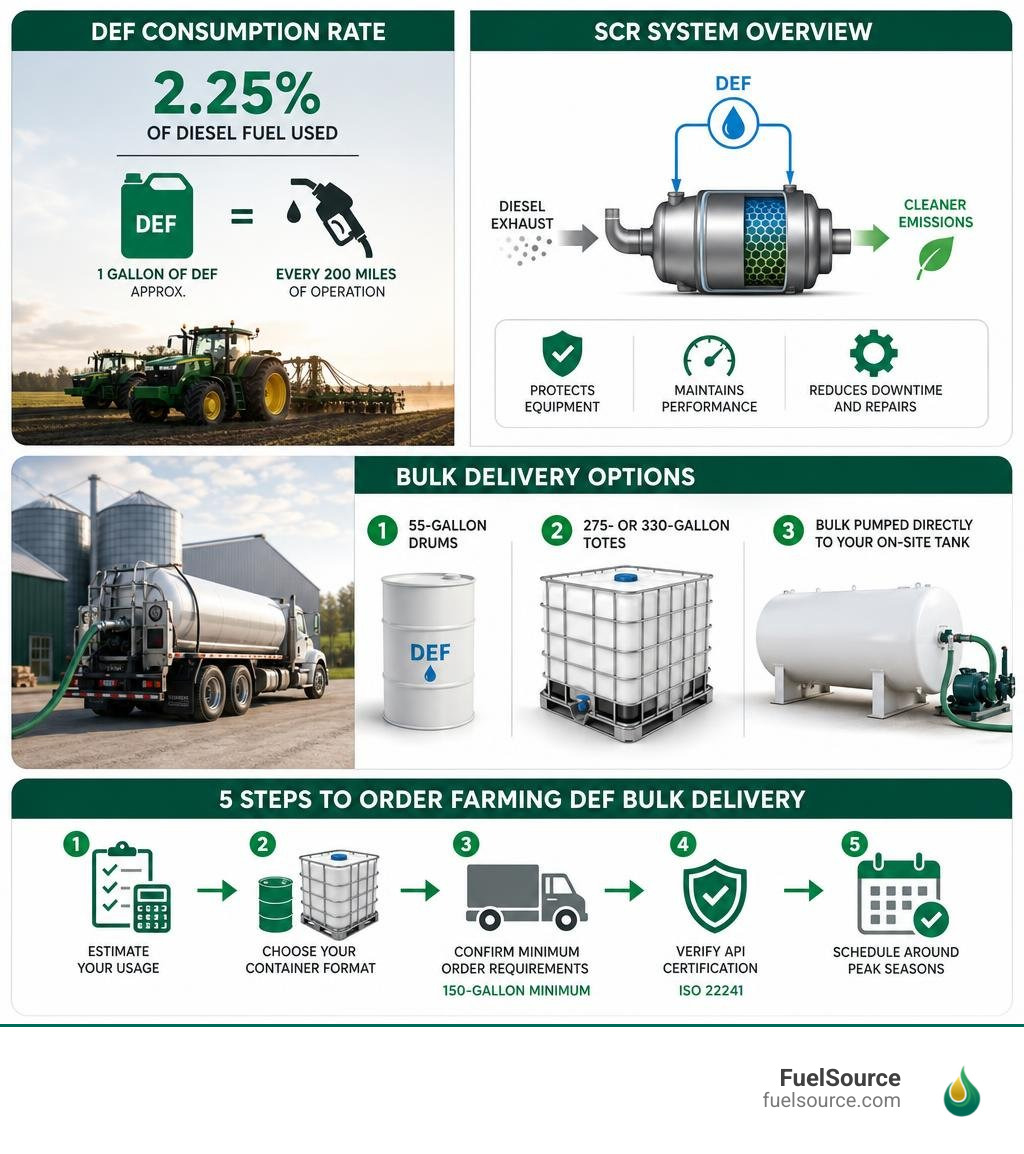
Quick look at farming def bulk delivery:
Understanding DEF and Its Role in Modern Agriculture
To keep a farm running smoothly in June 2026, you have to look beyond diesel fuel. Modern agricultural machinery depends just as much on Diesel Exhaust Fluid (DEF) to keep moving.
At its core, DEF is a non-toxic, clear, and odorless solution composed of 32.5% high-purity medical-grade urea and 67.5% deionized water. It is not a fuel additive; rather, it is sprayed directly into the exhaust stream before it passes through the Selective Catalytic Reduction (SCR) system. Inside the SCR catalyst, the urea reacts with harmful nitrogen oxide (NOx) emissions, breaking them down into harmless nitrogen gas and water vapor.
This process allows Tier 4 agricultural engines to meet strict EPA emissions standards. However, if the DEF tank runs dry, the engine’s onboard computer will automatically trigger a “de-rate” or “limp mode,” slashing engine power or preventing the machine from restarting entirely.
Why Modern Tractors and Combines Require DEF
Every major manufacturer—from John Deere to Case IH—uses SCR technology to comply with environmental regulations while maximizing engine efficiency. When engines are tuned to run hot and clean, they produce less particulate matter (soot) but more NOx. By utilizing an SCR system and DEF, manufacturers can optimize engine combustion for maximum torque and fuel efficiency, leaving the cleanup of emissions to the exhaust system.
For Georgia growers managing tight operational windows, understanding your equipment’s Agricultural fuel delivery options means recognizing that DEF is a co-primary fluid. If your high-horsepower tractor is pulling a heavy disk or your combine is running hard through the corn, it is consuming DEF at a steady rate alongside its diesel fuel.
The Risks of Running Out of DEF During Peak Seasons
When you are racing against an incoming summer storm in Bartow County or Cherokee County, every minute counts. If your tractor’s DEF sensor registers an empty tank, the engine will instantly de-rate, limiting your speed to a crawling 5 mph. Bypassing these systems or ignoring warning lights isn’t just illegal; it risks severe engine damage and can render expensive DEF injector heads useless.
Because of supply chain realities, replacing a damaged DEF head or resetting a locked emissions computer can cost thousands of dollars and sideline your machine for days. Having access to Emergency DEF solutions is a critical safety net, but establishing a proactive bulk delivery schedule is the best way to ensure you never face a shutdown in the first place.
The Financial and Operational Benefits of Farming DEF Bulk Delivery
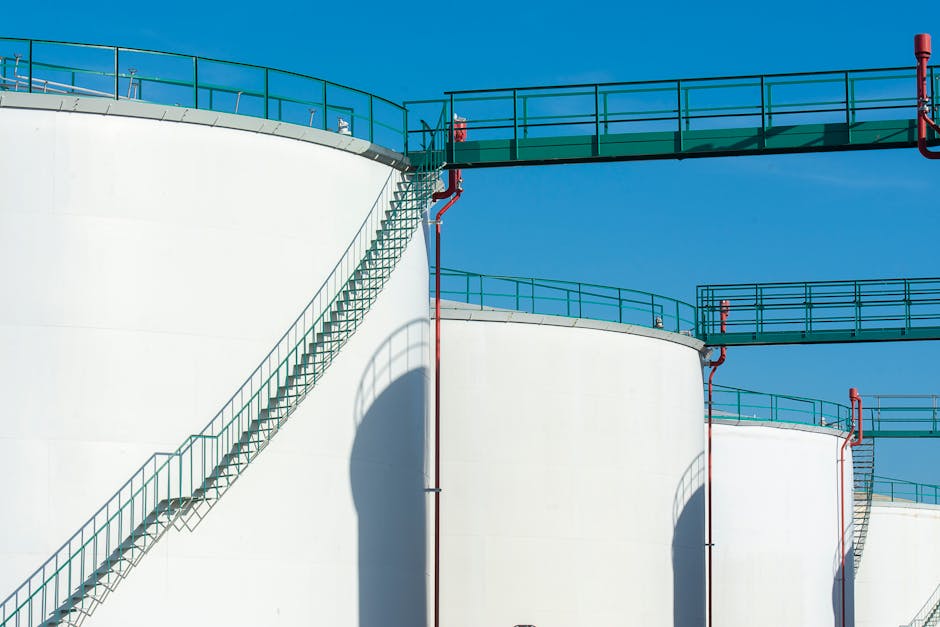
Many farms still rely on buying 2.5-gallon plastic jugs of DEF from retail stores. While convenient for a single utility tractor, this approach is incredibly inefficient and expensive for a commercial-scale agricultural operation. Transitioning to farming def bulk delivery completely changes the financial and operational dynamics of your yard.
Lowering Cost Per Gallon with Bulk Purchasing
Purchasing DEF in individual jugs is easily the most expensive way to buy the fluid. You are paying a heavy premium for the plastic packaging, individual labeling, and retail shelf space.
By switching to bulk delivery, farms can reduce their overall DEF costs by up to 30%. When you order in larger volumes, the price per gallon drops dramatically. Over a full season of planting, spraying, and harvesting across hundreds of acres in Forsyth or Paulding County, those savings directly improve your bottom line. To see how these savings scale for your specific setup, you can explore the options for Bulk DEF delivery near you.
Streamlining Operations with Farming DEF Bulk Delivery
Beyond the direct financial savings, bulk delivery eliminates the logistical headache of manual handling. Think about how much time your crew spends hauling 2.5-gallon jugs (which weigh about 22 pounds each), cutting them open, finding funnels, and dealing with the mountain of plastic waste left behind.
Bulk systems can improve vehicle turnaround times by up to 20% by utilizing high-flow, dedicated pumps to fill equipment directly from an on-site storage tank. No more heavy lifting, no more spilled fluid, and no more administrative clutter from tracking dozens of retail receipts. Incorporating bulk storage into your yard pairs perfectly with On-site fleet fuel delivery, creating a single, streamlined fueling station for all your machinery.
How to Set Up and Manage Your On-Farm Bulk DEF Storage
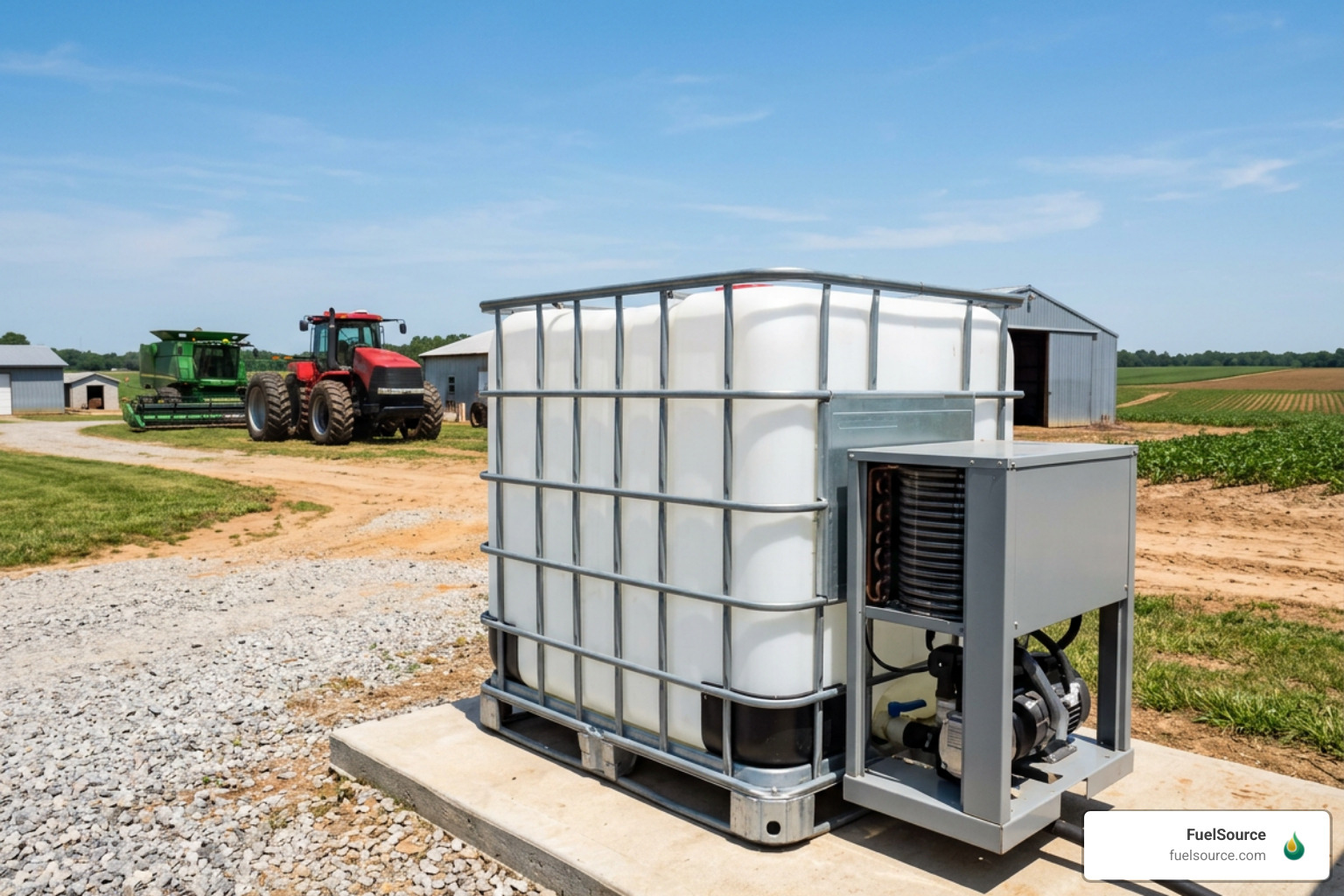
Setting up bulk DEF storage on your farm is a straightforward process, but it requires careful attention to material compatibility and temperature control. Because DEF is highly corrosive to certain metals, you must store it in approved containers.
Choosing the Right Storage Option: Totes, Drums, or Bulk Tanks
Depending on the size of your operation and your annual consumption, several storage configurations are available:
| Container Option | Capacity (Gallons) | Best Suited For | Key Advantages |
|---|---|---|---|
| 55-Gallon Drums | 55 | Small farms or isolated utility equipment | Portable, small footprint, easy to move with a drum hand-truck. |
| 275-Gallon Tote | 275 | Medium-sized operations with 3-5 diesel machines | Standard size, easily moved with pallet forks, fits in most barns. |
| 330-Gallon Tote | 330 | Larger farms with high-horsepower tractors | Maximizes storage volume on a standard pallet footprint. |
| Bulk Pumped-to-Tank | 500 to 1,000+ | Large commercial operations, co-ops, and custom harvesters | Lowest cost per gallon, integrates with digital fleet monitoring systems. |
Best Practices for Preventing DEF Contamination
DEF is extremely sensitive to contamination. Even a microscopic trace of dust, metal, tap water, or fuel can ruin a batch of DEF and destroy your tractor’s SCR catalyst. To keep your fluid pure:
- Avoid incompatible materials: Never let DEF come into contact with copper, brass, bronze, zinc, galvanized steel, or aluminum. Only use high-density polyethylene (HDPE) plastic or stainless steel tanks, fittings, and pumps.
- Keep it dedicated: Never use a pump, hose, or nozzle for DEF that has ever been used for diesel, oil, water, or agricultural chemicals.
- Manage the environment: Store your DEF out of direct sunlight in a cool, dry, and well-ventilated area. While DEF freezes at 12°F, it is not damaged by freezing (it will thaw and perform normally). However, prolonged exposure to temperatures above 86°F will accelerate the breakdown of the urea, shortening its shelf life.
For detailed advice on maintaining fluid integrity, check out our Mobile DEF suppliers guide.
Coordinating Your Farming DEF Bulk Delivery Schedule
Farming is entirely dependent on the calendar and the weather. Your fuel and fluid usage isn’t flat throughout the year; it peaks sharply during planting and harvest. Managing your bulk DEF deliveries requires an understanding of these seasonal waves.
Aligning DEF Shipments with Your Farming DEF Bulk Delivery Needs
To calculate how much DEF you will need to store and order, use the industry-standard consumption rate. On average, DEF consumption runs at about 2.25% of your diesel fuel usage.
For example, if your high-clearance sprayer or articulated tractor consumes 1,000 gallons of off-road diesel during spring planting, you will need approximately 22.5 gallons of DEF to match that run time. By looking at your historical fuel logs, you can easily project your fluid requirements for the upcoming season. This allows you to plan your bulk orders so that your tanks are full before the first seed goes into the ground. You can coordinate these seasonal deliveries by reviewing your options for Georgia farming diesel delivery.
Integrating DEF with Your Overall Fleet Fuel Delivery
The most efficient way to manage farm inputs is to combine your fuel and fluid logistics. Instead of dealing with multiple suppliers, invoices, and delivery trucks driving down your farm lanes, you can consolidate your orders.
By partnering with a supplier that can deliver off-road dyed diesel, highway-grade diesel, lubricants, and bulk DEF all in a single visit, you save administrative time and reduce traffic on your property. This integrated approach ensures that when your tractor is fueled, your DEF tanks are topped off as well. Learn more about how to set up this seamless system with our guide on Tractor diesel delivery.
Frequently Asked Questions About Bulk DEF for Farms
What is the minimum order size for bulk DEF delivery?
For most dedicated bulk pumped-to-tank deliveries, the standard industry minimum is 150 gallons. This volume allows suppliers to route dedicated, multi-purpose transport trucks efficiently. If your storage capacity is smaller, suppliers can easily deliver pre-packaged 55-gallon drums or 275-gallon totes directly to your shop or equipment yard.
How long can I store bulk DEF on my farm?
Under optimal storage conditions—specifically kept out of direct sunlight and maintained at temperatures between 12°F and 75°F—DEF has a shelf life of up to two years. If stored in an uninsulated outdoor tank during hot Georgia summers where temperatures regularly exceed 90°F, the shelf life may degrade to roughly 6 to 12 months. It is always best to size your bulk tank so that you rotate through your inventory within a single season.
How do I verify that my bulk DEF is API-certified?
To protect your equipment warranties and prevent SCR system failures, only purchase DEF that displays the American Petroleum Institute (API) Certified symbol and references the ISO 22241 standard. This certification guarantees that the fluid contains the precise 32.5% urea concentration and is free from harmful trace metals or minerals that can poison the catalyst in your exhaust system.
Conclusion
In modern farming, staying competitive means finding every operational efficiency you can. Transitioning to a professional farming def bulk delivery program protects your high-value equipment, slashes your input costs by up to 30%, and eliminates the daily hassle of handling individual retail jugs.
At FuelSource, we have spent over 30 years helping agricultural operations across Metro Atlanta and North Georgia—including Cobb, Cherokee, Forsyth, Gwinnett, Fulton, and Bartow counties—keep their fleets moving. With our state-of-the-art delivery equipment, dedicated customer portal for easy reporting, and integrated fueling services, we make managing your farm’s diesel and DEF needs completely hassle-free.
Don’t let a dry DEF tank stall your equipment when you can least afford it. Order bulk DEF delivery today and experience the peace of mind that comes with a truly reliable fuel partner.