When the Pump Needs to Come to You: What Farming Fuel Mobile Service Actually Means
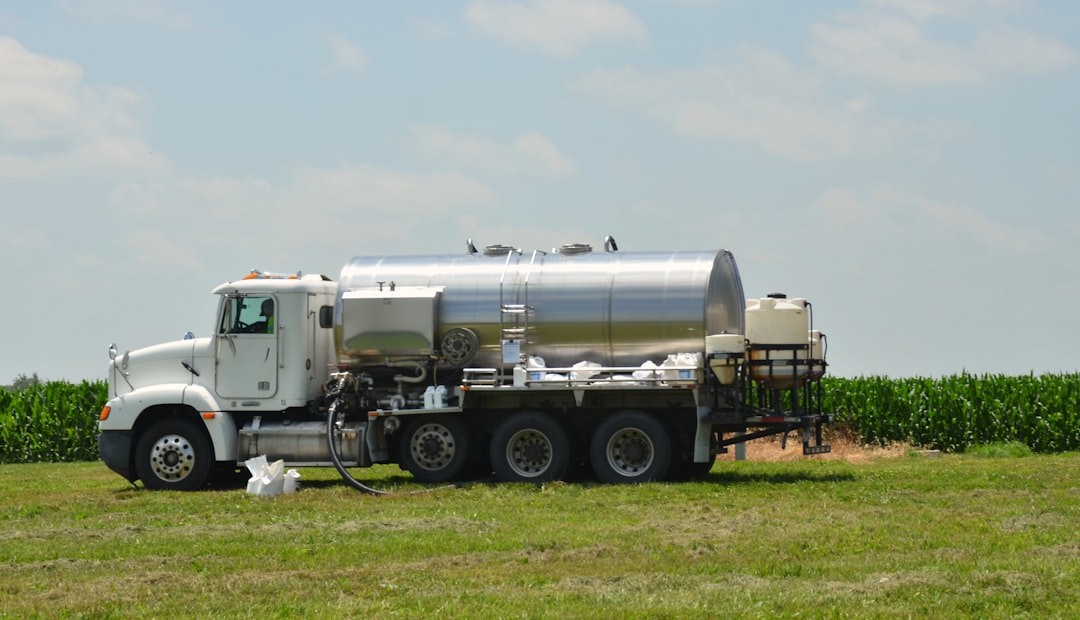
A farming fuel mobile service brings diesel, gasoline, and DEF directly to your equipment — no trips to town, no dry tanks, no lost hours during planting or harvest.
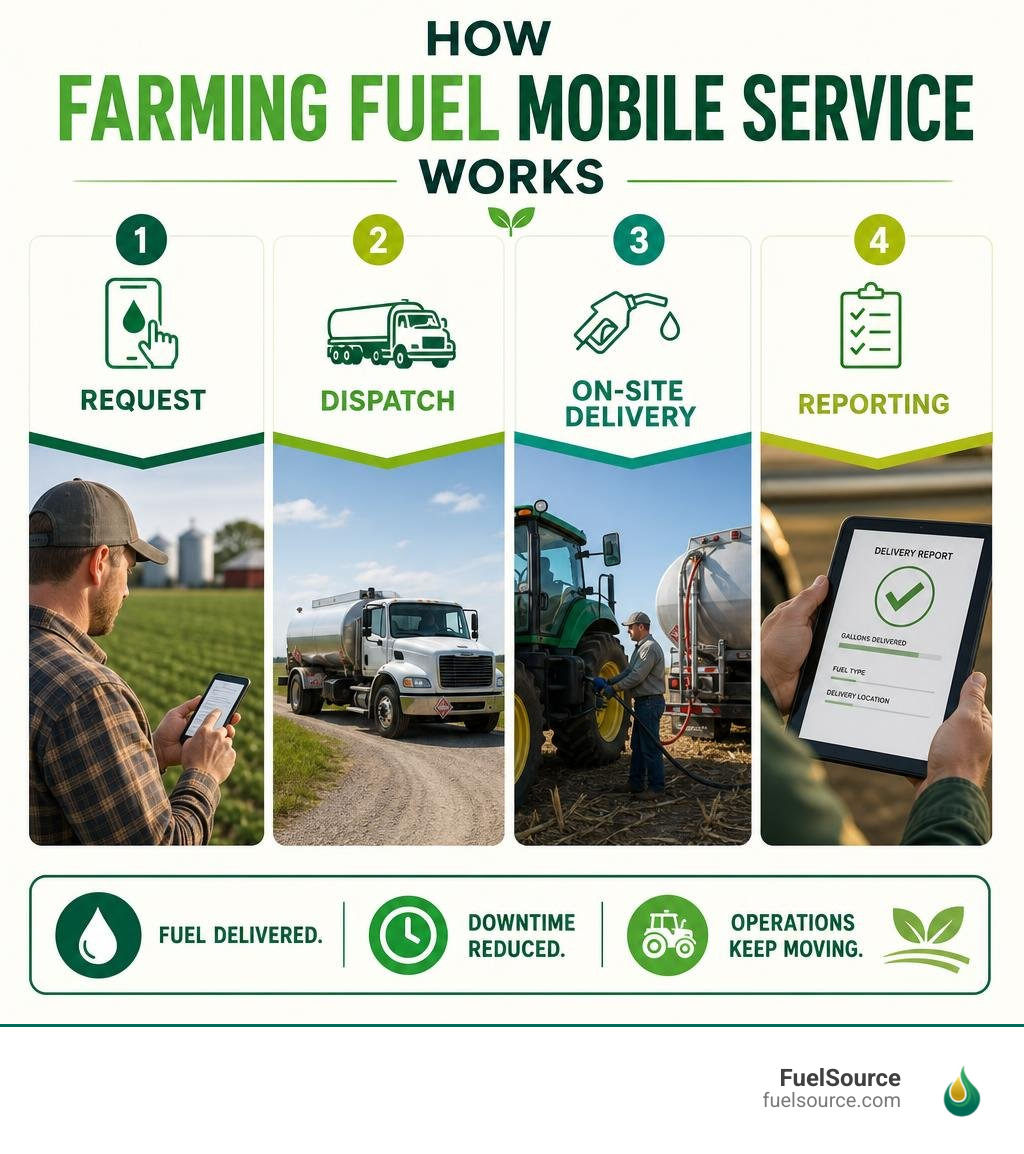
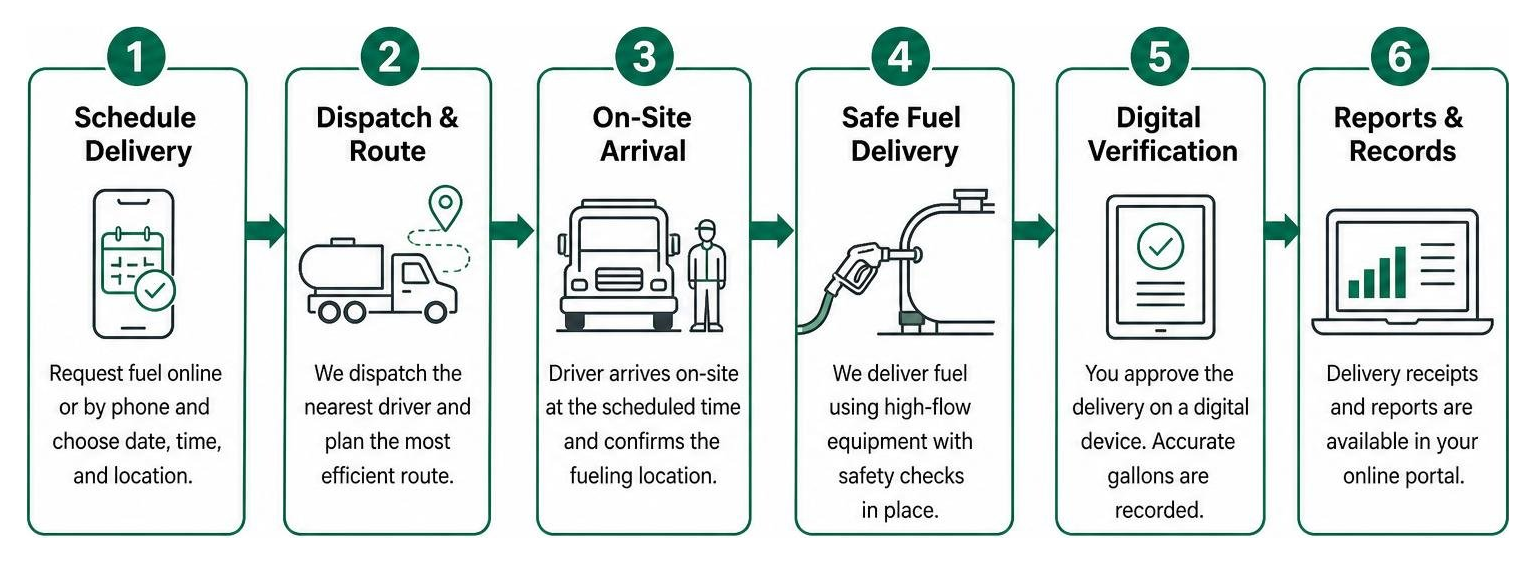
Here’s how it works at a glance:
- A licensed fuel truck drives to your farm, field, or storage tank
- You choose scheduled deliveries or call for emergency dispatch (often 24/7)
- The driver fuels equipment on-site — tractors, combines, irrigation pumps, generators
- You receive a delivery report for your records
Running out of fuel mid-harvest isn’t just inconvenient. It stops everything. Equipment sits idle, workers wait, and time-sensitive crops can take a hit that cuts straight into your bottom line.
For farms in rural or hard-to-reach locations, a trip to the nearest fuel station can eat up an hour or more — per run. Multiply that across a full planting season and the hidden cost becomes very real.
That’s exactly the problem a farming fuel mobile service is built to solve.
I’m Kyle Behnke, a business professional with FuelSource and a background in operations and business strategy from Emory University’s Goizueta Business School — I’ve spent my career helping agricultural and commercial operations cut downtime and simplify logistics through smarter farming fuel mobile service solutions. Let’s walk through everything you need to know to keep your equipment fueled and your operation moving.
Easy farming fuel mobile service word list:
Why Modern Agriculture Relies on a Farming Fuel Mobile Service
Modern agricultural operations in Georgia are highly mechanized. We no longer rely on small, pull-behind equipment that can easily be managed with a few handheld jerry cans. Today’s commercial farms and ranches across Bartow, Cherokee, Forsyth, and Cobb counties utilize massive tractors, high-capacity combines, and heavy-duty generators that consume hundreds of gallons of fuel in a single shift.
Managing this fuel supply independently creates a massive logistical headache. If you are still haulage-dependent—meaning you have to drive your tractors or support vehicles to a local retail station or transport fuel in small, trailer-mounted tanks—you are losing valuable time and risking safety. Using a specialized farming fuel mobile service shifts the entire logistical burden off your shoulders.
Instead of pausing your operations to manage fuel runs, a mobile service delivers vital petroleum products directly to where your machinery is working. Whether you need dyed diesel for your off-road tractors, clear diesel for your highway-use farm trucks, gasoline for your utility vehicles, or Diesel Exhaust Fluid (DEF) to keep your modern emissions-compliant engines running smoothly, mobile fueling ensures that your tanks stay full without interrupting your daily workflow. To learn more about how to eliminate these tedious trips to town, check out our guide on How to Fuel Your Tractor Without Driving to Town.
How a Farming Fuel Mobile Service Prevents Costly Downtime
In farming, timing is everything. The planting and harvest windows are incredibly tight, and a single day of bad weather can throw off an entire season’s yield. When you are racing against a storm to get your crops out of the field, every minute counts.
Consider the sheer volume of fuel required for standard field operations. Tilling an acre of land can consume anywhere from 0.30 to 2.10 gallons of diesel, while fertilizing can require up to 1.05 gallons of diesel per acre. When you are managing hundreds or thousands of acres across Gwinnett, Fulton, or Dekalb counties, those gallons add up fast.
If a tractor runs dry in the middle of a pass, the costs multiply quickly. You aren’t just paying for the replacement fuel; you are paying for idle labor, delayed operations, and potential crop spoilage. Furthermore, a professional fuel service helps you optimize your overall consumption. By delivering fuel directly to the field, you eliminate the need for machines to drive back to a central farmyard just to refuel, which reduces unnecessary idling. Proper use of machinery and avoiding idling can reduce diesel waste by up to 15%, adding long-term savings directly to your farm’s bottom line. For more practical advice on keeping your support equipment running efficiently, read about How to Keep Your Mowers Moving with On-Site Fuel.
Fuel Types Delivered Directly to the Field
A comprehensive agricultural mobile fuel service does not just deliver standard diesel. Modern farms require a diverse mix of fuel types and fluid products to keep different classes of machinery running legally and efficiently:
- Red Dyed Diesel (Off-Road Diesel): This fuel is chemically identical to standard highway diesel but is dyed red to indicate that it is exempt from federal and state road taxes. It is strictly designated for off-road agricultural equipment like tractors, combines, harvesters, and stationary irrigation pumps.
- Clear Diesel: Subject to standard road taxes, clear diesel is required for any farm vehicle that travels on public roads, such as transport trucks, flatbeds, and service vehicles.
- Gasoline: Available in various octane ratings, gasoline is delivered to power light-duty utility vehicles, ATVs, and small engine tools like chainsaws and weed eaters.
- Diesel Exhaust Fluid (DEF): Modern diesel engines built with Selective Catalytic Reduction (SCR) systems require high-purity DEF to reduce emissions. Running out of DEF will cause your tractor to enter “limp mode,” severely limiting its power output. To ensure your emissions-compliant machinery stays active, read our insights on Why Your Farm Needs a Dedicated Bulk DEF Delivery Partner.
The Operational Benefits of On-Site Agricultural Fueling

Bringing a mobile fuel service directly to your farm or ranch offers several operational advantages that extend far beyond simple convenience. It allows you to streamline your entire fuel management workflow, control your input costs, and protect your valuable equipment from environmental hazards.
One of the greatest operational benefits is the ability to leverage flexible pricing models. Because we monitor the wholesale petroleum market closely, we can offer competitive, market-based pricing, fixed-price contracts to lock in your costs before peak seasons, or bulk discounts for large-volume deliveries. This cost predictability is essential for accurate seasonal budgeting.
Additionally, many modern farm operations choose to rent or lease on-site storage tanks. Instead of investing thousands of dollars of capital into purchasing above-ground fuel tanks, farmers can partner with us to set up temporary or permanent double-walled storage tanks ranging from 500 to 5,000 gallons. These tanks can be equipped with remote tank monitoring technology. Wireless sensors track your fuel levels in real time and automatically alert our dispatch team when your inventory drops below a specific threshold, triggering an automatic delivery so you never have to worry about manually checking tank levels or running dry. To find the best local delivery options for your property, read our resource on The Best Farm Diesel Delivery Near You.
Streamlining Logistics for Remote and Hard-to-Reach Fields
Agricultural land is rarely uniform or easily accessible. Many of the most productive fields in North Georgia—from the rolling hills of Cherokee and Forsyth counties to the remote tracts in Bartow County—are located down narrow dirt roads, across rough terrain, or behind locked gates.
Standard fuel transport trucks are often too large and heavy to navigate these challenging environments. That is why a specialized agricultural fuel service utilizes custom-designed, highly maneuverable fuel trucks equipped with off-road suspension, heavy-duty tires, and extra-long hoses (often extending up to 150 feet or more). This specialized equipment allows our certified drivers to safely navigate challenging terrain and deliver fuel directly to tractors, harvesters, and irrigation pumps sitting deep within a field.
Furthermore, our dispatch and delivery systems utilize advanced GPS tracking and route optimization software. This ensures our drivers can pinpoint your exact coordinates in the field, reducing delivery times and ensuring we arrive precisely when and where you need us. For regional support and localized service details in Bartow County, you can learn more about our local coverage through Bartow – Palmetto Propane & Fuels .
Fuel Quality Assurance and Contamination Prevention
Your farm equipment represents a massive capital investment. Modern common-rail diesel engines operate under extreme pressures and have incredibly tight tolerances. Even microscopic particles of dirt, dust, or water can clog fuel injectors, ruin fuel pumps, and cause catastrophic engine failure.
Maintaining fuel quality in an outdoor, agricultural environment is incredibly difficult. Dust from tilling, humidity changes that cause condensation inside tanks, and biological growth in biodiesel blends all threaten fuel integrity. A professional mobile fuel service mitigates these risks through strict quality control protocols:
- Multi-Stage Filtration: Fuel is filtered multiple times, both when it is loaded onto our delivery trucks and as it is pumped through our filtered hoses into your equipment or storage tanks.
- Water Mitigation: Specialized water-separating filters and regular tank testing ensure that water intrusion from condensation is prevented.
- Regular Fuel Sampling: Periodic testing and sampling verify that the fuel meets all ASTM performance and purity standards.
- Professional Tank Cleaning: Over time, storage tanks accumulate sediment and sludge. We provide professional tank cleaning services to keep your storage infrastructure pristine.
To explore more about how professional fuel management keeps your engines running cleanly and efficiently, see the industry standards outlined in Agriculture Fuel Delivery Solutions .
Choosing the Right Farming Fuel Mobile Service for Your Ranch
When evaluating potential fueling partners for your agricultural operation, you should look for a provider that offers more than just a truck and a hose. A truly professional service acts as a partner in your business, providing the data and transparency you need to manage your operating costs.
Look for a provider that offers auditable tracking and detailed reporting. Every time a delivery is made, you should receive a digital ticket detailing the exact gallon count, fuel type, date, time, and specific piece of equipment fueled. This data should be easily accessible through a secure cloud portal. This level of detail is invaluable for bookkeeping, cost-accounting by field or crop, and simplifying your IFTA (International Fuel Tax Agreement) tax reporting.
Additionally, if you operate a mix of highway vehicles and off-road machinery, ensure your provider has experience in fleet fuel delivery. This allows you to streamline all your fueling needs—for both your field equipment and your transport trucks—under a single, reliable partner. To learn more about how we structure these comprehensive commercial services, explore our Fleet Fueling Services.
Comparing Mobile Fueling to Traditional Retail Refueling
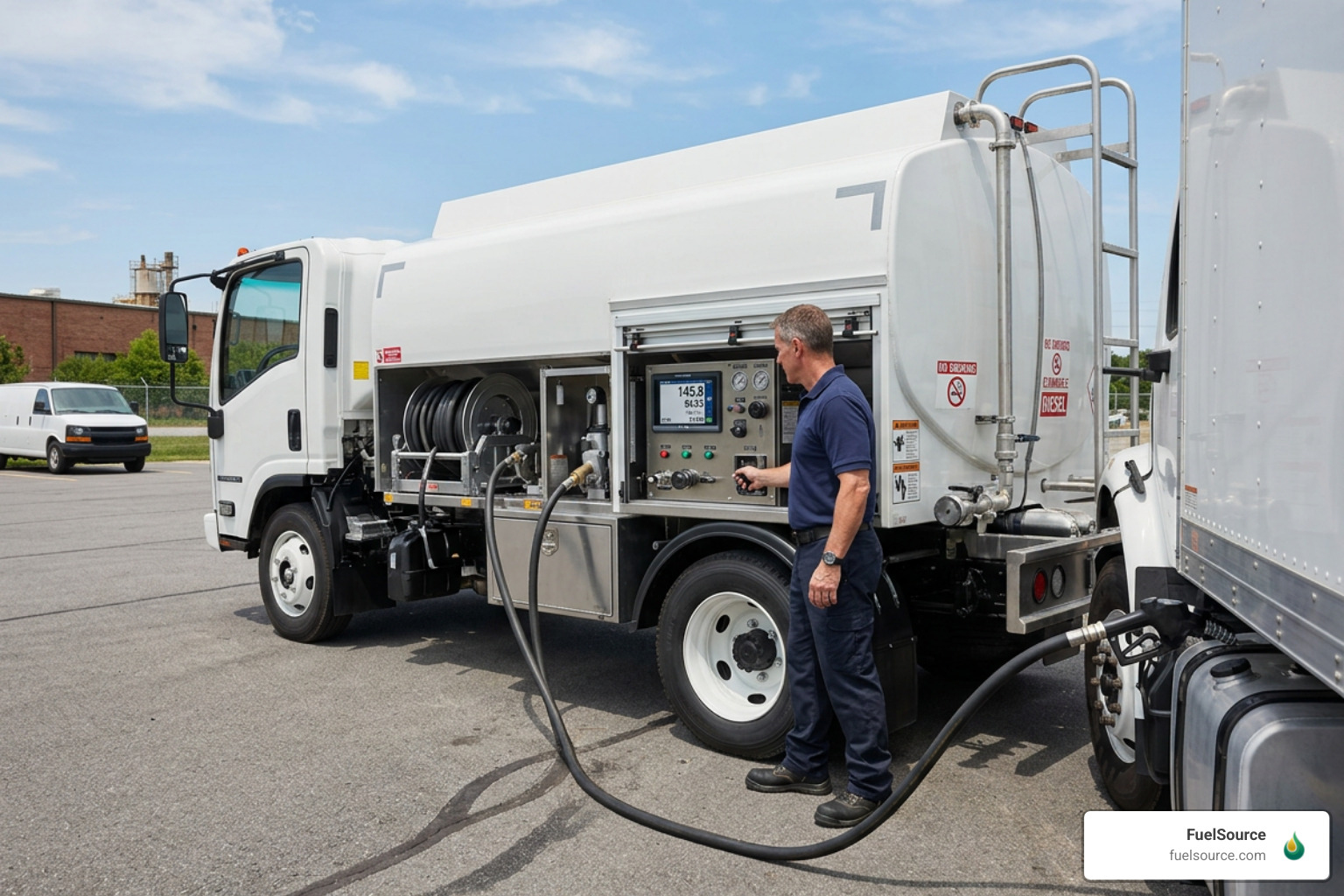
Many farmers wonder if switching to a mobile fuel service is truly more cost-effective than relying on traditional retail gas stations or local cardlock facilities. While the per-gallon price at a local retail pump might occasionally look slightly lower on a roadside sign, the total cost of retail refueling is almost always significantly higher when you factor in labor, equipment wear, and lost productivity.
Retail gas stations are built for commuters, not commerce. Their pump lanes are tight, their overhead clearances are low, and their standard pumps are slow, often taking twice as long to fill a heavy-duty tank compared to commercial high-flow pumps. Cardlock stations offer commercial access, but they still require you to drive your equipment or support vehicles off the farm to refuel.
Here is a direct comparison of how mobile fuel delivery stacks up against traditional retail refueling:
| Feature | Mobile Fuel Delivery | Traditional Retail Gas Stations |
|---|---|---|
| Convenience | Fuel is brought directly to your equipment, wherever it sits. | You must transport equipment or haul fuel in portable tanks. |
| Labor Cost | Zero labor hours spent driving to and from stations. | Paid operators spend productive hours transit-refueling. |
| Equipment Wear | Minimizes non-productive road miles and tire wear. | Puts unnecessary road miles on off-road machinery. |
| Fuel Security | Direct-to-tank delivery with digital tracking prevents theft. | High risk of fuel pilferage from portable cans or open tanks. |
| Reporting | Automated, digital delivery reports via a cloud portal. | Paper receipts that are easily lost or miscalculated. |
| Tax Compliance | Clear separation of taxed clear diesel and tax-exempt dyed diesel. | Harder to track and document off-road tax exemptions. |
To see how on-site fueling can be customized to fit your specific farm layout and daily schedule, read more about our approach to On-Site Fueling. Additionally, to understand how on-demand fueling is transforming logistics in our local region, you can read about how Gas Dash launches on-demand fueling in metro Atlanta .
Safety, Licensing, and Regulatory Compliance Standards
Transporting and dispensing large volumes of petroleum products is a highly regulated activity. Reputable mobile fuel providers must adhere to strict safety and environmental standards set by federal, state, and local authorities.
When we deliver fuel to your farm, our operations are fully compliant with all Environmental Protection Agency (EPA) and Department of Transportation (DOT) regulations. This includes utilizing certified drivers who hold commercial driver’s licenses (CDLs) with hazardous materials (Hazmat) and tank vehicle endorsements. Our custom trucks are regularly inspected, equipped with spill-containment kits, and feature automatic shut-off valves to prevent overfills and environmental contamination.
Furthermore, we help farmers navigate local safety guidelines, such as proper tank placement. For instance, in many jurisdictions, bulk fuel storage tanks must be installed on stable ground at least 25 feet away from any permanent structures to minimize fire risks. Partnering with a licensed and insured provider ensures your farm remains compliant, safe, and protected from costly regulatory fines.
Frequently Asked Questions About Farm Fuel Delivery
Navigating agricultural fuel logistics can bring up several questions, especially if you are transitioning from self-managed storage to a professional delivery service. Below are some of the most common questions we hear from local farmers and ranchers in Georgia.
What is the difference between clear diesel and dyed diesel?
The primary difference between clear diesel and dyed diesel is tax status and legal use, not fuel quality. Chemically, both fuels are identical Ultra-Low Sulfur Diesel (ULSD) containing less than 15 ppm of sulfur, ensuring they perform equally well in modern engines.
- Clear Diesel: This fuel is transparent and is subject to state and federal fuel taxes. It is legally required for any vehicle that operates on public roads and highways, such as your personal pickup trucks, farm semi-trucks, and transport trailers.
- Dyed Diesel (Off-Road Diesel): This fuel is dyed red with a solvent dye for easy identification. Because it is intended solely for off-road agricultural, construction, or stationary equipment (like tractors, combines, and generators), it is exempt from highway excise taxes.
Because dyed diesel is tax-exempt, using it in an on-road vehicle is a serious federal and state offense. State authorities regularly conduct random fuel-tank checks on public roads, especially in agricultural areas. If red dye is detected in an on-road vehicle’s fuel tank, the penalties and fines can range from $1,000 to $2,000 per vehicle per violation.
What are the typical minimum order sizes and delivery options?
Delivery terms vary depending on your location and specific fuel needs, but professional fuel services are designed to accommodate operations of all sizes. Most providers establish a standard minimum delivery quantity—often around 100 gallons—to ensure delivery routes remain efficient and cost-effective.
To fit your farm’s schedule, several delivery options are typically available:
- Scheduled Deliveries: Perfect for year-round stability, you can set up recurring deliveries (weekly, bi-weekly, or monthly) based on your average fuel consumption.
- On-Demand Fueling: You monitor your tank levels and call or request a delivery online whenever your inventory runs low.
- 24/7 Emergency Dispatch: During critical periods like harvest or major weather events, emergency fuel dispatch is available around the clock to keep generators and key machinery running.
- Tank Rentals: If you do not have sufficient storage, you can rent double-walled fuel tanks ranging from 500 to 5,000 gallons, complete with high-speed pumps and optional remote monitoring.
How do mobile fuel services handle remote or hard-to-access fields?
We specialize in reaching locations that standard delivery vehicles cannot. When you partner with us, our logistics team conducts pre-delivery planning to analyze the terrain, identify potential obstacles (such as low-hanging branches, tight gates, or soft soil), and map out the safest, most efficient route.
Our fleet of custom-designed, off-road capable fuel trucks is operated by highly trained, certified drivers who know how to navigate rough farm roads and muddy fields. By utilizing advanced GPS tracking, route-optimization software, and extra-long, high-durability hoses, we can deliver fuel directly to your equipment in the field, even in remote corners of Bartow, Cherokee, or Paulding counties. To understand the unique demands of agricultural fueling in our state, explore The Dirt on Diesel Delivery for Georgia Farming.
Conclusion
In modern agriculture, efficiency is the key to profitability. Managing your own fuel runs, maintaining outdated storage tanks, and dealing with the downtime of dry equipment are unnecessary drains on your time and capital. Partnering with a professional farming fuel mobile service keeps your tractors moving, your generators huming, and your harvest on schedule.
At FuelSource, we have spent more than 30 years delivering dependable, high-quality fuel services across the Atlanta Metro and North Georgia regions, including Marietta, Canton, Decatur, and surrounding counties. Equipped with state-of-the-art delivery trucks and a user-friendly customer portal for real-time reports and seamless IFTA tracking, we bring the pump directly to your pasture so you can focus on what you do best: running a successful agricultural operation.
Ready to eliminate downtime and simplify your farm’s fueling logistics? Discover how we support local growers by reading From Farms to Foundations: North Georgia’s Best Fueling Resources. To explore our complete fueling options, check out our dedicated Diesel Delivery page, or take the next step today and Schedule your delivery with FuelSource.