
Buy the Right DEF for Agricultural Use
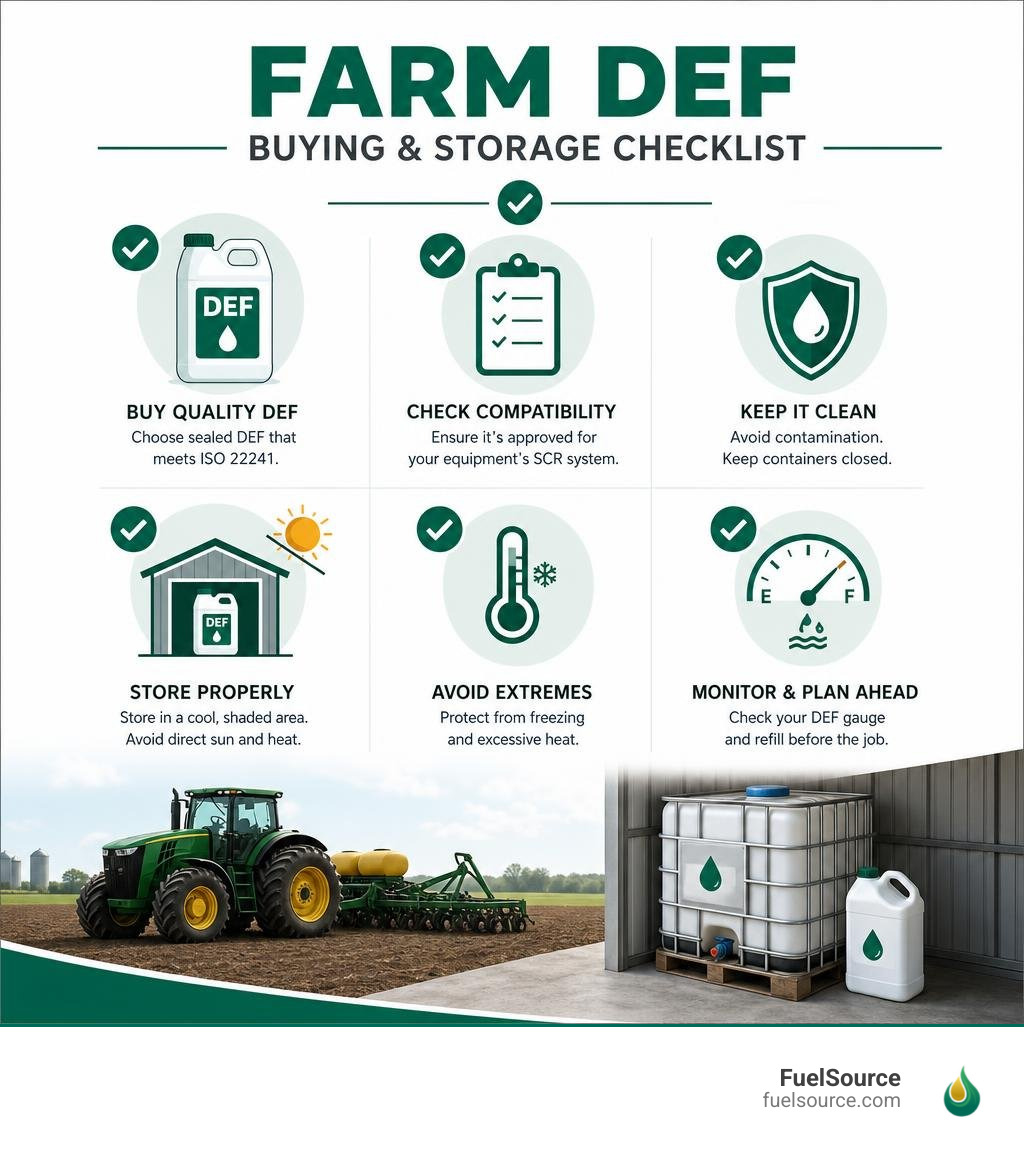
For DEF for agricultural use, buy only sealed fluid that meets ISO 22241 and is approved for your tractor’s SCR system. Keep it clean, store it out of direct sun and excessive heat, and monitor the machine’s DEF gauge before heading to the field. Running out can trigger power limits that turn a small supply issue into costly downtime.
Diesel Exhaust Fluid is a 32.5% high-purity urea solution in deionized water. SCR-equipped tractors, combines, and other Tier 4 farm machines inject it into the exhaust stream, where it helps convert nitrogen oxides into nitrogen and water vapor.
DEF is not diesel fuel, and it is not fertilizer. It belongs only in the dedicated DEF tank on compatible equipment. Most farm machines use roughly 3% to 4% as much DEF as diesel, though heavy PTO work can raise that rate.
I am Kyle Behnke, a business and operations professional in the Atlanta area with experience helping organizations make practical supply decisions in fast-moving fuel markets. In this guide, I will cover the key buying, storage, and uptime considerations for DEF for agricultural use.
Understanding Diesel Exhaust Fluid and SCR in Agricultural Machinery
Modern farming equipment relies on cutting-edge engineering to deliver immense horsepower while complying with strict emissions standards. For machinery rated at Tier 4 Final and European Stage V emissions levels, Selective Catalytic Reduction (SCR) technology is the core method used to scrub harmful compounds from the exhaust.
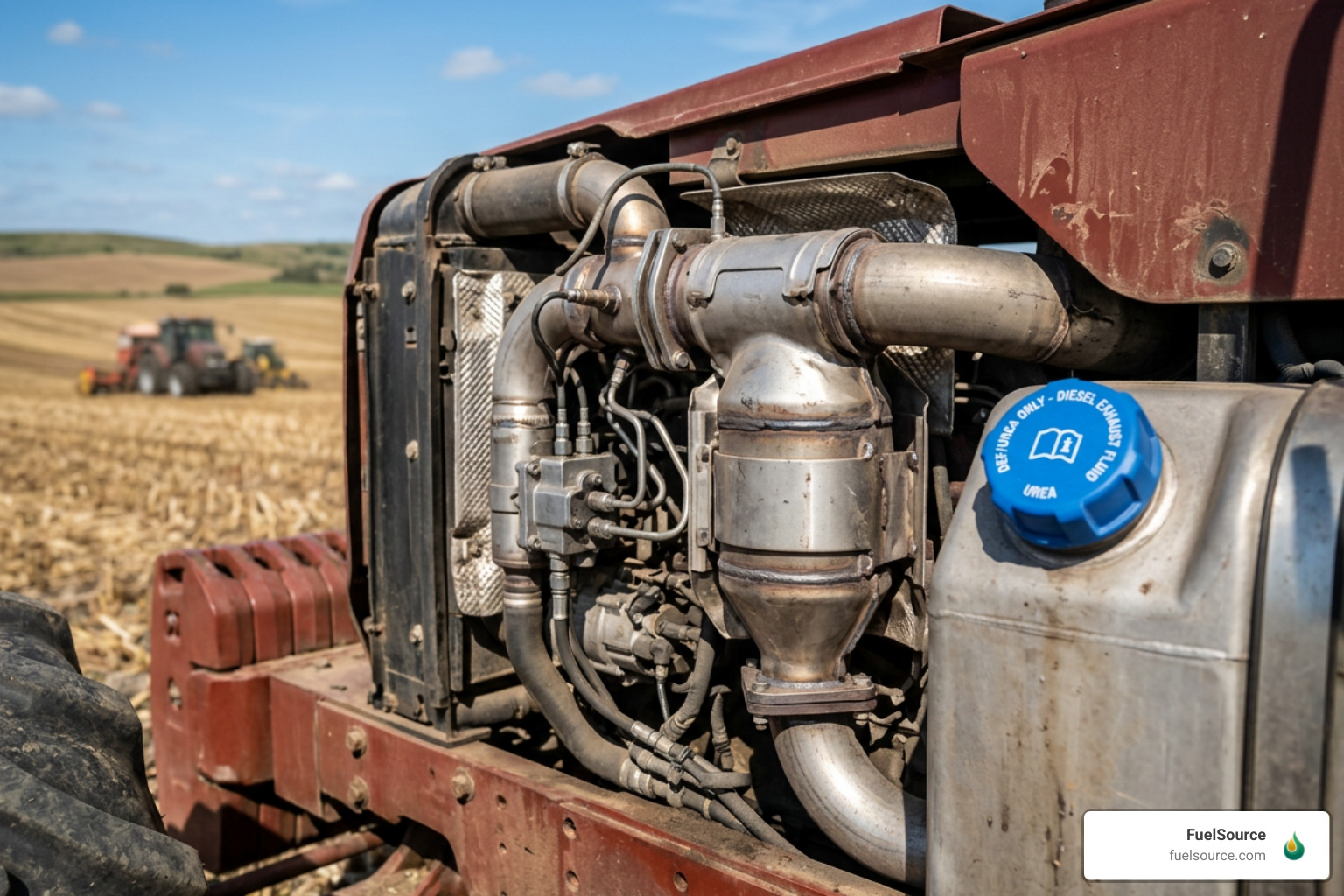
At the center of this process is Diesel Exhaust Fluid. Chemically, DEF is an aqueous urea solution composed of 32.5% high-purity synthetic urea and 67.5% deionized water. It is non-flammable, non-toxic, and clear as water, weighing roughly 9.1 pounds per gallon. Rather than being added to the fuel tank, DEF resides in a separate, dedicated onboard reservoir marked by a distinctive blue fill cap.
How Selective Catalytic Reduction Reduces Ag Emissions
Selective Catalytic Reduction works as an active emissions control system. When the tractor operates and the exhaust system reaches operating temperatures above 250°C (482°F), the engine control unit (ECU) precisely meters DEF injection directly into the hot exhaust stream ahead of the catalytic chamber.
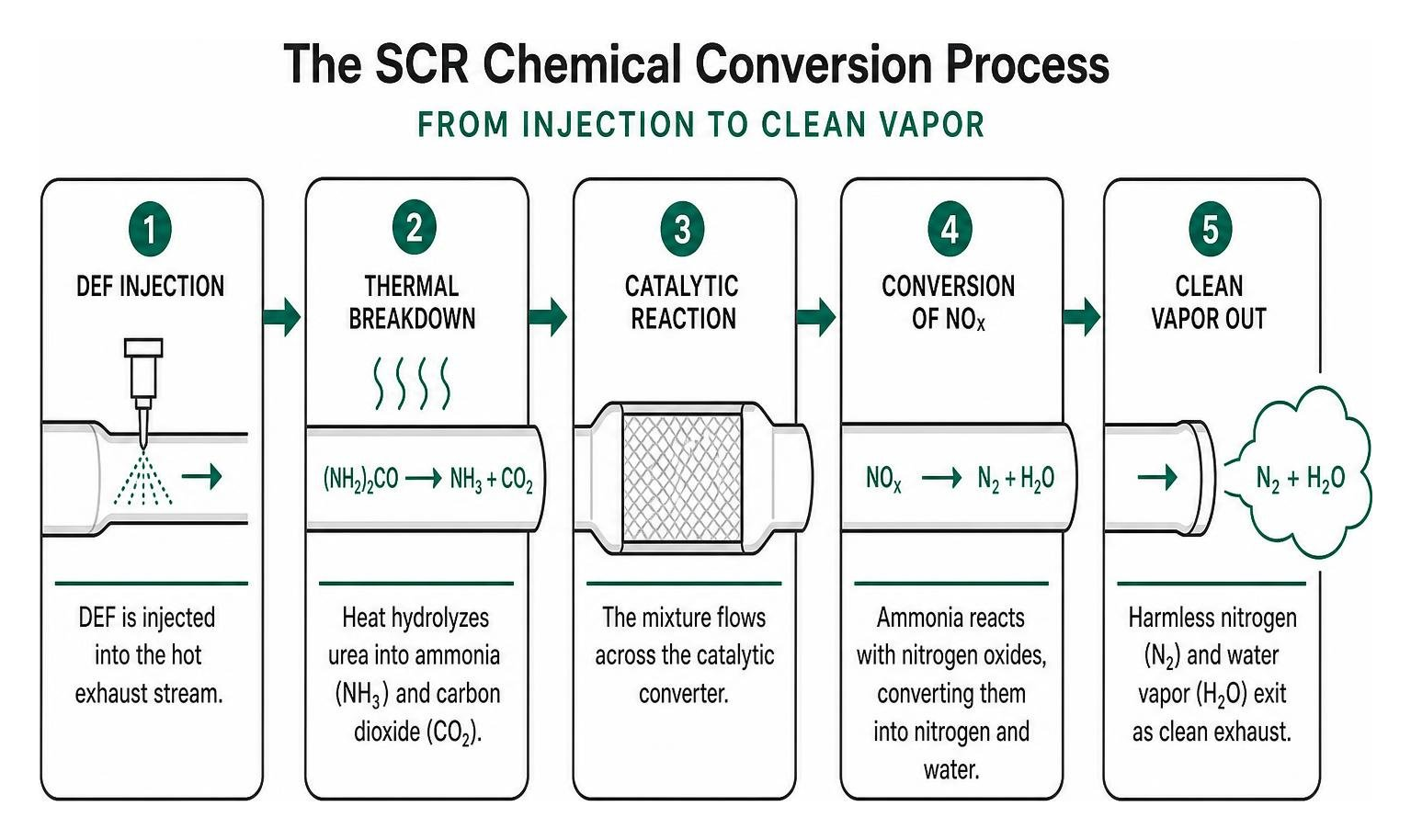
Inside the exhaust stream, heat hydrolyzes the urea into ammonia vapor ($NH3$) and carbon dioxide ($CO2$). As this mixture flows across the catalytic converter, the ammonia chemically reacts with harmful nitrogen oxides ($NOx$). The catalytic reaction breaks down these pollutants into harmless elemental nitrogen ($N2$) and water vapor ($H_2O$)—the natural components of clean air.
Engine Derating and Field Downtime Risks
Because EPA Tier 4 Final mandates strict emission outputs, engine control units continuously measure DEF level, quality, and exhaust chemistry using integrated sensors. If the DEF tank runs dry, the system will not simply log a fault code and let the tractor pull a heavy disc at full power.
Instead, progressive warning indicators alert the operator from the cab. If these warnings are ignored and the reservoir empties, the ECU initiates engine derating. The tractor drops into a restricted “limp mode,” slashing engine torque and capping ground speed at roughly 5 mph. If the machine is shut down while empty, it may refuse to restart until the DEF tank is replenished. During tight harvest windows or spring planting, this forced shutdown causes severe operational delays. Understanding how off-road diesel supply integrates with emissions systems helps ensure your farm machinery never grinds to a halt due to an empty fluid tank.
Managing DEF for Agricultural Use Across Modern Farm Machinery
Balancing fluid inventories requires knowing real-world consumption patterns across varied farm tasks. Operating hours, field terrain, ambient temperatures, and implement resistance all influence how much DEF your tractors and combines require.
| Operating Condition | Engine Load Profile | Manufacturer Baseline Estimate | Real-World DEF Consumption (% of Fuel) |
|---|---|---|---|
| Light Utility / Transport | 20% – 40% (Road travel, light loader) | 2.0% – 3.0% | 2.5% – 3.5% |
| Moderate Fieldwork | 50% – 70% (Planting, spraying, mowing) | 3.0% – 4.0% | 3.5% – 5.0% |
| Heavy PTO Operations | 80% – 100% (Baling, silage chopping) | 3.0% – 4.0% | 4.3% – 6.8% |
| Extreme Draft Tillage | 90% – 100% (Deep ripping, heavy discing) | 3.0% – 4.0% | 5.5% – 7.9% |
Calculating DEF for Agricultural Use Across High-Load Machinery
Under standard operating cycles, manufacturers quote a baseline DEF consumption rate of 3% to 4% of diesel fuel burned. For an average agricultural tractor burning 1,000 gallons of off-road diesel per year, that translates to approximately 30 to 40 gallons of DEF annually.
However, real-world field conditions frequently challenge standard baselines. In certified power-take-off (PTO) dynamometer tests, tractors operating under continuous heavy loads recorded DEF consumption rates between 4.3% and 7.9% of fuel burned. When pulling deep-tillage implements or running high-capacity forage harvesters, the engine creates more $NO_x$, requiring higher injection volumes to scrub the exhaust. Reviewing real-world PTO consumption dynamics shows why managers should budget fluid supplies based on peak seasonal loads rather than nominal idle averages.
Fuel Economy Gains and Operating Cost Offsets
While adding another fluid to manage might seem like an extra burden, SCR systems offer a notable financial upside. By shifting $NO_x$ reduction entirely to the exhaust stream, engine designers can tune diesel combustion for maximum power, thermal efficiency, and minimal particulate generation.
As a result, SCR-equipped agricultural engines consume on average 5% less diesel fuel compared to older EGR-only engines. Because diesel fuel is significantly more expensive per gallon than bulk DEF, that 5% reduction in total fuel burn easily compensates for the purchase cost of the fluid, lowering total operating costs per acre.
Farm Storage, Handling, and Temperature Requirements
Maintaining high fluid quality across rural properties requires clean, dedicated dispensing infrastructure. DEF is mildly corrosive to copper, brass, zinc, and carbon steel, and easily contaminated by microscopic dust.
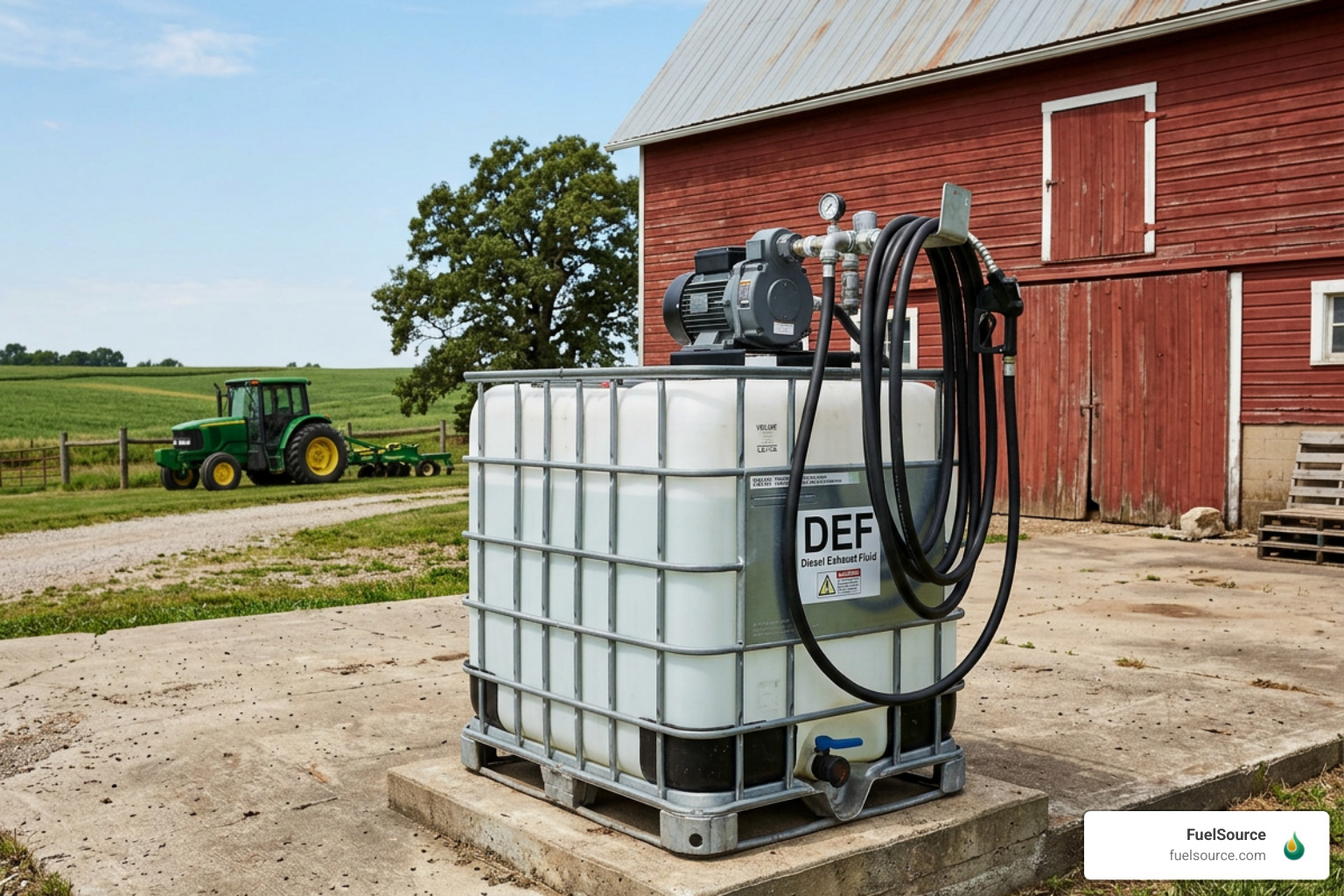
All on-farm storage setups must use containers made exclusively from approved materials such as high-density polyethylene (HDPE), polypropylene, or ISO-grade stainless steel. Keep pumps, hoses, and dry-break couplers sealed to prevent field dust, grain chaff, and moisture from compromising the fluid.
Temperature Thresholds, Freezing, and Shelf Life
Under optimal conditions—stored out of direct sunlight in a dry environment between 12°F and 75°F—DEF maintains an official shelf life of up to 36 months. If stored in unshaded outdoor areas where ambient temperatures consistently exceed 90°F, the urea gradually decomposes into ammonia gas, reducing usable life to roughly 12 months.
DEF freezes at 12°F (-11°C). When frozen, the fluid expands by approximately 7%, which is why onboard tractor tanks and bulk totes are designed with expansion headspace. Freezing does not degrade the urea solution or alter its chemical integrity; once thawed naturally, the fluid returns to its standard 32.5% concentration without separation. Modern farm equipment includes internal heating elements surrounding the DEF tank and dosing lines to thaw fluid quickly during cold mornings.
Quality Standards: Ensuring Pure DEF for Agricultural Use
Purity is non-negotiable. Farm machinery DEF must meet the global ISO 22241 standard (parts 1 through 4) and carry the American Petroleum Institute (API) certification mark.
Even a trace amount of mineral oil, tap water minerals, fuel residue, or dust can permanently poison the expensive catalytic coating inside the SCR canister or foul the fine micro-orifices of the DEF injector. Farm managers can monitor batch consistency using a simple optical refractometer; an accurate reading should register a refractive index of 1.3814 to 1.3843, corresponding directly to 32.5% urea content.
Can DEF Be Used as Fertilizer? Agronomic and Environmental Risks
Given that DEF consists of synthetic urea and deionized water, growers sometimes wonder if surplus or expired fluid can be repurposed as a liquid nitrogen source through field sprayers or irrigation systems.
Agronomists strongly advise against this practice. Applying DEF directly to fields introduces serious agronomic, chemical, and regulatory risks that far outweigh any temporary nitrogen recovery.
Chemical Incompatibility and Foliar Scorch Risks
While DEF does contain nitrogen (approximately 15.2% pure elemental N by weight), its formulation is chemically optimized for high-temperature exhaust vaporization, not plant metabolism. DEF carries an alkaline pH between 9.0 and 10.0. Applying a solution with this high alkalinity directly to crop foliage causes severe leaf scorch and cell wall destruction.
Furthermore, industrial DEF can contain specialized antifoam additives, stabilizers, or trace biuret compounds that are not screened or cleared for soil application. These non-agronomic compounds can damage the delicate soil microbiome, disrupt beneficial mycorrhizal fungi, and cause uneven nitrogen release. Reviewing the documented risks of using DEF on crops makes it clear that automotive urea should never replace purpose-formulated crop nutrition products.
Environmental Runoff and Disposal Guidelines
Improper disposal of DEF violates environmental protection mandates. If spilled in concentrated quantities, the sudden influx of urea breaks down into high levels of ammonia and nitrates, risking rapid leaching into shallow farm wells and tile drain networks.
- Always store DEF away from open surface waterways, drainage ditches, and livestock ponds.
- In the event of a minor surface spill on concrete or shop floors, contain the spread with absorbent pads, collect the residue in marked drums, and flush the surface thoroughly with clean water.
- Never dump expired or off-spec DEF down septic tanks, storm sewers, or across open pasture land.
- Empty totes and plastic drums must be triple-rinsed with deionized water before recycling or disposal according to local environmental regulations.
Legal Definitions, Farm Tax Exemptions, and Compliance
The term “agricultural use” carries specific legal meaning under state and federal law. It designates activities directly related to bona fide commercial farming, such as cultivating row crops, harvesting timber, livestock management, horticulture, and dairy operations.
Understanding these boundaries is essential when auditing farm fuel expenses, managing agricultural property tenancy, and maintaining sales tax compliance for supplies.
Qualifying Agricultural Use and Tax Relief
Across Georgia and surrounding agricultural hubs, state revenue departments grant sales tax exemptions on operational inputs used directly in crop and animal production. For example, qualifying producers holding a valid Georgia Agriculture Tax Exemption (GATE) certificate are often exempt from state sales tax on off-road diesel, tractor maintenance components, and operating fluids like DEF.
To maintain compliance and protect your exemptions:
- Retain all bulk fluid delivery invoices and receipts alongside your IRS Schedule F tax filings.
- Ensure equipment using tax-exempt fluids is engaged in bona fide agricultural production rather than third-party highway hauling or non-ag commercial landscaping.
- Review state-specific statutory language covering state agricultural tax exemptions to ensure your storage and usage records meet strict departmental standards.
Bulk Delivery and Refueling Infrastructure for Rural Operations
Managing individual 2.5-gallon jugs during long shifts creates plastic waste, slows down turnaround times, and exposes fluid to open-air dust. For operations running multiple Tier 4 machines, upgrading to intermediate bulk containers (IBCs) provides substantial savings and better quality control.
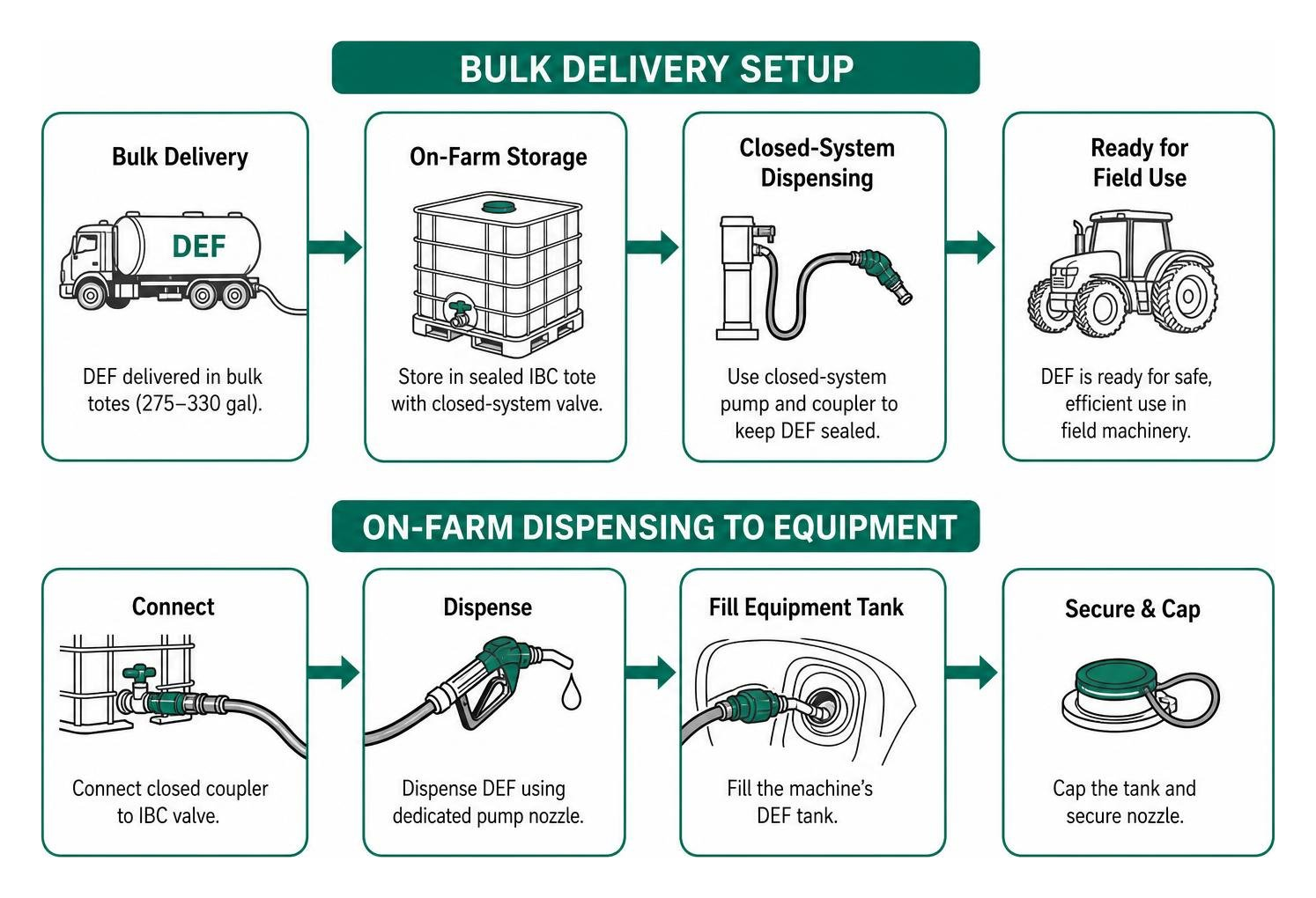
Bulk 275-gallon and 330-gallon totes equipped with closed-system coupler valves ensure fluid remains hermetically sealed until it enters the tractor tank. Coordinating routine deliveries with your fuel distributor keeps planting and harvest schedules moving smoothly. With direct-to-tractor delivery, farm operators eliminate daily logistics hassles. Partnering with a specialist for dedicated bulk DEF farm delivery ensures pure, certified product arrives directly at your home base or field staging pads.
Frequently Asked Questions About Farm DEF Management
What happens if my tractor runs completely out of DEF in the middle of a field?
When the DEF tank hits empty, the engine control unit logs a critical emissions fault and initiates an immediate power derate. The engine reduces torque output by 40% to 50% and limits maximum ground speed to roughly 5 mph to prevent non-compliant emissions. To restore full operating power, replenish the tank with certified ISO 22241 fluid; the sensors will clear the derate sequence shortly after detecting proper fluid levels and quality.
Why can’t automotive DEF be applied directly to crops as liquid nitrogen?
DEF is engineered specifically for catalytic exhaust systems rather than agricultural fertility. With a high alkaline pH of 9.0 to 10.0 and lack of agronomic buffering agents, applying DEF directly to plants causes severe foliar scorch, root burn, and potential microbial disruption in the soil profile. Always use registered agricultural nitrogen fertilizers like UAN-32 or granular urea designed for agronomic use.
How long can bulk DEF sit in an unheated barn before degrading?
If stored in a dark, clean, indoor space where ambient temperatures stay below 75°F, bulk DEF will safely last up to 36 months. Even in unheated structures across colder regions, winter freezing will not harm the fluid’s chemistry once thawed. However, if unheated barns experience extreme summer heat exceeding 90°F for sustained periods, plan on cycling through fluid inventories within 12 months.
Conclusion
Keeping your farm machinery running smoothly during critical operating seasons means staying proactive with your emissions systems. By understanding SCR technology, matching fluid storage to real-world PTO consumption, and protecting product purity from dust and heat, you protect your Tier 4 machinery from expensive downtime.
At FuelSource, we bring over 30 years of petroleum and fluid logistics experience directly to agricultural producers, fleet operators, and job sites across Metro Atlanta and North Georgia—from Cherokee, Bartow, and Forsyth counties down through Fulton, Coweta, and beyond. Whether you need off-road diesel or scheduled DEF fluid delivery straight to your farm shop, our modern transport trucks and dedicated customer portal give you instant reporting and dependable supply. Contact us today to set up a turnkey fluid schedule tailored to your farm’s operating needs.