Key Types of Fuel Delivered to Jobsites and Commercial Fleets
Finding a reliable commercial fuel delivery service requires verifying four core capabilities: 24/7 emergency dispatch response times, multi-fuel and DEF availability on single runs, direct-to-equipment wet hosing or bulk tank telemetry support, and automated digital reporting for tax compliance. Evaluating these criteria ensures your operations eliminate equipment downtime while maintaining regulatory adherence.
When managing a busy site or terminal, having the exact fuel delivered to match your engine specifications and regulatory mandates is vital. Using the wrong blend can damage sensitive injectors or trigger major compliance fines.
| Fuel Type | Visual Marker | Tax Status | Primary Applications | Key Advantage |
|---|---|---|---|---|
| On-Road Diesel | Clear / Pale Amber | Subject to federal & state road taxes | Box trucks, tractor-trailers, service vans, pickups | Highway-legal, high cetane, lubricity additives |
| Off-Road Diesel | Red Dye (Solvent Red 164) | Tax-exempt from motor fuel road taxes | Excavators, bulldozers, stationary generators, tractors | Significant per-gallon cost savings for jobsite machinery |
| Unleaded Gasoline | Clear / Light Yellow | Road taxed (standard grades 87–93) | Light-duty fleet trucks, lawn mowers, utility carts | Convenient site replenishment for mixed vehicle yards |
| Marine Diesel / Gas | Clear or Dyed depending on vessel use | Specialized harbor/commercial marine rules | Tugboats, dredges, workboats, waterfront equipment | High-flow dockside delivery directly at marine terminals |
| Kerosene | Clear | Special seasonal taxation | Space heaters, specific industrial burners, cold blends | Exceptional low-temperature anti-gel performance |
Beyond liquid fuels, pairing fuel replenishment with heavy-duty lubricants, engine oils, and hydraulic fluids allows your technicians to handle preventative maintenance without coordinating multiple supply vendors.
On-Road Clear Diesel vs. Off-Road Dyed Diesel
The fundamental difference between on-road clear diesel (Ultra-Low Sulfur Diesel or ULSD) and off-road dyed diesel comes down to taxes and chemistry markers. Mechanically, both fuels provide identical combustion power and energy density. However, off-road diesel contains an added red dye (Solvent Red 164) signifying that the end-user did not pay on-highway road taxes on that volume.
Federal and state regulators enforce strict penalties for using red-dyed fuel in vehicles operating on public roadways. For stationary equipment like prime or standby backup generators, earthmovers, and agricultural machinery, using off-road diesel offers massive operational savings. When maintaining heavy equipment, understanding how heavy machinery and DEF work in tandem helps equipment managers ensure that emissions systems and fuel lines stay completely trouble-free.
Diesel Exhaust Fluid (DEF) and Ancillary Fluids
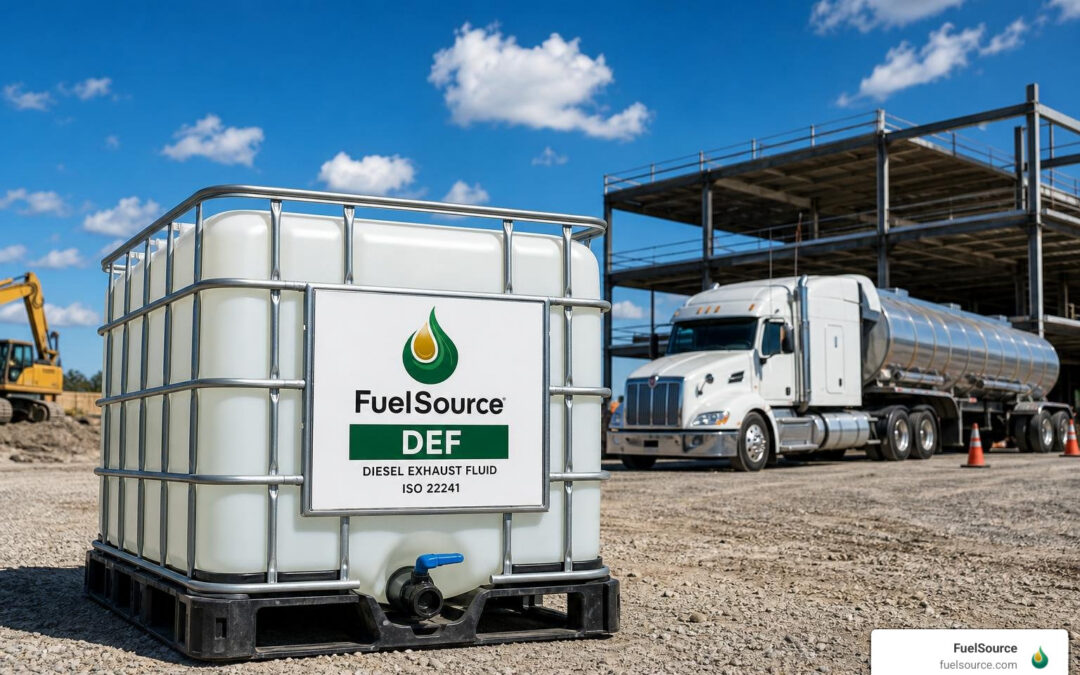
Modern diesel engines equipped with Selective Catalytic Reduction (SCR) systems require pure, high-grade Diesel Exhaust Fluid to transform harmful nitrogen oxide emissions into harmless nitrogen gas and water vapor. Running out of DEF forces modern ECM engines into severe “derate mode,” capping top speed and torque until the fluid reservoir is refilled.
Because DEF is sensitive to temperature extremes and chemical contamination, handling it in dedicated closed-loop systems is critical. Scheduling dedicated DEF fluid delivery alongside your routine diesel drops keeps your machinery fully compliant with Environmental Protection Agency (EPA) standards without messy jug handling or storage degradation. During cooler winter operations, providers also deliver specialized anti-gel and cold-flow fuel conditioners to keep fuel lines free of paraffin wax blockages.
On-Site Fueling Methods: Direct-to-Equipment vs. Bulk Storage
Keeping heavy machines moving requires choosing an on-site fueling strategy that matches your physical layout, shift patterns, and machinery footprint. The two primary methods are mobile direct-to-equipment fueling (wet hosing) and bulk on-site tank replenishment.

Utilizing professional on-site fueling eliminates the dangerous and messy practice of having crew members haul open jerrycans across active work zones, reducing both spill hazards and manual labor costs.
Mobile Wet Hose Fueling: Getting Fuel Delivered Directly to Machinery
Mobile wet hosing involves dispatching a certified tank truck directly to individual machines parked across a construction site, yard, or quarry. A specialized operator runs the hose directly to the fuel neck of each excavator, crane, bulldozer, skid steer, or generator tank.
Many contractors prefer having mobile wet hosing completed during off-shift hours or overnight. When your heavy machinery operators arrive at 6:00 am, every single fuel tank is topped off and ready for immediate work. You stop wasting time at the pump with construction site fuel delivery, eliminating fifteen to thirty minutes of daily lost production per machine operator.
On-Site Storage Tanks, Fuel Cubes, and Rentals
For facilities running around-the-clock operations or high-volume daily machinery rotations, deploying stationary bulk storage tanks or double-walled fuel cubes provides reliable 24/7 on-demand access. Modern double-walled fuel cubes offer integrated 110% environmental containment, eliminating the need for secondary spill containment basins.
When planning jobsite infrastructure, reading up on tanking up: how to choose the best on-site fuel tanks for your business ensures you pick the right capacity and pumping configuration. Top fuel providers install modern wireless telemetry monitors on these tanks, automatically alerting dispatch when levels drop below 30% so replenishment arrives before running dry.
Emergency Response, Marine, and Specialized Fuel Logistics
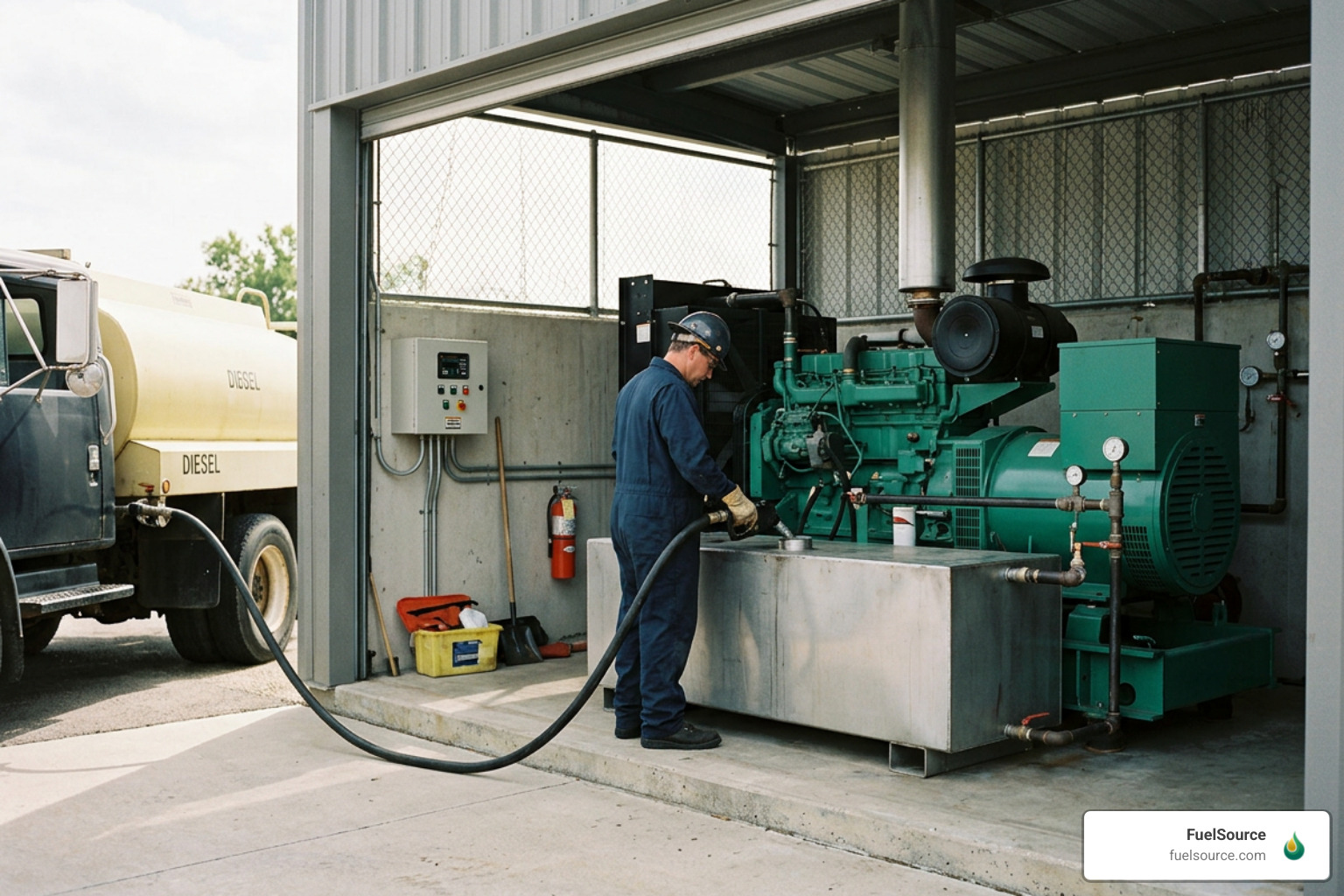
Fuel demands change quickly when extreme weather strikes or when maritime schedules require rapid turnaround times. Maintaining a reliable logistics chain ensures operational continuity regardless of external disruptions.
During unexpected utility outages, having a dedicated partner means you never run out of generator juice again, protecting mission-critical cold storage, healthcare facilities, manufacturing plants, and municipal pump stations through guaranteed priority response times.
Marine Vessel and Waterfront Refueling
Commercial waterfront operations demand precision and strict environmental adherence. Commercial workboats, tugs, barges, and dredging vessels operate under tight tidal and maritime schedules that do not leave room for fueling delays.
Mobile dockside fuel delivery services bring high-flow marine diesel and lubricants directly to docks, piers, and waterfront terminals. Experienced fuel delivery teams utilize specialized dry-break couplings and follow strict United States Coast Guard (USCG) marine transfer protocols to ensure zero-spill transfers during high-speed dockside pumping.
How Government and Federal Projects Get Fuel Delivered
Large-scale institutional and federal projects manage fuel requirements through streamlined procurement operations. Agencies like the Defense Logistics Agency (DLA Energy) manage commercial direct delivery fuels for military installations and federal civilian agencies worldwide.
Under direct delivery frameworks, regional fuel management groups coordinate delivery of commercial-grade ground fuels, aviation fuels, and maritime propulsion products directly to tactical vehicles, federal depots, and emergency staging grounds. These organized logistics frameworks provide crucial short-notice fuel supplies to disaster management teams like FEMA during severe storm recoveries and regional emergencies.
How to Choose the Right Fuel Delivery Partner
Selecting an experienced commercial fuel supplier goes far beyond finding the cheapest spot price. You need a dependable logistics partner that protects your machinery, guarantees emergency support, and makes accounting simple.

Key factors to consider include:
- Verified 24/7 Dispatch Capabilities: Emergency responsiveness backed by contractual Service Level Agreements (SLAs).
- Comprehensive Product Availability: The ability to deliver clear diesel, dyed diesel, gasoline, DEF, and premium lubricants on a single delivery run.
- Strict Safety and Environmental Protocols: Dedicated spill prevention gear, double-walled containment tanks, and fully licensed Hazmat drivers.
- Transparent Automated Invoicing: Barcode or RFID asset tagging at the vehicle fill neck for complete reconciliation down to the tenth of a gallon.
Having access to clear reporting simplifies complex tax compliance tasks like completing IFTA compliant fuel reports and how to file them by capturing the exact fuel volume pumped into each unit automatically.
Digital Fleet Management and Real-Time Reporting
Modern fleet management requires real-time data visibility. The best fuel suppliers eliminate hand-written delivery tickets and manual fuel logs by offering secure customer portals.
By reviewing your fleet metrics using instant fleet fuel reports, fleet managers can monitor fuel burn rates per machine, track consumption by job site, and reconcile purchases directly with general ledger accounting systems.
Evaluating Delivery Footprint, Reliability, and Safety
Before partnering with any fuel delivery provider, evaluate their dedicated distribution radius and operational fleet size. When finding a reliable fuel transport company, verify that their delivery footprint reliably spans your regional operating territory. In North Georgia, FuelSource serves commercial fleets, job sites, and facilities across Metro Atlanta and surrounding counties including Bartow, Cherokee, Forsyth, Paulding, Cobb, Gwinnett, Barrow, Douglas, Fulton, DeKalb, Rockdale, Walton, Newton, Henry, Fayette, Spalding, and Coweta.
Frequently Asked Questions About Commercial Fuel Delivery
What is the difference between wet hosing and bulk fuel drops?
Wet hosing (mobile direct fueling) involves a delivery driver pumping fuel directly into the fuel tanks of individual trucks, excavators, or generators scattered across a yard or jobsite. Bulk fuel drops involve replenishing an on-site storage tank or fuel cube from which your own team dispenses fuel as needed.
How quickly can emergency fuel delivery arrive during severe weather?
Most dedicated fuel partners maintain 24/7 on-call emergency response dispatchers who prioritize contracted critical infrastructure customers. Response times typically range between two to four hours depending on severe weather road conditions, with scheduled pre-storm tank top-offs arranged ahead of forecasted major weather events.
Can commercial fuel services deliver both diesel and DEF in the same run?
Yes. Modern multi-compartment fuel delivery trucks are equipped to transport both bulk diesel (clear or dyed) and Diesel Exhaust Fluid in dedicated, contamination-free storage tanks with separate metering reels, allowing one delivery driver to service both fluid ports on your equipment in a single visit.
Conclusion
A dependable commercial fuel delivery service is one of the highest-ROI operational partnerships a construction manager, farmer, or fleet operator can establish. By moving away from inefficient gas station visits and dirty manual fuel handling, you recapture valuable labor hours, maintain strict emissions compliance, and protect your enterprise against sudden power interruptions.
At FuelSource, we bring over 30 years of industry experience, state-of-the-art delivery equipment, and real-time digital reporting tools to fuel delivery for fleets, construction sites, agriculture, and emergency facilities throughout Metro Atlanta and North Georgia. Ready to take the friction out of fueling your machines? Visit our portal to order fuel and set up your customized delivery schedule today.