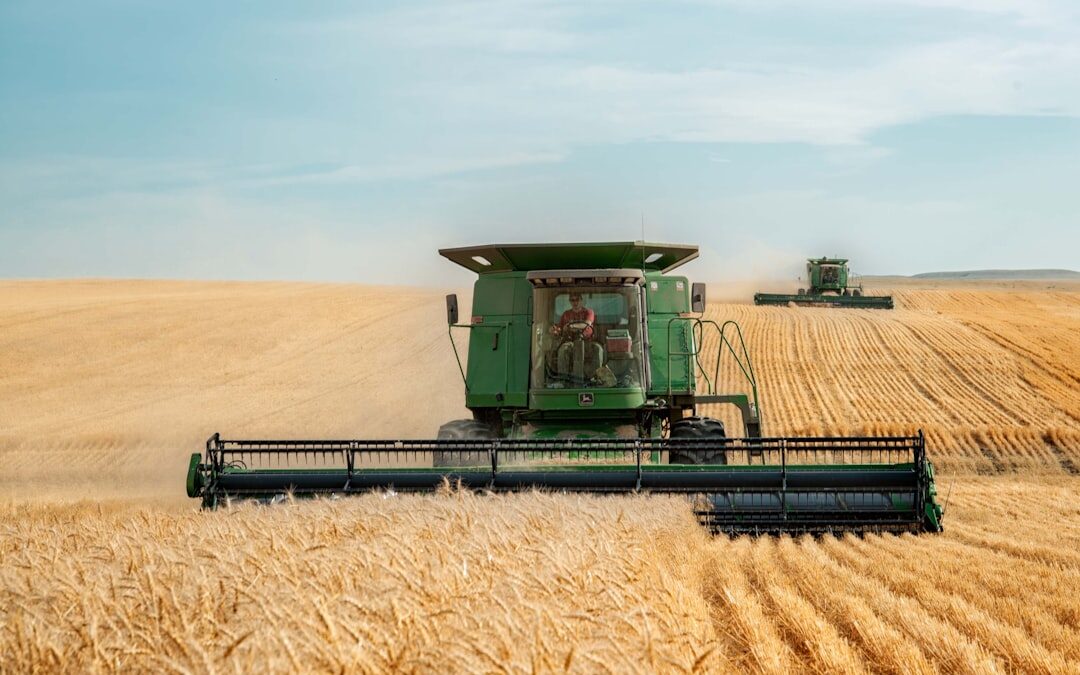
Keep Farm Equipment Running With Agricultural Diesel Delivery
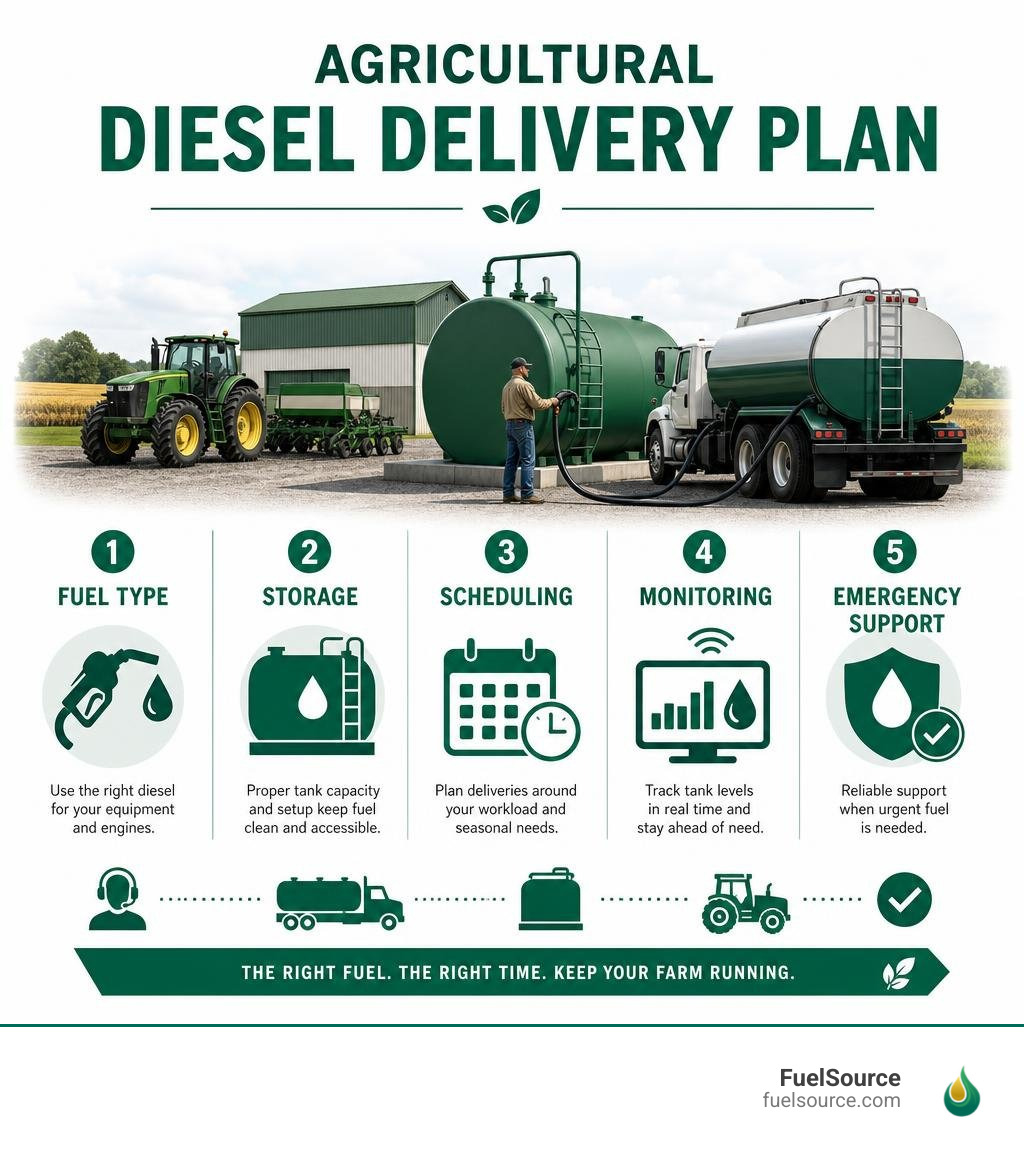
Agricultural diesel delivery brings the right fuel to your farm, storage tank, generator, or equipment when you need it. Start by confirming which fuel your equipment requires, estimating peak-season use, and setting a delivery schedule that leaves a safe reserve in your tank. For planting and harvest, consider tank monitoring or keep-fill service so a low fuel level triggers a refill before downtime starts.
A dependable supplier can also help you separate off-road dyed diesel for eligible farm equipment from clear on-road diesel for highway vehicles, coordinate DEF for newer diesel engines, and provide winter-treated fuel when temperatures drop. The goal is simple: fewer trips to town, less time spent managing fuel, and fewer interruptions when the work cannot wait.
For North Georgia farms, timing matters as much as price. A strong fuel plan accounts for changing workloads, tank capacity, delivery access, and the possibility of urgent refueling during a narrow weather window.
I am Kyle Behnke, a business professional with experience in operations, growth, and practical energy solutions at FuelSource. In this guide, I will break down agricultural diesel delivery options in clear terms so you can build a fuel plan that supports uptime and control.
Learn more about agricultural diesel delivery:
Types of Farm Fuels and Seasonal Formulations
Running a successful agricultural operation requires matching the right fuel blend to the right piece of machinery. Modern agricultural engines demand clean, high-performance fuel to maintain efficiency and comply with strict emission standards.
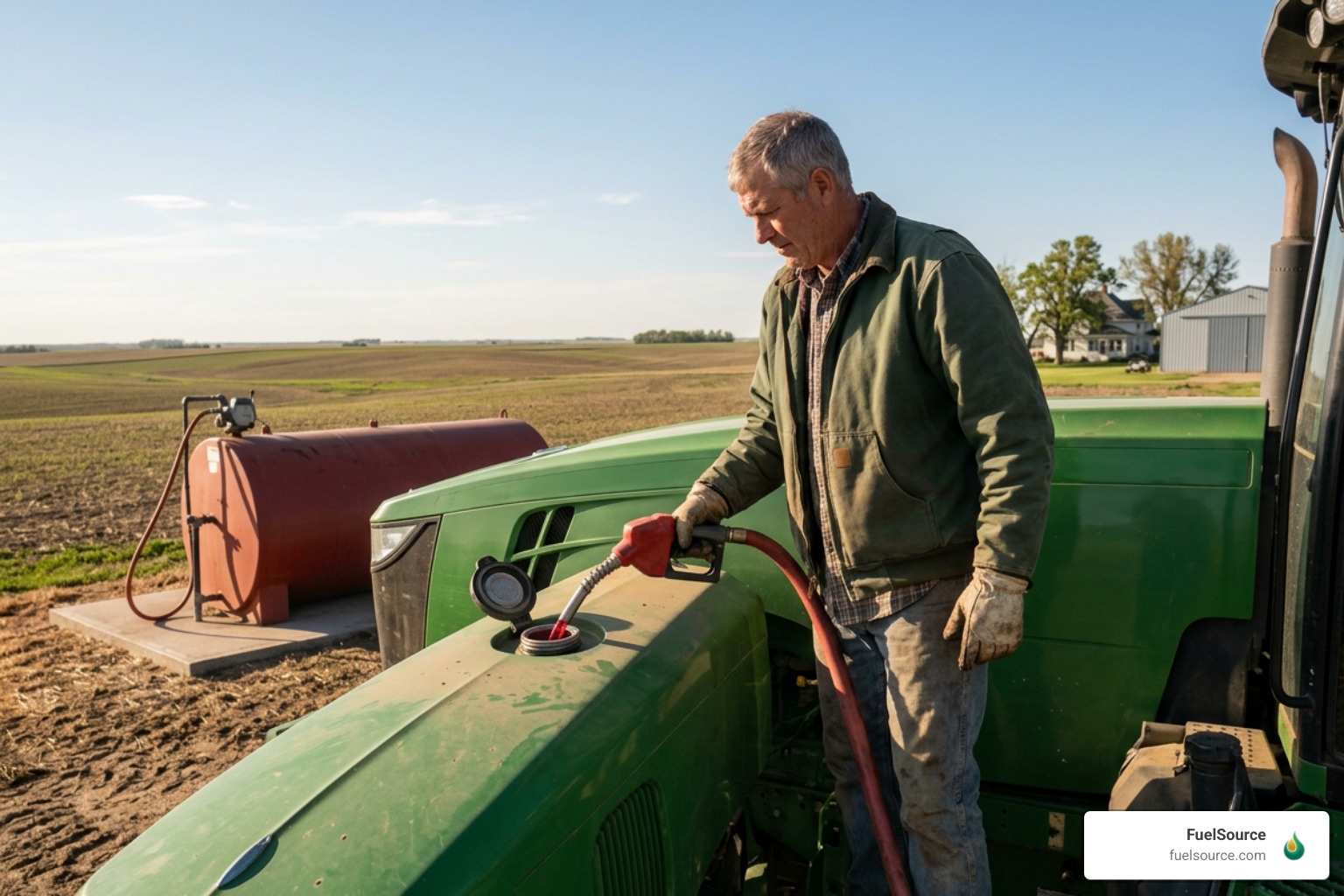
Federal and state regulations categorize diesel based on its intended operational environment and taxation structure:
- Off-Road Red-Dyed Diesel: Chemically identical to highway-grade fuel, this diesel is injected with Solvent Red 164. The red dye indicates that the fuel is exempt from state and federal highway fuel taxes. It is strictly legal only for non-highway agricultural machinery, such as combines, tractors, stationary pumps, and generators. Using dyed diesel in a licensed highway truck carries hefty regulatory penalties.
- On-Road Clear Diesel: This standard, untaxed-at-source ultra-low sulfur diesel (ULSD) is required for licensed road vehicles, such as farm pickup trucks and grain haulers. It contains less than 15 parts per million (ppm) of sulfur to prevent catalytic converter and particulate filter degradation.
- Ultra-Low Sulfur Heating Oil & Kerosene: Often utilized for shop heaters, curing barns, or outdoor storage tanks where cold flow properties are paramount.
| Fuel Type | Visual Identifier | Tax Exemption Status | Primary Farm Application |
|---|---|---|---|
| Off-Road Diesel (ULSD) | Red Dye | Exempt from highway taxes | Tractors, harvesters, irrigation pumps, off-grid generators |
| On-Road Diesel (ULSD) | Clear / Straw | Fully taxed (Federal & State) | Transport trucks, service flatbeds, road-registered haulers |
| Biodiesel Blends (B5–B20) | Light Straw / Amber | Dependent on on/off-road dye | Mainline tractors, modern combine engines, emissions reduction |
| Kerosene (No. 1 Fuel) | Clear | Application dependent | Cold-weather blending, outdoor equipment heaters |
| Fuel Oil (No. 2 Fuel) | Red Dye / Amber | Non-highway taxable | Pole barn heating systems, greenhouse furnaces, indoor tanks |
Biodiesel Blends and Renewable Options
Biodiesel has earned a permanent place in modern agriculture. Made primarily from domestically produced soybean oil and other organic fats, commercial biodiesel is blended with petroleum diesel in ratios ranging from B5 (5% bio, 95% petro) to B20 (20% bio) and occasionally higher-blend B99.
For farm equipment, B5 and B20 blends offer distinct operating advantages:
- Enhanced Lubricity: The ultra-low sulfur refining process strips away natural lubricating agents. Biodiesel adds exceptional lubricity back into the fuel, reducing wear on high-pressure fuel injection pumps and injectors.
- Engine Compatibility: Standard B5 through B20 blends operate seamlessly in modern Tier 4 diesel engines without requiring fuel system modifications.
- Reduced Emissions: Soy-based biodiesel burns significantly cleaner than pure petroleum, reducing particulate matter, hydrocarbons, and carbon monoxide around enclosed livestock structures and fields.
Winter Blending and Fuel Storage Quality
When temperatures plummet across North Georgia, standard No. 2 diesel is susceptible to gelling. Diesel fuel contains natural paraffin wax. When the fuel temperature hits its “cloud point,” this wax crystallizes, dropping out of liquid suspension and quickly clogging fuel filters.
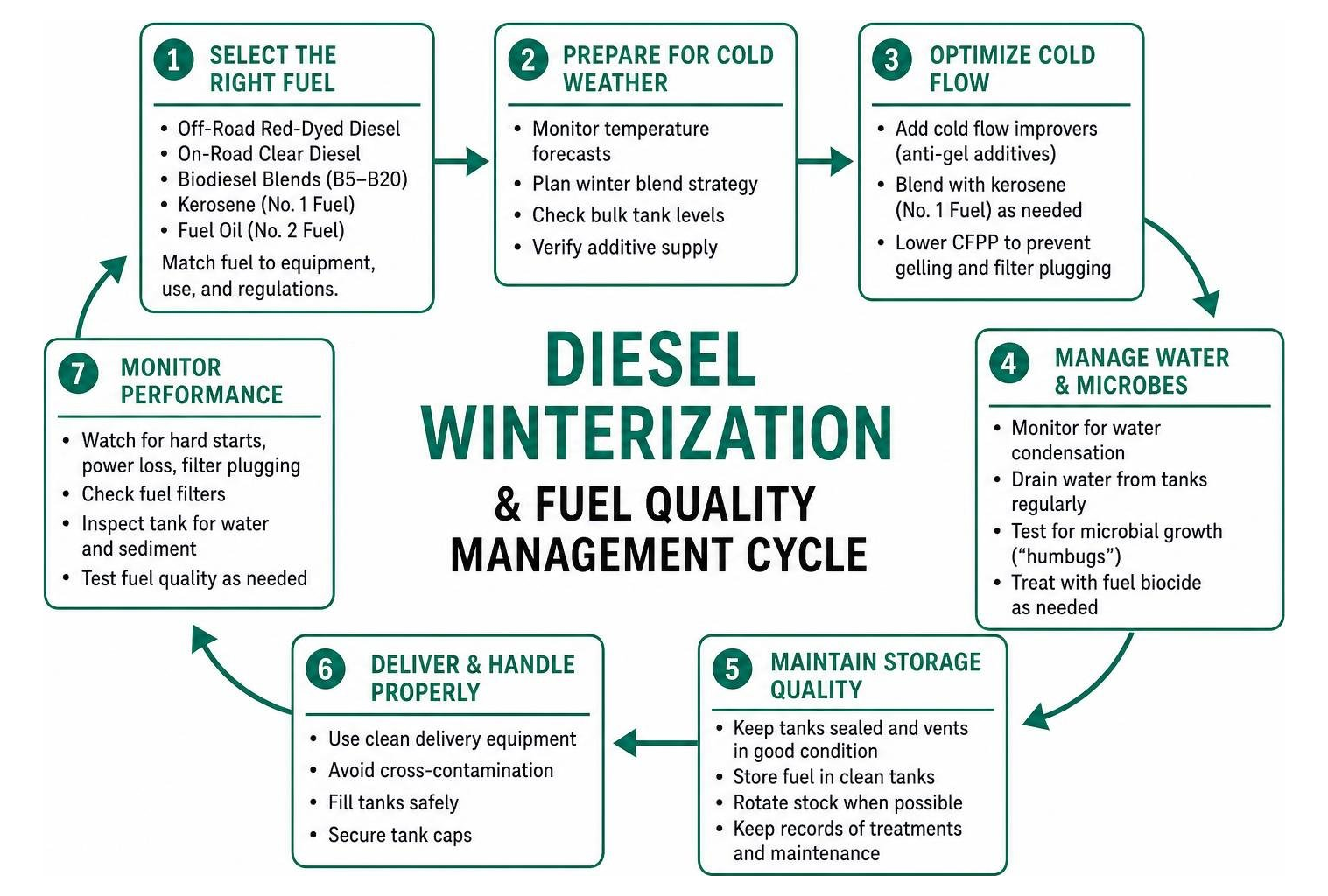
To prevent equipment from locking up during freezing mornings, professional fuel providers employ targeted mitigation strategies:
- Cold Flow Improvers: Specialized chemical anti-gel additives lower the Cold Filter Plugging Point (CFPP) of the diesel, preventing wax crystals from binding together.
- Winter Blending with Kerosene: Blending No. 1 diesel (kerosene) into standard No. 2 diesel thins the fuel naturally, ensuring uninterrupted flow through cold fuel lines.
- Microbial and Water Management: Water condensation inside bulk tanks creates a breeding ground for anaerobic microbes—commonly called “humbugs.” These bacteria feast on hydrocarbons, producing acidic sludge that destroys injectors. Routine tank testing, water draining, and fuel biocide treatments protect bulk storage systems from degradation.
Key Benefits of Agricultural Diesel Delivery for Modern Farms
Managing fuel by hauling 55-gallon drums in the bed of a pickup or pulling trailers to a retail gas station drains labor hours, introduces safety hazards, and inflates operating costs. Working with The Best Farm Diesel Delivery Near You eliminates retail station retail markups and keeps your operators in the field where they belong.
Learning how to fuel your tractor without driving to town translates directly into preserved field hours during tight planting and harvesting windows. Bulk deliveries leverage wholesale pricing tiers, eliminating hidden fuel surcharges and providing direct cost control over agricultural margins.
Direct Equipment and Pasture Refueling
For operations managing vast acreage across Cherokee, Bartow, Forsyth, and Paulding counties, moving heavy machines back to a central farm depot every evening burns unnecessary engine hours. Modern bulk suppliers provide wet hosing—delivering fuel directly into equipment fuel tanks parked at the field edge.
Utilizing mobile fuel services that bring the pump to the pasture gives farm managers total freedom. Our trucks navigate farm access roads to fuel combines, sprayers, and excavators where they sit. Exploring how to get diesel delivered directly to your tractor enables your field team to start working immediately at sunrise with full tanks and zero downtime.
Dedicated DEF and Multi-Fuel Consolidation
Modern farming requires more than just diesel. Since the EPA implemented Tier 4 Final emission requirements, almost all modern tractors and combines require Diesel Exhaust Fluid (DEF) to operate. If a machine runs out of DEF, the engine computer de-rates horsepower or shuts down completely.
Understanding why your farm needs a dedicated bulk DEF delivery partner ensures you never suffer de-rated power in the middle of harvest. Professional suppliers consolidate multiple products into single delivery routes, supplying:
- Off-road red-dyed diesel for tractors and harvesters
- On-road clear diesel for highway service vehicles
- Bulk closed-system DEF in totes, drums, or direct-fill dispensing
- Propane for grain drying systems and poultry house heaters
- Regular and ethanol-free gasoline for utility vehicles and small equipment
Logistics, Storage Technology, and Biosecurity Protocols
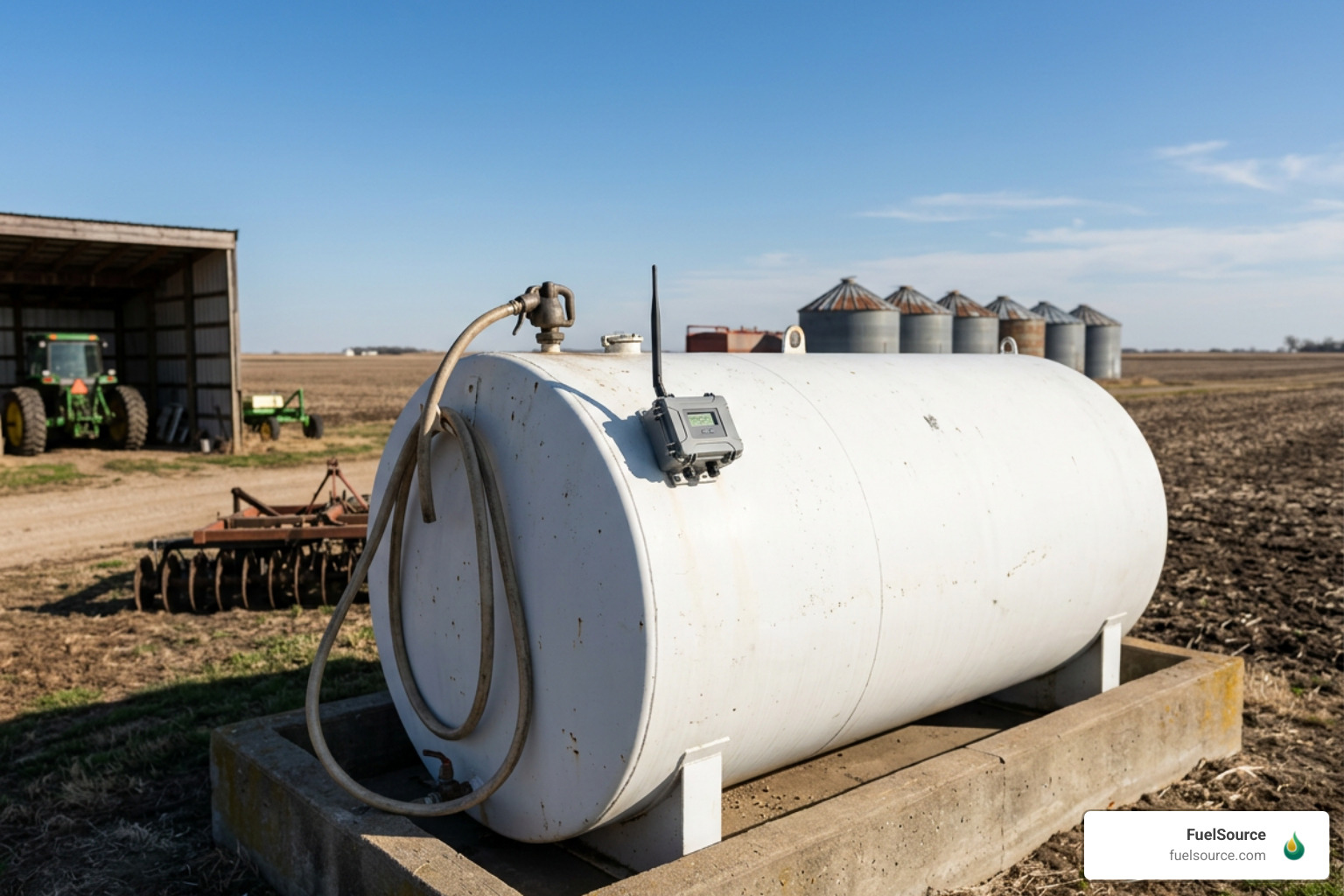
Effective on-farm fueling centers on secure, compliant fuel storage. Whether you maintain a 500-gallon skid tank for an auxiliary pump or a 10,000-gallon bulk tank setup for a multi-thousand-acre commercial operation, understanding the dirt on diesel delivery for Georgia farming ensures your storage infrastructure meets environmental regulations and operational requirements.
How Peak Seasons Impact Agricultural Diesel Delivery Scheduling
Agricultural fuel demand is deeply cyclical. During standard maintenance months, a farm might consume only a few hundred gallons of fuel. However, when spring planting arrives or fall harvest kicks into high gear, that same farm might burn through thousands of gallons every few days.
During these critical windows, standard delivery cadences must expand into multi-trip weekly schedules. Reputable suppliers provide emergency dispatch capabilities, running high-capacity transport trucks (hauling 7,500 to 9,500 gallons) and agile bobtail delivery units to make sure a sudden weather window isn’t lost to an empty tank.
Remote Tank Telemetry and Keep-Fill Automation
Manual fuel dipping with wooden sticks is an outdated chore that risks human error and introduces dirt into bulk tanks. Modern farms use wireless tank telemetry.
A compact, solar-powered or long-life battery sensor mounts directly into your bulk tank bung. The monitor measures fuel levels continuously using ultrasonic or pressure sensors, transmitting data over cellular networks to a central dashboard.
When levels hit a predetermined threshold (such as 30%), an automated dispatch order triggers automatically. This keep-fill automation ensures your team never walks out to an empty pump handle, completely eliminating run-out risks during harvest.
Biosecurity and Sanitation Standards
For livestock, poultry, and dairy operations throughout Georgia, farm gate biosecurity is paramount. Delivery trucks moving between rural facilities can inadvertently transport pathogens like Highly Pathogenic Avian Influenza (HPAI) or livestock diseases if sanitation standards are ignored.
Modern agricultural fuel suppliers follow strict biosecurity protocols:
- Tire and Undercarriage Sanitization: Spraying delivery vehicle wheels and underbodies with approved disinfectants before entering farm gates.
- Driver Footbaths and Boot Covers: Requiring drivers to step into sanitized footbaths or wear disposable protective boot covers when exiting the cab.
- Dedicated Farm Route Planning: Isolating delivery sequences to prevent cross-visitation between high-density poultry operations and outside agricultural facilities without comprehensive sanitation washes in between.
Pricing Structures, Fuel Contracts, and Account Onboarding
Managing farm fuel budgets requires transparency. Fuel represents one of the largest variable input costs on any farm balance sheet. Working with a dedicated provider allows you to streamline your operation with dependable bulk diesel supply while selecting pricing models tailored to your cash flow.
Common agricultural pricing structures include:
- Rack-Plus / Spot Pricing: Fuel is billed based on the daily wholesale terminal rack price plus a fixed delivery and margin fee. This transparent model passes immediate market savings to the farm during market downturns.
- Volume-Tiered Discounts: Pricing incentives that reduce the per-gallon cost as delivery drops increase in volume (e.g., 500+ gallons vs. transport loads of 7,500+ gallons).
- Transparent Billing: Invoices that clearly separate actual fuel costs from sales tax, delivery charges, or equipment monitoring fees.
Hedging Strategies and Fixed Price Contracts
Because petroleum markets experience high volatility driven by international trade, refinery maintenance, and seasonal storm events, many agricultural producers prefer price certainty.
Suppliers offer fuel hedging strategies to protect operating margins:
- Pre-Buy Contracts: Purchasing your projected seasonal fuel volume ahead of time during historical low-cost winter windows to lock in that exact price for spring planting.
- Fixed-Price Contracts: Agreeing on a set per-gallon rate for a predetermined 6-to-12-month window, guaranteeing steady budgeting regardless of global oil market spikes.
- Price Cap Agreements: Setting a ceiling price that protects your operation from extreme spikes while allowing you to enjoy lower costs if fuel prices drop.
Setting Up Your First Agricultural Diesel Delivery Account
Onboarding with a professional fuel provider is a simple, structured process:
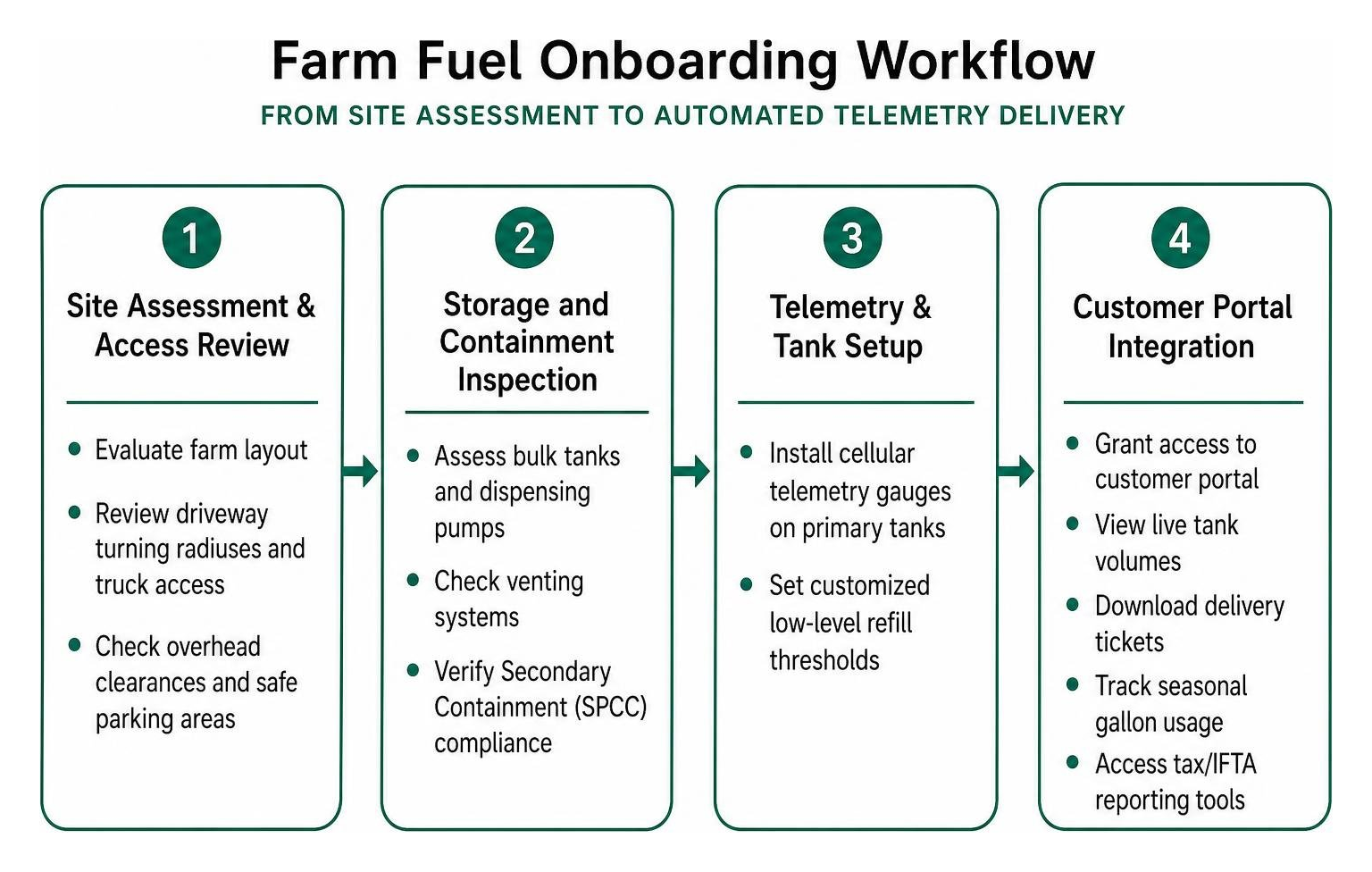
- Site Assessment & Access Review: An account specialist evaluates your farm layout, reviewing delivery driveway turning radiuses, overhead power line clearances, and safe parking areas for delivery trucks.
- Storage and Containment Inspection: Assessing bulk tanks, dispensing pumps, venting, and Secondary Containment (SPCC) compliance to guarantee safe, leak-free filling.
- Telemetry & Tank Setup: Installing cellular telemetry gauges on primary tanks and setting customized low-level refill thresholds.
- Customer Portal Integration: Granting farm management access to a direct digital portal where you can view live tank volumes, download instant delivery tickets, track seasonal gallon usage, and access tax/IFTA reporting tools.
Frequently Asked Questions about Farm Fuel Delivery
What is the difference between off-road and on-road diesel on the farm?
The fundamental difference lies in tax status and visual identification. Off-road diesel is dyed red with Solvent Red 164 and is exempt from motor fuel excise taxes because it is designated exclusively for non-highway machinery (tractors, combines, stationary equipment). On-road diesel is clear (undyed) and includes state and federal road taxes. Mechanically, both are Ultra-Low Sulfur Diesel (ULSD) containing less than 15 ppm sulfur, making them equally safe for modern diesel engines.
What are typical minimum gallon requirements for farm deliveries?
Minimum delivery quantities vary based on delivery truck types. While full transport transport loads range from 7,500 to 9,500 gallons, regional bobtail delivery trucks generally accommodate lower minimums starting around 100 to 250 gallons. This flexibility allows smaller family farms, equestrian facilities, and specialized nurseries to enjoy the benefits of direct bulk delivery without investing in massive storage setups.
How do suppliers prevent diesel fuel gelling in winter?
Suppliers manage cold-weather fuel performance by introducing anti-gel cold flow improver additives and creating winterized fuel blends. In colder weather, suppliers mix standard No. 2 diesel with No. 1 diesel (kerosene), which naturally lowers the fuel’s cloud point and Cold Filter Plugging Point (CFPP). This prevents paraffin wax crystallization and keeps fuel flowing smoothly through fine micron filters.
Conclusion
Maximizing agricultural productivity requires dependable equipment, skilled operators, and an uninterrupted supply of clean fuel. By taking advantage of tailored delivery schedules, keep-fill telemetry, consolidated multi-fuel services, and seasonal price protection, your farm can eliminate downtime and safeguard its bottom line.
At FuelSource, we bring over 30 years of industry experience, state-of-the-art mobile fueling equipment, and dedicated customer portal reporting to farms across Metro Atlanta and North Georgia. Whether you need field-side wet hosing, bulk tank keep-fill automation, or DEF delivery, we keep your machinery running through every planting and harvest cycle.
Connect with our team today to establish reliable diesel delivery in Alpharetta and North Georgia and build a dependable fueling plan customized for your land.