

Why High-Tech Diesel Transport Trucks Are Dominating Modern Freight
High-tech diesel transport trucks are at the center of a massive shift in how goods move across the country — and the numbers back it up. The global high-performance truck market was valued at $93.5 billion in 2024 and is projected to hit $204.75 billion by 2033, growing at a 9.1% CAGR.
Here’s a quick look at what defines today’s high-tech diesel trucks:
- Engine efficiency — advanced turbocharging, common rail fuel injection at up to 2,500 bar, and downspeeding for better fuel economy at lower RPMs
- Aerodynamics — sculpted cab designs, digital mirror systems, and chassis fairings that cut drag and reduce fuel burn
- Smart systems — GPS-based cruise control, predictive maintenance AI, and real-time telematics
- Emissions technology — selective catalytic reduction (SCR), Diesel Exhaust Fluid (DEF) integration, and diesel particulate filters
- Driver support — Level 2 ADAS, lane-keeping assist, blind-spot monitoring, and drowsiness detection
Diesel isn’t fading — it’s evolving. These trucks now deliver more power, better mileage, and lower emissions than any previous generation.
Consider this: Nussbaum Transportation hit an average fleet fuel economy of 9.1 MPG in 2023 using 15-liter Detroit engines, automated transmissions, and wide-base tires. That’s not a lab result — that’s a real fleet, on real roads.
Meanwhile, Cummins engines alone power one in every four tractor trailers on U.S. roads today. Diesel’s grip on heavy-duty freight isn’t loosening anytime soon.
I’m Kyle Behnke, a business professional with FuelSource Inc. based in the Atlanta area, where I work closely with fleet managers and operators who rely on high-tech diesel transport trucks to keep their operations running. My background in business strategy through Emory University’s Goizueta Business School gives me a practical lens for understanding the real operational and fueling challenges these fleets face every day. In this guide, we’ll break down exactly what makes today’s diesel trucks so advanced — and what that means for how you fuel and manage them.
High-tech diesel transport trucks helpful reading:
The Evolution of High-Tech Diesel Transport Trucks
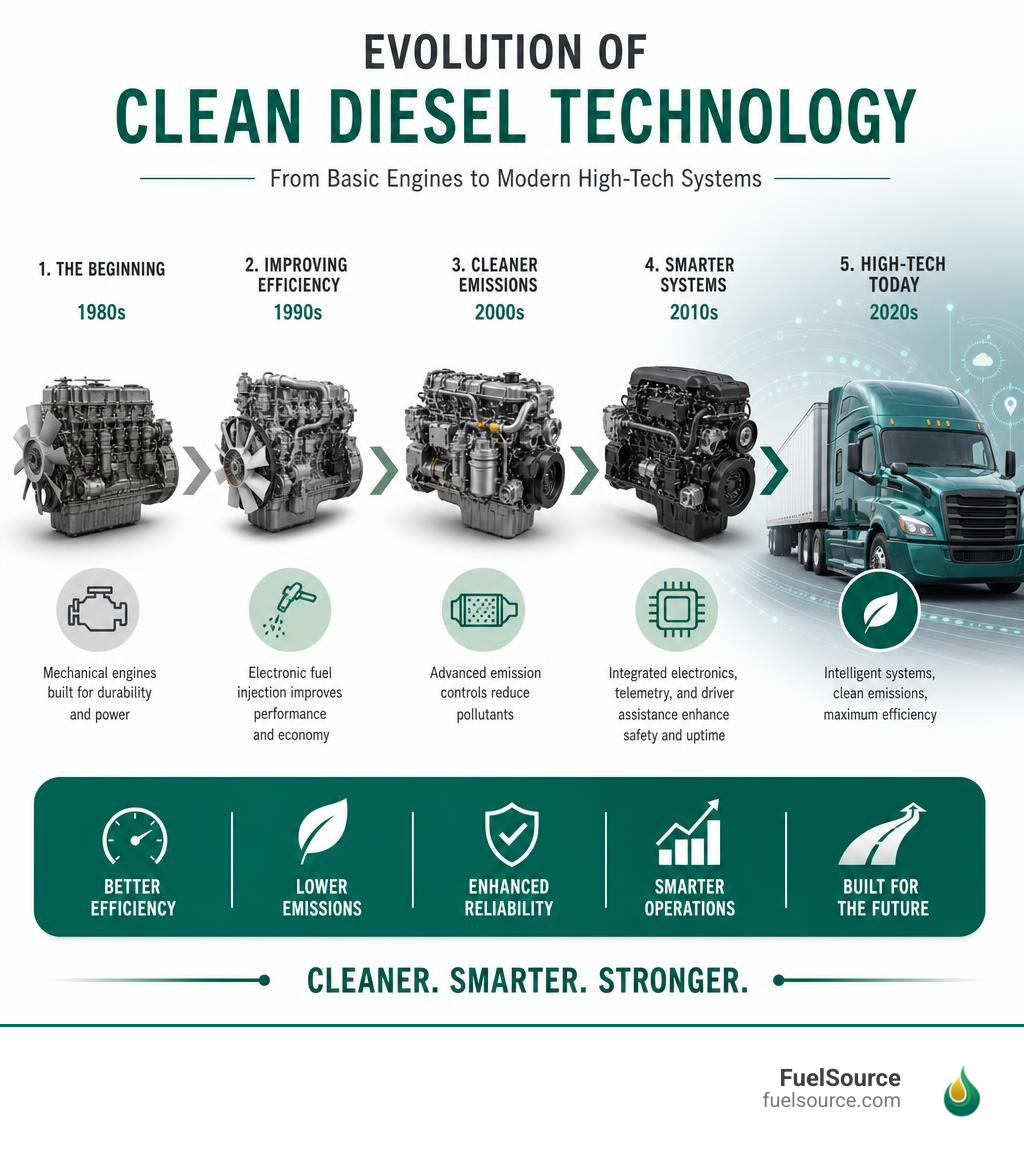
Modern diesel engines bear little resemblance to the loud, smoke-bellowing powerplants of the past. Today’s commercial powertrains are highly sophisticated, computer-controlled systems engineered to extract every possible ounce of energy from every drop of fuel. By combining advanced thermodynamics with precision manufacturing, legacy engine builders have managed to continuously lower emissions while scaling up torque.
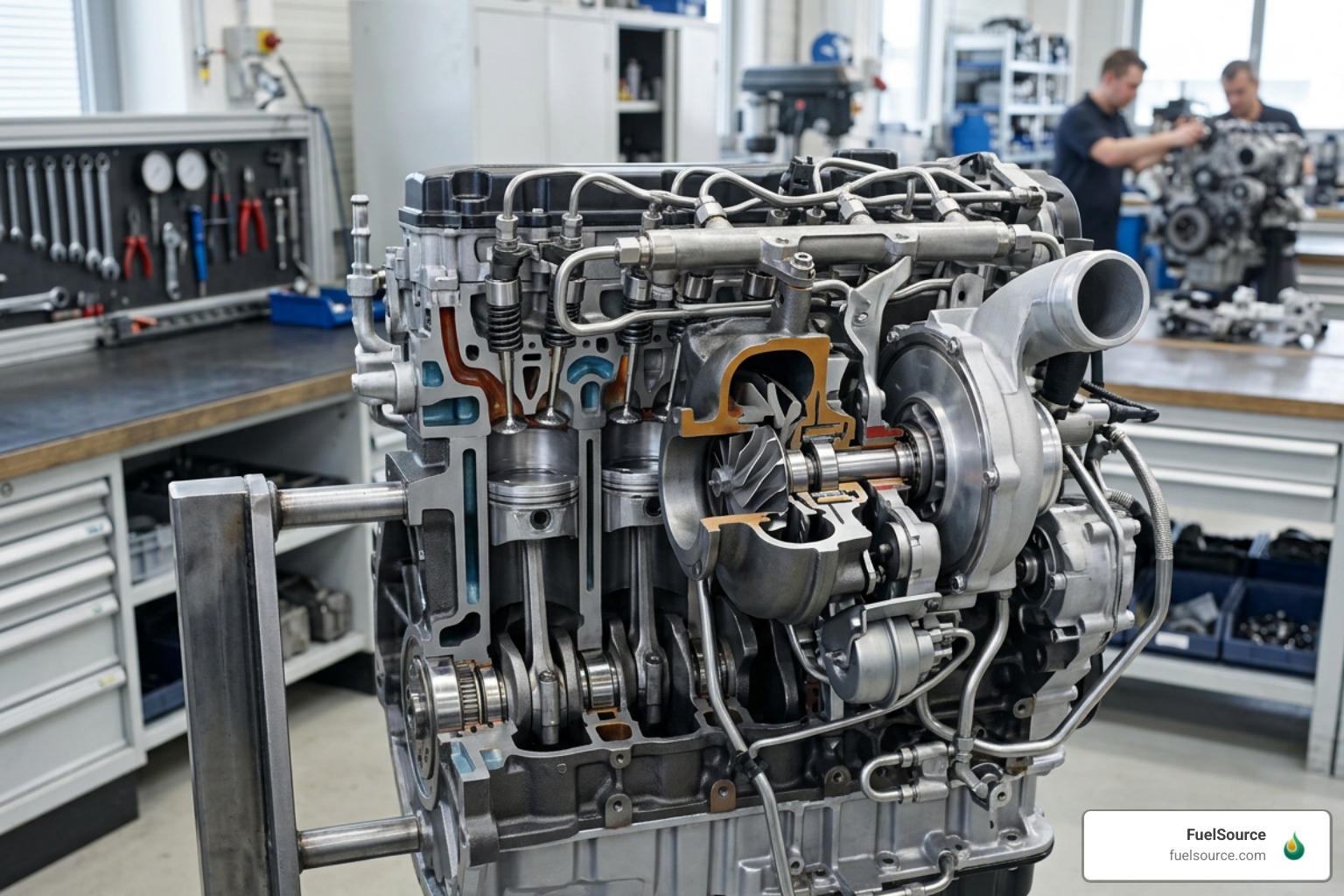
At the heart of this evolution is the transition from purely mechanical operations to complex electronic controls. Today’s engines rely on a network of sensors that monitor everything from exhaust gas temperatures to intake manifold pressure in real-time. This data allows the engine control module (ECM) to adjust operating parameters on the fly, optimizing combustion for maximum efficiency.
Two core technologies have driven this transformation: high-pressure common rail fuel injection and advanced variable-geometry turbocharging. Modern common rail systems can achieve injection pressures up to 2,500 bar. This extreme pressure atomizes the diesel fuel into an incredibly fine mist, allowing for a more complete and cleaner burn inside the cylinder. When paired with variable-geometry turbochargers that adjust airflow based on engine load, these systems eliminate turbo lag and provide consistent, high-torque performance across the entire operating range.
To keep these advanced vehicles running at peak performance without interruption, many operators in the Atlanta Metro and North Georgia regions are moving away from traditional retail truck stops. Instead, they rely on specialized fleet fueling services to deliver high-quality, clean-burning diesel directly to their yards. This ensures that high-tech fuel systems are never compromised by contaminated fuel or water in the lines, protecting expensive common rail injectors from premature wear.
Advanced Combustion and Downspeeding in High-Tech Diesel Transport Trucks
One of the most significant engineering breakthroughs in recent years is the concept of “downspeeding.” Traditionally, heavy-duty trucks had to run at high engine speeds (RPMs) to generate the horsepower and torque needed to move heavy payloads. Downspeeding flips this dynamic by matching high-torque engines with faster rear axle ratios, allowing the truck to cruise at highway speeds at much lower engine RPMs—often between 900 and 1,100 RPM.
By running the engine slower, internal friction is significantly reduced, which directly translates to lower fuel consumption. To make downspeeding work, the engine must be capable of producing massive torque at these low engine speeds.
Manufacturers have achieved this through highly specialized engineering:
- The IVECO XC13 Engine: This cutting-edge powerplant features a 10% weight reduction in its cylinder block compared to its predecessor, yet handles a massive 2,500 bar injection pressure. Its top rating produces up to 580 hp and 2,800 Nm of torque, utilizing downspeeding technology with a Dual Flow Turbine Volute to allow faster rear axle ratios. You can learn more about this design via the IVECO S-WAY ARTIC | Tractor unit for long distance .
- The PACCAR MX-13 Engine: Integrated beautifully into the Peterbilt Model 579, this engine features a broad torque curve that delivers up to 1,850 lb-ft of torque. When paired with the PACCAR TX-12 PRO automated transmission, the system is optimized to cruise at low RPMs, maximizing fuel economy while maintaining a gross combination weight rating (GCWR) of up to 70,000 lbs.
- The Mitsubishi Fuso 6R30 Engine: Featured in the Super Great | Mitsubishi Fuso Truck and Bus Corporation , this 12.8L turbocharged engine utilizes ball bearings in the turbocharger to drastically reduce friction. It optimizes boost pressure according to engine output and focuses its calibration on the frequently used low-RPM range to save fuel during regional hauls.
These downsped powertrains require incredibly precise transmission shifting. Automated manual transmissions (AMTs) use predictive software to read the topography of the road ahead, choosing the perfect gear to keep the engine in its optimal fuel-efficiency sweet spot.
Emissions Reduction and DEF Integration
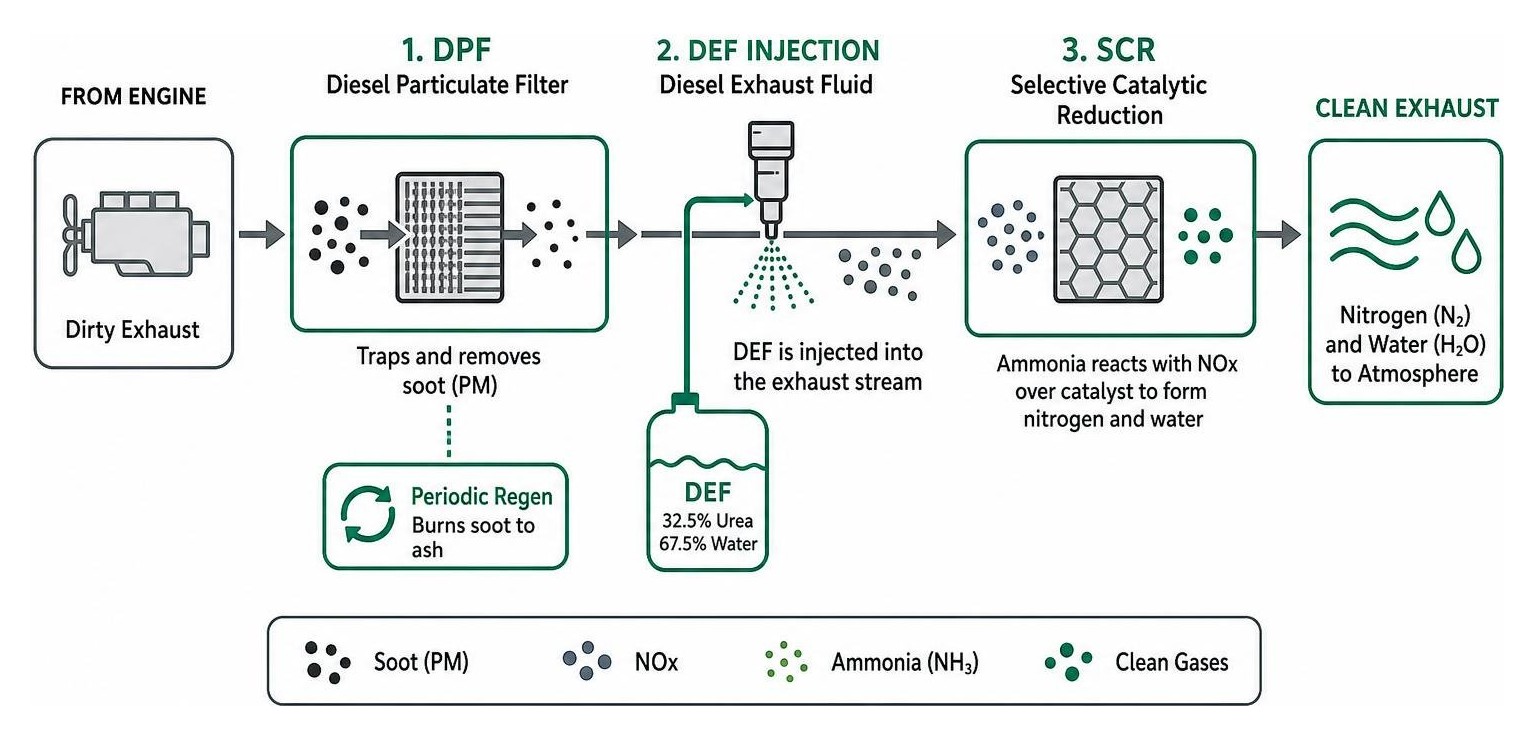
While improving fuel mileage is a primary goal, modern trucks must also meet incredibly strict environmental standards. Today’s clean diesel technology relies on a multi-stage exhaust aftertreatment system to eliminate harmful pollutants like particulate matter (soot) and nitrogen oxides (NOx).
The process begins with the Diesel Particulate Filter (DPF), which physically traps soot particles from the exhaust gas. Periodically, the truck performs a “regen” cycle, using heat to burn off the trapped soot and convert it into harmless ash.
Next, the exhaust gas passes into the Selective Catalytic Reduction (SCR) system. Here, a precise amount of Diesel Exhaust Fluid (DEF)—a high-purity mixture of 32.5% urea and 67.5% deionized water—is injected into the exhaust stream. The heat of the exhaust converts the DEF into ammonia, which reacts with the NOx gases inside the SCR catalyst, breaking them down into harmless nitrogen gas and water vapor.
To protect these highly sensitive SCR catalysts, the DEF used must meet strict ISO 22241 quality standards. Even minor contamination from dust, metal, or non-approved storage containers can poison the catalyst, triggering engine “derate” modes that limit vehicle speed and power to prevent environmental damage.
For fleet operators in areas like Cobb County, Gwinnett County, and Fulton County, managing DEF logistics is just as critical as managing diesel fuel. To prevent contamination and eliminate the hassle of handling individual jugs, many local businesses utilize the ultimate guide to on-site fueling for fleets to set up bulk, closed-loop DEF delivery directly alongside their diesel fueling stations. This keeps the fluid pure and ensures the trucks remain fully compliant with emissions laws without adding operational complexity.
Aerodynamics, Lightweight Materials, and Smart Vehicle Systems
While engine advancements do the heavy lifting under the hood, modern high-tech diesel transport trucks rely just as heavily on exterior design and digital intelligence to maximize every gallon of fuel. At highway speeds, overcoming aerodynamic drag consumes a massive portion of an engine’s output. By smoothing out airflow and stripping unnecessary weight from the chassis, manufacturers have unlocked double-digit efficiency gains.
Aerodynamic Innovations and Digital Mirrors
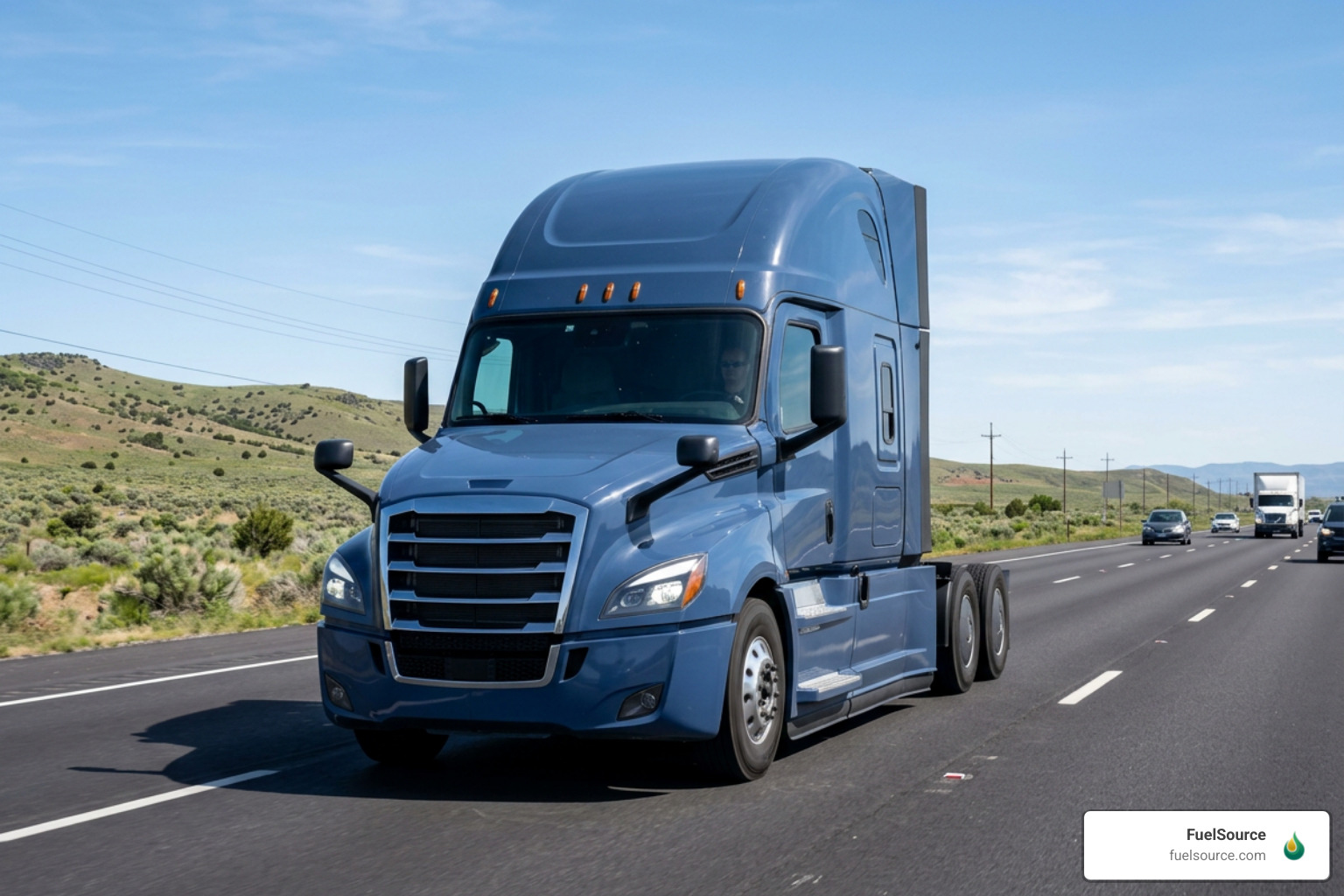
To minimize wind resistance, modern truck manufacturers spend thousands of hours conducting computational fluid dynamics (CFD) testing and wind tunnel evaluations. The result is a new generation of highly sculpted, aerodynamic cabs that slice through the air with minimal turbulence.
Key aerodynamic improvements found on modern highway tractors include:
- Sculpted Bumpers and Grilles: Bumper designs are now engineered to direct airflow underneath and around the vehicle rather than pushing against it like a flat wall.
- A-Pillar and Chassis Fairings: Specialized fairings along the A-pillars direct wind smoothly around the windshield, while side chassis fairings cover the fuel tanks and battery boxes to prevent air from getting trapped under the trailer.
- Bonded One-Piece Windshields: Replacing traditional two-piece rubber-mounted glass with a single, flush-bonded windshield reduces drag and wind noise inside the cabin.
- Digital Mirror Systems (DMS): One of the most visible high-tech shifts is the replacement of massive, traditional physical side mirrors with sleek, camera-mounted wings. These cameras stream real-time, high-definition video to screens mounted inside the cab’s A-pillars.
This digital mirror setup is a core feature of the Mack Pioneer™ | Mack Trucks , which achieves up to an 11% improvement in fuel efficiency through its optimized aerodynamic package and enhanced MP13 powertrain. The digital mirror system not only reduces aerodynamic drag but also enhances driver safety by eliminating blind spots and improving visibility during rain, snow, or night driving.
Smart Telematics and Predictive AI in High-Tech Diesel Transport Trucks
Beyond physical design, today’s trucks are essentially rolling data centers. Equipped with advanced telematics and predictive AI, these vehicles constantly communicate with fleet managers, tracking performance, driver behavior, and mechanical health.
Predictive maintenance is a game-changer for reducing total cost of ownership. Instead of waiting for a part to break or relying on rigid mileage-based service schedules, AI algorithms monitor real-time data from the engine and transmission. By analyzing patterns in oil temperature, vibration, and filter pressures, the system can predict a component failure before it actually happens. This allows fleet managers to schedule maintenance during planned downtime, avoiding expensive roadside breakdowns.
Additionally, smart GPS-based cruise control systems analyze topographical map data miles ahead of the truck’s current position. The system automatically adjusts engine power, schedules gear shifts, and utilizes “eco-roll” functions (where the transmission temporarily disengages on slight downhills) to maintain momentum using the absolute minimum amount of fuel.
For operators running routes across North Georgia—from the rolling hills of Cherokee County to the busier corridors of Dekalb County and Henry County—this level of data integration is highly valuable. Fleet managers can easily monitor fuel consumption, track carbon footprints, and even access ifta compliant fuel reports and how to file them directly through a digital everything you need to know about your fleet fuel dashboard. This level of visibility makes tracking tax compliance and managing fuel spend incredibly straightforward.
Alternative Fuels vs. Electrification in Heavy-Duty Transport
As the transportation industry looks toward a lower-carbon future, fleet operators face a critical choice: do they invest in alternative diesel fuels, transition to natural gas, or make the leap to full battery-electric vehicles? Each technology comes with distinct operational trade-offs, particularly when it comes to long-haul, heavy-duty applications.
| Technology / Fuel Type | Key Benefits | Major Limitations | Best Use Case |
|---|---|---|---|
| High-Tech Clean Diesel | Maximum range, proven reliability, established global refueling infrastructure, high payload capacity. | Relies on fossil fuels, complex exhaust aftertreatment systems required. | Long-haul freight, heavy-duty construction, regional logistics. |
| Renewable Diesel / Biodiesel | Drop-in replacement for regular diesel, reduces CO2 emissions by up to 80%, uses existing trucks. | Limited supply availability in some regions, can be more expensive than standard diesel. | Immediate carbon reduction for existing diesel fleets. |
| Battery-Electric (BEV) | Zero tailpipe emissions, highly efficient, quiet operation, incredibly low fuel cost per mile. | Heavy battery weight reduces payload capacity, high upfront cost, limited public megawatt charging. | Short-haul, urban delivery, port drayage, fixed-route regional runs. |
While battery-electric trucks are making rapid progress, they face significant physics-based limitations in heavy-duty long-haul transport. For example, the Tesla reveals final Semi specs with two trims | Electrek shows that while the Standard Range model offers a 325-mile range with a curb weight under 20,000 lbs, the Long Range (500-mile) model has a curb weight of 23,000 lbs. That extra weight is due to the massive battery pack, which directly sacrifices about 3,000 lbs of cargo payload capacity compared to a standard diesel truck.
Furthermore, charging infrastructure remains a massive bottleneck. Drawing the megawatt-level power required to charge multiple heavy-duty trucks simultaneously requires massive electrical grid upgrades that can take utility companies years to install. Some electric truck manufacturers, like SANY, are building highly adaptable platforms to combat this. The SANY Electric Heavy Truck, Zero-Emission Commercial Vehicle features a self-developed battery system with an aluminum alloy structure and advanced thermal management. It can charge from 20% to 80% in 45 minutes using dual-port DC fast charging, or perform a complete battery swap in just 5 minutes.
However, for heavy-duty construction, agricultural work, and long-distance freight moving through counties like Paulding, Bartow, and Forsyth, high-tech diesel remains the undisputed king. Its high energy density, combined with the ability to refuel in minutes anywhere in the country, ensures that diesel will remain the dominant powertrain for heavy transport for years to come.
Frequently Asked Questions about High-Tech Diesel Trucks
How do modern high-tech diesel engines reduce emissions compared to older models?
Modern diesel engines utilize a combination of ultra-clean combustion and advanced exhaust aftertreatment. High-pressure common rail fuel injection (operating at up to 2,500 bar) atomizes fuel into a fine mist for a highly efficient burn, reducing raw engine emissions.
The remaining exhaust is then routed through a Diesel Particulate Filter (DPF) to trap soot, followed by a Selective Catalytic Reduction (SCR) system. The SCR system injects Diesel Exhaust Fluid (DEF) into the exhaust stream, converting harmful nitrogen oxides (NOx) into harmless nitrogen and water vapor, resulting in near-zero tailpipe emissions.
Why does diesel remain the dominant fuel for long-haul transport in 2026?
Diesel fuel possesses an incredibly high energy density, meaning it packs more energy per gallon than almost any alternative fuel source. This allows a diesel truck to travel over 1,000 miles on a single fill-up while carrying maximum legal payloads.
Additionally, diesel engines produce the massive low-end torque required to move 80,000-lb loads up steep highway inclines. When combined with a mature, nationwide refueling infrastructure and the high weight penalties of heavy electric vehicle batteries, diesel remains the most economically viable option for long-distance transport.
How do smart telematics systems lower the total cost of ownership for fleets?
Smart telematics systems continuously monitor hundreds of data points across the engine, transmission, and safety systems. By using predictive AI, these systems can alert fleet managers to minor mechanical issues—such as a clogged filter or a failing sensor—before they lead to catastrophic roadside breakdowns.
Additionally, telematics optimize routing, track driver behavior (like excessive idling or harsh braking), and integrate with GPS-based cruise control to ensure the vehicle is operating at peak fuel efficiency, saving thousands of dollars per truck annually.
Conclusion
As high-tech diesel transport trucks continue to push the boundaries of efficiency, safety, and clean operation, managing their fueling and maintenance logistics has never been more critical. These advanced machines require high-quality, ultra-low sulfur diesel and pure, ISO-compliant Diesel Exhaust Fluid to keep their sophisticated systems running smoothly.
At FuelSource, we have spent over 30 years providing reliable mobile delivery of diesel, DEF, and gasoline directly to fleets, construction sites, farms, and emergency operations throughout the Atlanta Metro and North Georgia regions. Whether you are operating out of Marietta, Decatur, Canton, or anywhere across Cherokee, Cobb, or Fulton counties, our state-of-the-art delivery equipment ensures your high-tech engines get the clean, high-grade fuel they deserve.
With our advanced customer portal, fleet managers get instant access to real-time reports and seamless IFTA-compliant fuel tracking, removing the administrative headache of fuel management so you can focus on moving your business forward.
Ready to optimize your fleet’s fueling operations and eliminate costly downtime? Contact FuelSource today to schedule your first delivery and experience the difference of premium, on-site fuel logistics.