Why Automated Fuel Management Is the Key to Stopping Fleet Budget Leaks
Automated fuel management is a combined hardware and software system that tracks, controls, and reconciles every drop of fuel your fleet uses — from the storage tank to the vehicle tank — in real time.
Here’s what it does at a glance:
- Tracks every fueling transaction by driver, vehicle, and volume
- Controls access so only authorized vehicles and personnel can dispense fuel
- Reconciles fuel delivered against fuel dispensed to catch theft, leaks, and waste
- Reports consumption data automatically, simplifying compliance and tax reporting
- Integrates with telematics, GPS, and EV charging for a single operational view
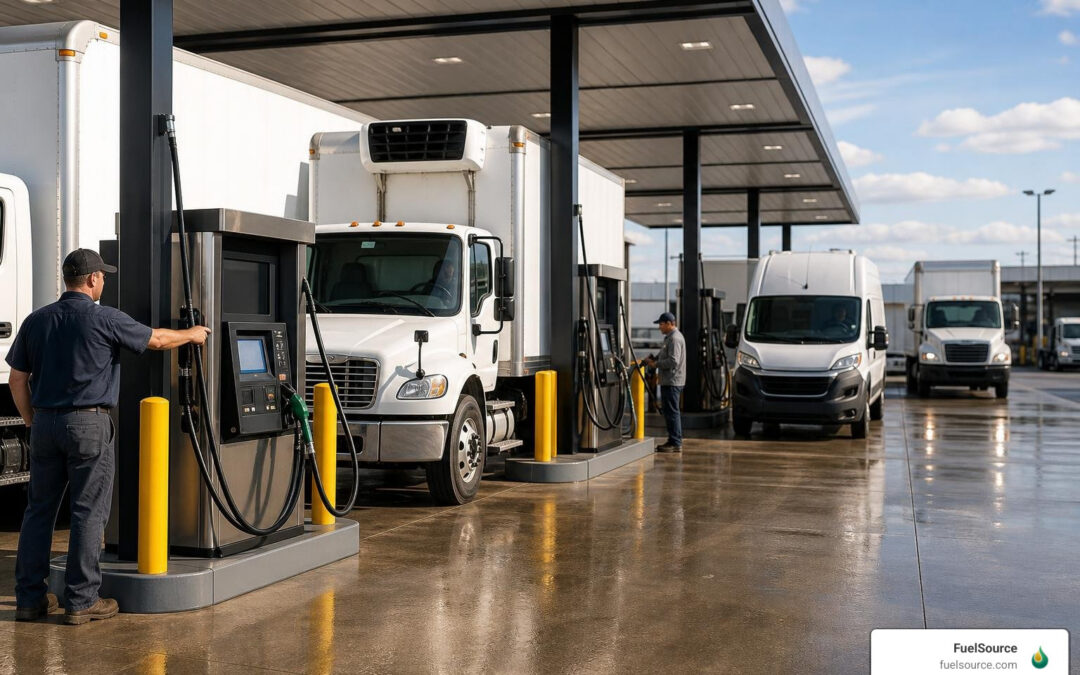
If you run a construction, farming, or logistics operation, fuel is almost certainly your largest and least-visible operating cost. A bulk tank sitting on your job site holds inventory worth tens of thousands of dollars — yet without an automated system in place, most businesses have no real-time insight into how those gallons are being used, lost, or stolen.
Manual fuel logs and clipboard sign-outs leave too much room for error and too little room for accountability. The result? Budget leaks that quietly drain margins month after month.
I’m Kyle Behnke, a business professional working with FuelSource Inc. in the Atlanta area. My work in fleet fuel delivery for fleets across North Georgia has given me a front-row seat to how automated fuel management transforms operations — and what happens when businesses try to get by without it.
Understanding Automated Fuel Management and How It Works
To truly stop budget leaks, you have to understand exactly how fuel flows through your business. Traditional tracking relies on drivers writing down odometer readings and gallons on a clipboard. In our experience, clipboard logs are highly unreliable. Numbers are misread, entries are forgotten, and spreadsheets end up off by three digits every single month.
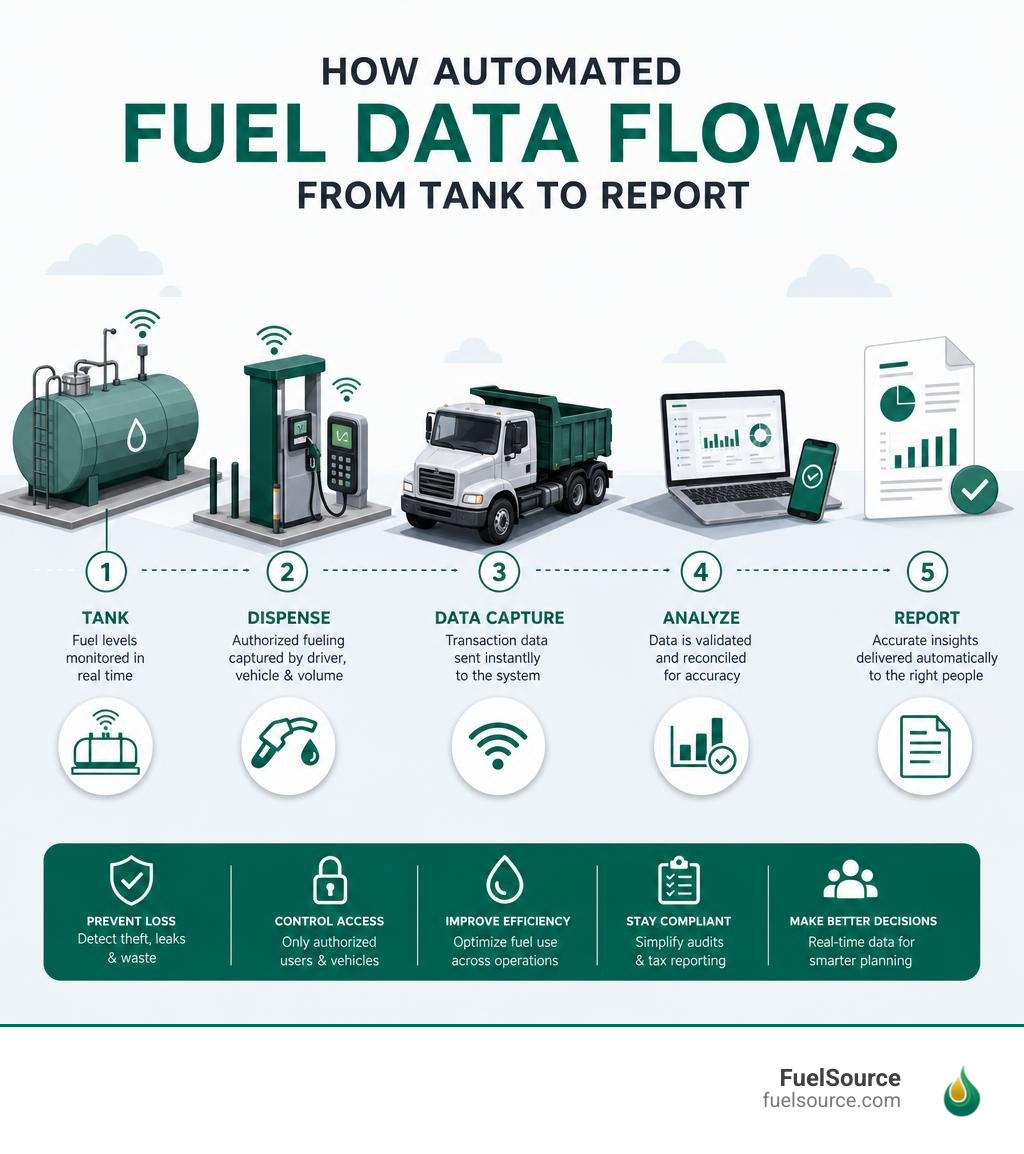
An Enterprise Fleet Fuel Management system replaces this human error with real-time data. The system automatically records the exact moment fuel is dispensed, which vehicle received it, who pumped it, and the exact volume transferred.
To help visualize the difference, let’s look at how manual tracking compares directly to an automated approach:
| Feature / Metric | Manual Clipboard Tracking | Automated Fuel Management |
|---|---|---|
| Data Accuracy | Low (prone to typos, guessing, and omissions) | Extremely High (automated sensor capture) |
| Time Investment | High (manual data entry, chasing missing logs) | Zero (instant background processing) |
| Theft Prevention | None (anyone can write down fake numbers) | Active (requires hardware/software authorization) |
| Reconciliation Speed | Monthly or weekly (lag time allows leaks to grow) | Instant / Real-Time (daily automated reports) |
| Maintenance Alerts | Reactive (based on driver complaints) | Proactive (triggered by live odometer/MPG drops) |
What is an Automated Fuel Management System?
At its core, an automated fuel management system (FMS) is the bridge between physical fuel dispensing and digital business intelligence. It is a secure loop that monitors, controls, and accounts for your fluid inventory.
Instead of treating fuel as an unmanaged expense, an FMS treats it as a high-value asset. The system ensures that fuel only flows when authorized assets are connected. By matching every gallon dispensed with an active vehicle profile, businesses can achieve a fluid reconciliation rate in excess of 99.5%.
This process of continuous fluid reconciliation allows you to verify that the fuel you purchased actually made it into your machinery. If you are managing your bulk storage, using tools for managing fuel deliveries online gives you immediate visibility into tank levels, preventing both unexpected runouts and undetected leaks.
Key Components of Modern Fuel Tracking Hardware
To achieve this level of control, an automated system relies on specialized, ruggedized hardware installed on your site and your vehicles:
- Vehicle Tags: Maintenance-free passive RFID chips or smart rings affixed near the fuel tank inlet.
- Nozzle Readers: Rugged transceiver units attached to the dispenser nozzles that read the vehicle tag instantly upon insertion.
- Wireless Controllers: Forecourt terminal boxes that process the authorization and transmit transaction data wirelessly to the cloud.
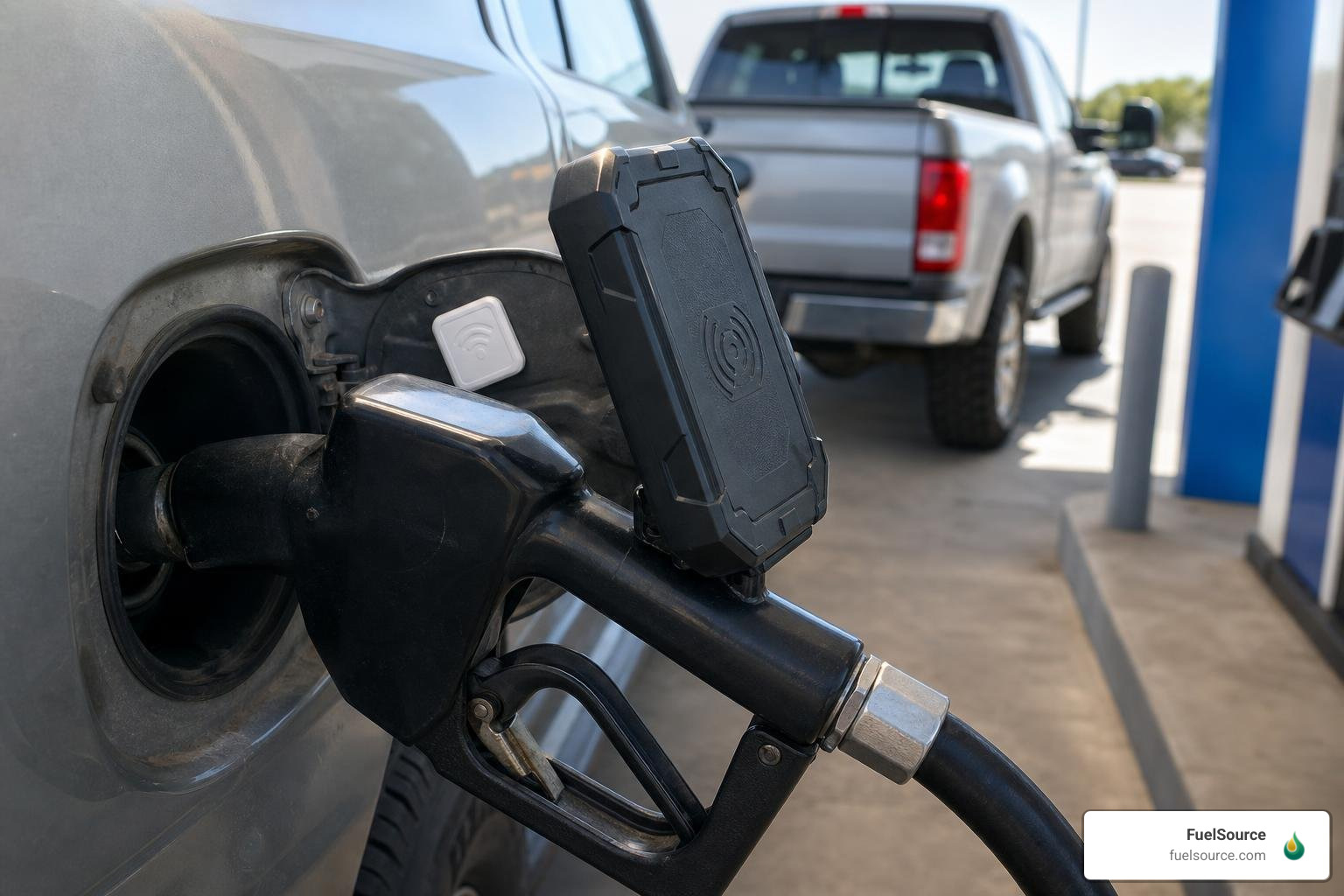
When a driver inserts the nozzle into a machine’s tank, the nozzle reader scans the vehicle tag. If the tag is authorized, the wireless controller opens the valve and allows the fuel to flow. The moment the nozzle is removed from the tank, the flow stops instantly. This physical handshake ensures that fuel cannot be siphoned into unauthorized containers or personal vehicles. You can explore these hardware configurations in detail in this Fuel Control Systems Catalog.
Why Your Fleet Needs Automated Fuel Management Today
Operating a fleet in competitive commercial markets like Metro Atlanta, Cobb County, or Gwinnett County means managing tight margins. Fuel prices fluctuate, and even minor waste can quickly add up to thousands of dollars in lost profit.
Globally, advanced fuel management systems manage in excess of 1 billion liters of fuel per month for major operations. While massive enterprises use these systems to coordinate global logistics, local businesses in Georgia use them to secure their daily operations. Utilizing on-site fueling for fleets combined with automated tracking allows you to control your fuel supply from delivery to combustion.
Eliminating Fuel Theft and Shrinkage
Fuel theft is a major contributor to budget leaks, particularly on unattended job sites or when relying on unmonitored retail fuel cards. Without strict access controls, fuel shrinkage is often written off as the cost of doing business.
Automated systems eliminate this vulnerability by requiring dual-factor authorization (such as a driver PIN combined with a vehicle RFID tag) before a pump will dispense a single drop. In the field, organizations implementing these rigorous controls routinely jump from poor tracking to over 99.68% volume accountability.
By utilizing Automated Reconciliation Software, you can automatically cross-reference the volume of fuel dispensed against active vehicle transactions. Any discrepancy — such as a pump running without an authorized tag present — triggers an immediate alert, stopping theft in its tracks.
Streamlining Fleet Fuel Delivery and Operations
Time is the one resource you can never buy back. Having your drivers wait in line at retail stations or drive heavy equipment back to a central yard for fueling is highly inefficient.
For large-scale industrial operations, bringing fuel directly to the fleet with mobile service trucks saves an average of 43 productive hours per day. That is the equivalent of adding two entire machines back to your daily operations.
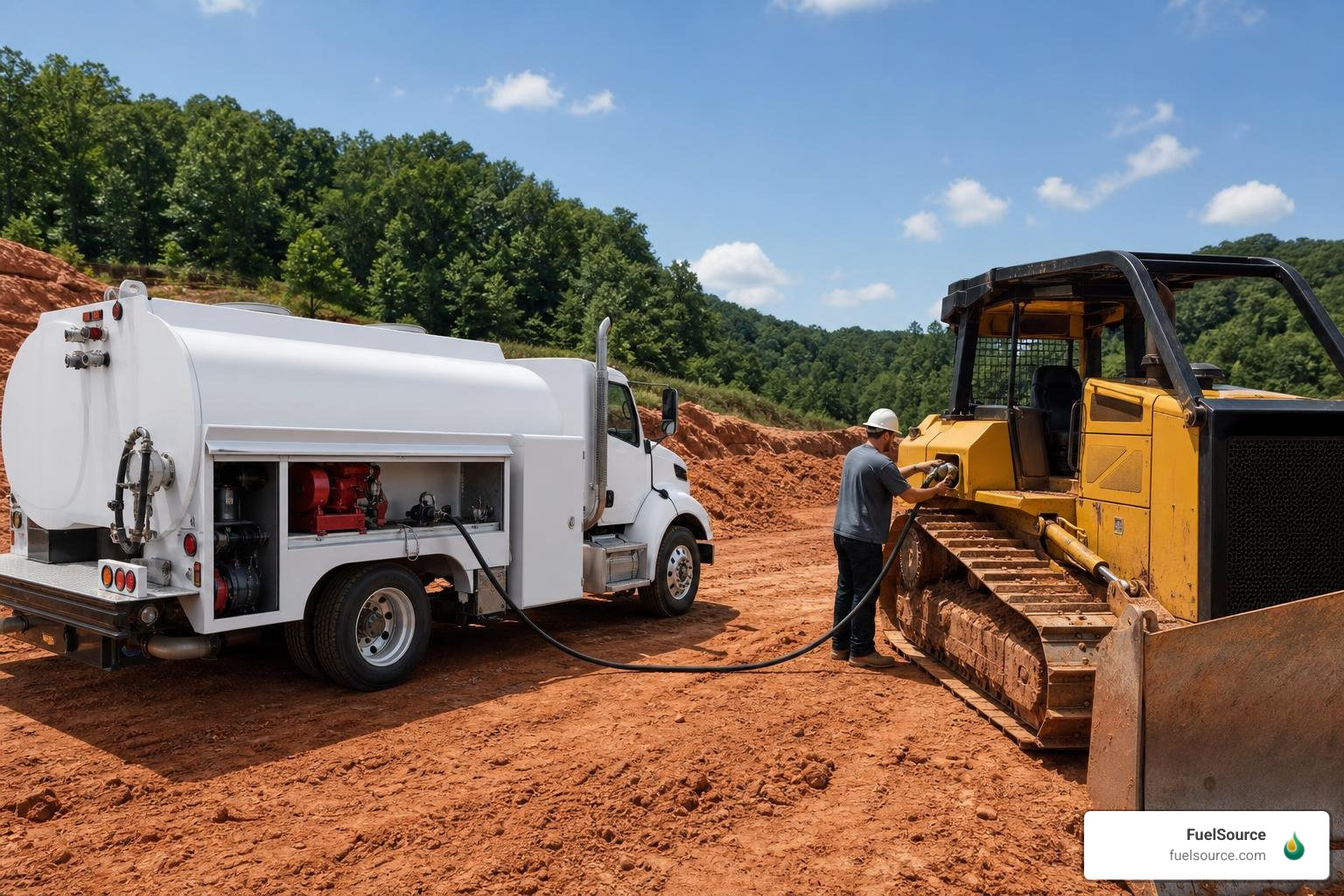
By partnering with a trusted provider for on-site fleet fueling and DEF delivery, your equipment can be fueled overnight or during scheduled downtime. When this mobile service is paired with automated tracking, you get the double benefit of zero driver downtime and 100% accurate data logging.
Industries That Benefit Most from Automated Tracking
Any business operating multi-vehicle fleets or heavy machinery stands to gain from automated tracking. However, certain sectors see an immediate and dramatic return on investment:
- Construction & Excavation: Heavy equipment scattered across job sites in Cherokee, Forsyth, or Paulding County is highly vulnerable to siphoning. Automated tracking secures these remote assets.
- Municipal Transit & Public Works: Public agencies must account for every tax dollar. Automated systems provide the auditable records required for public compliance.
- Farming & Agriculture: Farm machinery consumes massive quantities of diesel. Automated tracking ensures fuel is allocated to the correct equipment and cost centers.
Whether you are running a landscaping business in Marietta or a major utility fleet in Decatur, setting up on-site fueling with automated tracking keeps your operations running smoothly.
Advanced Integrations: Telematics, EV Charging, and Beyond
Modern automated fuel management has evolved far beyond simple pump locks. Today, it serves as a central hub for comprehensive fleet intelligence. By integrating your fuel tracking with telematics, GPS, and alternative energy metrics, you gain a complete, multi-dimensional view of your fleet’s efficiency.
By combining fuel transaction data with GPS tracking, you can instantly flag anomalies. For example, if a fuel card is swiped at a retail pump in Fulton County, but the vehicle’s telematics system shows it is currently parked on a job site in Dekalb County, the system can block the transaction in real time. Accessing real-time fuel delivery reports allows managers to spot these operational inconsistencies before they impact the bottom line.
Driver and Vehicle Identification Methods
To ensure data integrity, modern systems utilize several secure methods to identify drivers and vehicles before authorizing fuel flow:

- RFID Vehicle Tags: Passive rings installed on the fuel filler neck that communicate directly with the nozzle.
- Alphanumeric Keypads: High-durability keypads on the fuel pedestal requiring the driver to enter a PIN and current odometer reading.
- Dual-Card Authorization: A system requiring both an authorized driver card and a registered vehicle card to be swiped before dispensing.
- Bluetooth Mobile Apps: Secure smartphone apps that connect directly to the pump controller, bypassing the need for physical keys or cards.
These options, detailed in guides on Cloud-Based Fuel Management Systems, allow you to customize your security levels based on your operational environment.
Unifying Liquid Fuel and EV Charging Metrics
As fleets transition toward mixed-energy operations, managing different fuel types can create fragmented data silos. A major trend in 2026 is the integration of electric vehicle (EV) charging metrics directly alongside traditional liquid fuel tracking.
By consolidating diesel, gasoline, DEF, and EV charging data into a single, unified fleet fuel dashboard, fleet managers can accurately compare the total cost-per-mile across their entire mixed fleet. This unified reporting simplifies administrative tasks and provides clear data to guide future vehicle procurement.
Environmental Compliance and Regulatory Reporting
Operating bulk fuel storage tanks in Georgia comes with strict environmental responsibilities. State and federal regulations require rigorous monitoring to prevent soil and groundwater contamination. Automated systems help you maintain compliance while protecting your business from costly environmental fines.
Using instant fleet fuel reports allows you to monitor your inventory continuously, transforming regulatory compliance from an administrative burden into an automated background process.
Preventing Leaks and Ensuring Tank Safety
Manual tank measurements (using a dipstick) are prone to human error, temperature-related volume changes, and missed logs. A small leak in an underground or aboveground tank can go unnoticed for weeks, resulting in environmental damage and severe regulatory penalties.
Modern Forecourt Automation Solutions utilize magnetostrictive probes to monitor fuel levels in real time. These systems feature:
- Continuous Leak Detection: Automatically distinguishing between fuel being dispensed and fuel escaping through a tank compromise.
- Overfill Protection: Audio and visual alarms that prevent delivery trucks from overfilling storage tanks.
- Water Detection: Sensors at the bottom of the tank that detect bulk water intrusion before it reaches your vehicles’ engines.
Simplifying IFTA and Tax Credit Reconciliation
If your fleet vehicles cross state lines, calculating and filing your International Fuel Tax Agreement (IFTA) returns can be incredibly time-consuming. Drivers must track every mile driven and every gallon purchased in each individual state.
Automated fuel tracking simplifies this process by automatically pairing GPS mileage data with fuel transaction records. Generating IFTA compliant fuel reports ensures your data is accurate, auditable, and ready for filing, helping you avoid costly audit penalties and maximize your available fuel tax credits.
Key Considerations for Implementing a System
Upgrading your fuel tracking is a smart business decision, but it requires careful planning to ensure the technology matches your specific operational needs.
Before choosing a system, consider how your fuel is delivered. If you rely on on-call fuel delivery to keep your business agile, you need a tracking system that can easily integrate mobile delivery logs with your stationary storage records.
Choosing the Right Automated Fuel Management Solution
When evaluating different systems, keep these key factors in mind:
- Hardware Compatibility: Ensure the fuel controllers can connect to your existing pumps, pulse meters, and automatic tank gauges.
- Software Integration: Select a platform, like Fuel Inventory Management Software, that easily exports data to your existing accounting and fleet maintenance software via APIs.
- Scalability: Choose a modular system that can easily scale as your fleet grows from a few local trucks to hundreds of assets across North Georgia.
Future Trends: IoT, Bluetooth, and AI-Driven Analytics
The technology behind fuel tracking continues to advance rapidly. Several key innovations are currently transforming how commercial fleets manage their energy assets:
- Offline Data Buffering: Modern Bluetooth-enabled dispensers can securely authorize fuel transactions and store data locally even in remote areas with poor cellular coverage, syncing to the cloud once a connection is re-established.
- Wireless Forecourt Controllers: Eliminating the need for costly trenching, excavation, and conduit installation by connecting dispensers and gauges wirelessly.
- AI-Driven Analytics: Machine-learning algorithms that analyze consumption patterns to automatically flag abnormal driving behavior, mechanical issues, or subtle fuel theft.
Working with experienced fleet fueling specialists ensures you select and implement a future-proof system tailored to your unique operational footprint.
Frequently Asked Questions About Fuel Tracking
How does automated fuel tracking prevent card abuse?
Traditional fuel cards can easily be shared, lost, or used to fuel personal vehicles. Automated tracking prevents this abuse by requiring dual-card or card-and-PIN authorization, and by utilizing vehicle-specific RFID tags that ensure fuel only flows when the nozzle is physically inserted into a registered fleet vehicle.
Can these systems track multiple fluid types?
Yes. Modern automated systems are designed to track a wide variety of fluids simultaneously, including diesel, gasoline, DEF, lubricants, and alternative fuels. This ensures that all of your fluid assets are managed and reconciled within a single, secure platform.
What is the standard fluid reconciliation rate?
While manual tracking methods often result in fuel discrepancies of 2% to 5% due to theft, leaks, and paperwork errors, organizations utilizing automated systems consistently achieve standard fluid reconciliation rates in excess of 99.5%. If you are ready to secure your fuel supply, you can easily order fuel online to keep your operations moving.
Conclusion
Stopping budget leaks is not about working harder — it is about working smarter. Transitioning from manual logs to an automated fuel management system secures your high-value inventory, eliminates administrative overhead, and provides the clear data you need to optimize your business.
At FuelSource, we bring over 30 years of industry experience, state-of-the-art equipment, and a dedicated customer portal designed to make managing your fuel simple and transparent. We proudly serve businesses throughout the Atlanta Metro and North Georgia areas — including Cobb, Gwinnett, Fulton, and Dekalb counties — with dependable mobile delivery of diesel, DEF, and gasoline.
Ready to secure your fuel budget and streamline your logistics? Explore our professional fleet fueling services today, and let us help you keep your business moving forward.